To be a premier institution in Engineering & Technology that fosters excellence in education and research with ethics towards inspiring and developing future technocrats.
- To impart quality educational experience with ethical and human approach and skills to students that enables them to become successful technocrats in their chosen career.
- To nurture scientific temperament and promote research and development activities.
- To provide service to industries and communities through educational, technical, and professional activities.
To be a nationally and globally recognized center of excellence in technical education, fostering innovation, industry-relevant skills, and academic distinction to shape competent mechanical engineers for a sustainable future.
M1 – Educational Excellence: To deliver high-quality technical education that equips mechanical undergraduate, postgraduate, and research students with strong engineering fundamentals and practical skills aligned with industry needs.
M2 – Research Empowerment: To promote innovation and research through active collaboration with industry and continuous engagement with emerging technologies for real-world problem solving.
M3 – Cultivating Critical Minds: To cultivate ethical awareness and social responsibility among mechanical graduates, empowering them to contribute meaningfully to sustainable development and societal welfare at both national and global scales.
PEO 1 – To pursue successful career in mechanical engineering involving professional knowledge and skills for analysis, design and solution of real time engineering problems.
PEO 2 – To excel in professional career in the field of mechanical engineering with sound fundamental knowledge and pursue life-long learning including higher education and research.
PEO 3 – To demonstrate interpersonal skills, leadership ability and team building capacity to achieve organization goals and serve society with professional ethics and integrity.
PO1 – Engineering knowledge: Apply the knowledge of mathematics, science, engineering fundamentals, and an engineering specialization to the solution of complex engineering problems.
PO2 – Problem analysis: Identify, formulate, review research literature, and analyze complex engineering problems reaching substantiated conclusions using first principles of mathematics, natural sciences, and engineering sciences.
PO3 – Design/development of solutions: Design solutions for complex engineering problems and design system components or processes that meet the specified needs with appropriate consideration for the public health and safety, and the cultural, societal, and environmental considerations.
PO4 – Conduct investigations of complex problems: Use research-based knowledge and research methods including design of experiments, analysis and interpretation of data, and synthesis of the information to provide valid conclusions.
PO5 – Modern tool usage: Create, select, and apply appropriate techniques, resources, and modern engineering and IT tools including prediction and modeling to complex engineering activities with an understanding of the limitations.
PO6 – The engineer and society: Apply reasoning informed by the contextual knowledge to assess societal, health, safety, legal and cultural issues and the consequent responsibilities relevant to the professional engineering practice.
PO7 – Ethics: Apply ethical principles and commit to professional ethics, responsibilities, and norms of the engineering practice.
PO8 – Individual and teamwork: Function effectively as an individual, and as a member or leader in diverse teams, and in multidisciplinary settings.
PO9 – Communication: Communicate effectively on complex engineering activities with the engineering community and with society at large, such as, being able to comprehend and write effective reports and design documentation, make effective presentations, and give and receive clear instructions.
PO10 – Project management and finance: Demonstrate knowledge and understanding of the engineering and management principles and apply these to one’s own work, as a member and leader in a team, to manage projects and in multidisciplinary environments.
PO11 – Life-long learning: Recognize the need for, and have the preparation and ability to engage in independent and life-long learning in the broadest context of technological change.
PSO 1 – Application of Engineering Knowledge and Tools: Graduates will be able to apply principles of applied mathematics, mechanical engineering, and advanced software tools for the design, development, analysis, testing, and operation of mechanical systems, components, and processes.
PSO 2 – Professional and Ethical Engineering Practice: Graduates will demonstrate professionalism, ethical responsibility, and entrepreneurial skills in industrial or business environments by effectively applying design, manufacturing, quality control, and management practices in mechanical engineering.
Program details overview
Bachelor of Technology in Mechanical Engineering
The Bachelor of Technology in Mechanical Engineering at Parul University is designed for diploma holders and working professionals who want to advance their engineering careers through a flexible distance learning mode. The program enables students to pursue their studies while they fulfill their existing work obligations. Mechanical engineering exists as a highly adaptable engineering discipline which drives multiple sectors including manufacturing and automotive and energy and automation. The program develops through fundamental education to deliver advanced instruction about design and production and system optimization.
The program develops practical skills for students while teaching industry-relevant knowledge which students need to develop their technical abilities and meet contemporary engineering requirements.
Here is how you can study this program

Bachelor of Technology in Mechanical Engineering
The 4-years Bachelor of Technology in Mechanical Engineering provides an in-depth understanding of design principles, thermodynamics, materials science, manufacturing processes, and automation. Students are prepared for dynamic careers in energy, transportation, robotics, automotive, and heavy machinery industries through a blend of theory and hands-on projects.
Secure your place
Batch Commencing
8th July Onwards
Duration
4 years
Credits
180
Seats
60
Fee
1,95,000/- Per Annum
Language
English
Eligibility Criteria
Candidate shall have passed 12th Science with Physics and Mathematics as compulsory subject with Chemistry/Computer Science/Information practice/Computer with 45% for general and 40% for reserved category in theory or theory + practical from recognized board.
*Tuition Fees may vary depending on the Country/State in which the candidate has passed their qualifying examination.
Bachelor of Technology in Mechanical Engineering
The B.Tech program in Mechanical Engineering at Parul University provides students with advanced engineering knowledge through its flexible learning format. The program uses three main teaching methods to help students understand academic concepts through case studies and practical work experiences. The students can use their academic knowledge to practical work situations which improves their learning because it connects to real industry work.
Secure your place
Batch Commencing
8th July Onwards
Duration
3 Years
Credits
180
Seats
60
Fee
1,95,000/- Per Annum
Language
English
Eligibility Criteria
Candidate shall have passed Diploma engineering with 45% for Open Category and 40% for( SC/ST/SEBC) and can get admission in 2nd year of B.Tech (Lateral Entry) (Candidate can change the specialization from diploma to degree)
*Tuition Fees may vary depending on the Country/State in which the candidate has passed their qualifying examination.
Bachelor of Technology in Mechanical Engineering
The global pathway enriches academic learning with international collaborations, joint degree options, and study abroad opportunities. Students benefit from cross-cultural experiences and global engineering standards, making them industry-ready for multinational roles and global mechanical engineering challenges.
Secure your place
Batch Commencing
8th July Onwards
Duration
2+2 Years
Credits
180
Seats
60
Language
English
Eligibility Criteria
Candidate shall have passed 12th Science with Physics and Mathematics as compulsory subject with Chemistry/Computer Science/Information practice/Computer with 45% for general and 40% for reserved category in theory or theory + practical from recognized board. - testing
*Tuition Fees may vary depending on the Country/State in which the candidate has passed their qualifying examination.
B.Tech. in Mechanical Engineering (Work Integrated Program)
This B.Tech in Mechanical Engineering Work Integrated programme is designed for working professionals who wish to expand and improve their mechanical skills. By closely linking theory to proven industrial applications, this programme provides relevant and immediately-useful knowledge/application. It allows working with studying and therefore no break in your employment history. The programme’s focus on industry-related (practical) knowledge helps to make more informed decisions on the job, create new opportunities to advance, and create a pathway for pursuing further academic qualifications.
Secure your place
Batch Commencing
8th July Onwards
Duration
3 Years
Credits
180
Seats
60
Fee
1,85,000/- Per Annum
Language
English
Eligibility Criteria
Professionals working in Registered Industry/Organization (Central/State)/Private/Public Limited Company/MSMEs located within 50 km radial distance from the institute, Minimum of ONE-year Full Time/Regular Working Experience, A candidate must meet the Lateral eligibility criteria as per AICTE norms, Obtained a minimum 3-year Diploma in Engineering/Technology with at least 45% marks (40% for reserved category) in the qualifying examination.
*Tuition Fees may vary depending on the Country/State in which the candidate has passed their qualifying examination.
Extend Your Learning, Walk Away with Dual Degrees
While you are studying your main degree, you can also study another degree as a dual degree program which provides you an opportunity to explore multiple fields of study. With Dual Degree you can study your main degree in physical mode and your second degree in hybrid mode with adjustable study hours

Why study this program
Be a part of a engaging learning atmosphere that gives you the tools to excel in the career of your choice.
Flexible Distance Learning
Students can keep studying while maintaining their work and personal obligations.
Build on Existing Knowledge
Students can use their existing knowledge to study advanced mechanical engineering materials.
Hands-On Practical Learning
Students will develop their skills through laboratory work and workshops and by participating in actual industry projects.
Industry-Relevant Skills
Students will acquire technical skills that match the requirements of manufacturing facilities and automotive companies and fundamental engineering fields.
Career-Ready Approach
Students will develop their abilities to solve problems analyze systems and create solutions which they need to face authentic engineering difficulties.

What you can become after studying BTech – Mechanical Engineering?

Mechanical Engineer

Production Engineer

Design Engineer

Maintenance Engineer

Quality Control Engineer
Manufacturing Engineer
Here is the Important Information you need to Know
Find out if this is the right course for you.
Find out if this is the right course for you.

Download curriculum
Get a complete overview of what you’ll learn, the skills you’ll build, and how the program shapes your academic journey.


Download teaching scheme
Understand how your learning is structured, from subject flow to timelines, designed to keep your progress clear and consistent.

Download faculty details
Discover the experts behind your education: their experience, specialisations, and the knowledge they bring into the classroom.
Download curriculum
Get a complete overview of what you’ll learn, the skills you’ll build, and how the program shapes your academic journey.
Download teaching scheme
Understand how your learning is structured, from subject flow to timelines, designed to keep your progress clear and consistent.
Download faculty details
Discover the experts behind your education: their experience, specialisations, and the knowledge they bring into the classroom.
Launch your career with our leading placements
We provide you with leading placement opportunities before you graduate, with the best career training and an exposure to leading recruiters.
3-5 LPA
Average Package
100+
Recruiter
8 LPA
Highest Package Offered

Give your future career a head start
Explore our facilities & resources for this program
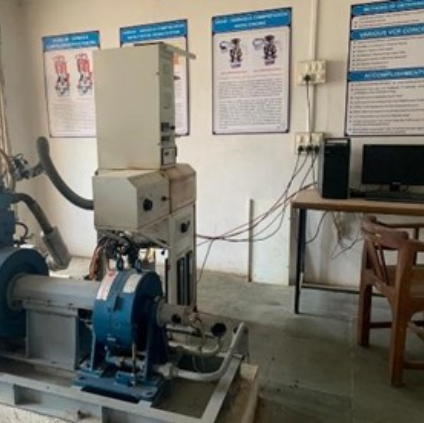
IC Engine Research Lab
This lab enables students to study the performance, combustion, and emission characteristics of internal combustion engines. It helps them understand engine components, testing methods, and real-world applications related to automobile and energy systems.
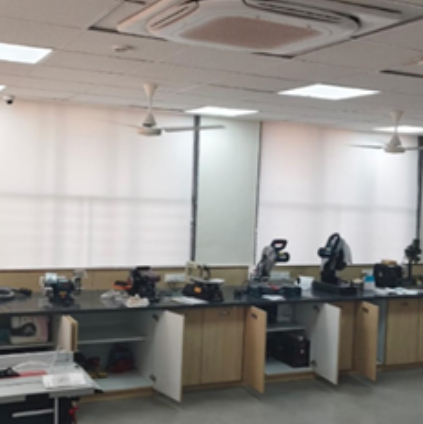
Idea Lab
The Idea Lab encourages creativity and innovation by providing tools and resources for students to convert ideas into prototypes. It supports project-based learning, interdisciplinary collaboration, and problem-solving skills.
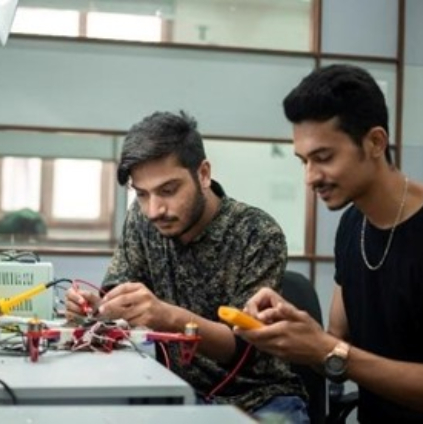
FAB Lab
The FAB Lab provides digital fabrication facilities such as 3D printing, laser cutting, and CNC machining. It helps students design and manufacture prototypes, enhancing practical knowledge of modern manufacturing technologies.
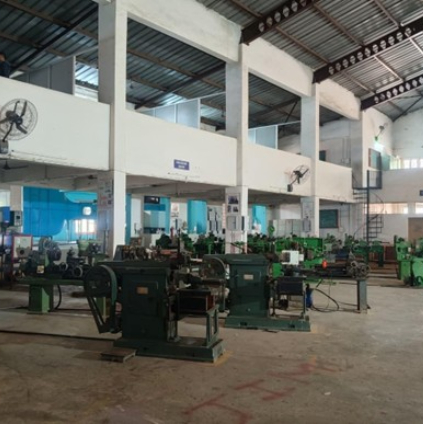
Workshop Facility
The workshop facility provides hands-on training in basic manufacturing processes like fitting, welding, turning, and machining. It builds fundamental technical skills required for mechanical engineering practice and industry readiness.
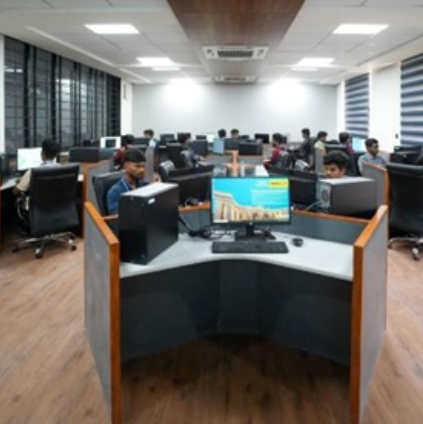
AR/VR lab
The AR/VR Lab allows students to visualize complex mechanical systems and simulations using augmented and virtual reality technologies. It enhances conceptual understanding, interactive learning, and virtual experimentation.
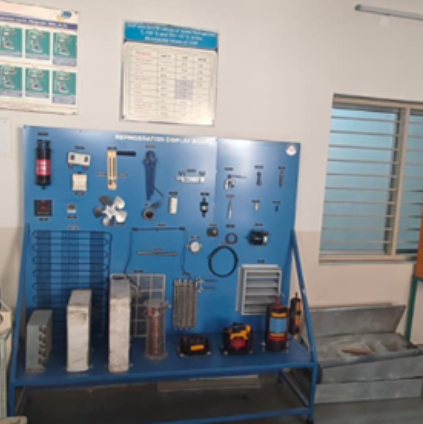
Refrigeration and Air Conditioning Lab
This lab helps students understand the principles of refrigeration cycles, air conditioning systems, and cooling technologies. It provides practical exposure to system components, performance analysis, and energy efficiency.
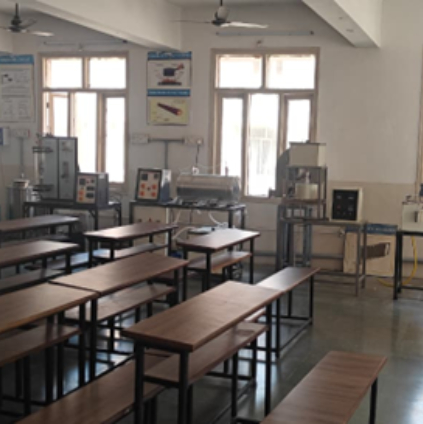
Heat Transfer lab
The Heat Transfer Lab enables students to study conduction, convection, and radiation phenomena through experiments. It strengthens theoretical knowledge by demonstrating practical heat transfer applications in engineering systems.
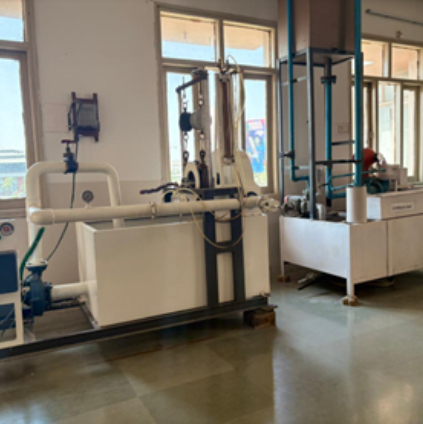
Fluid Mechanics and Fluid Power Engineering lab
This lab provides practical understanding of fluid flow behavior, hydraulic machines, and pneumatic systems. It helps students analyze fluid properties, pressure losses, and fluid power applications used in industries.
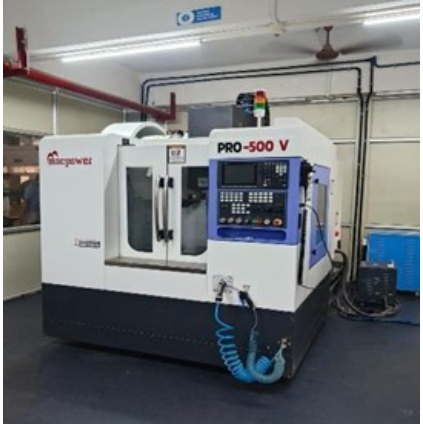
Advanced Manufacturing Facility
The Advanced Manufacturing Facility exposes students to modern machining technologies such as CNC machining, automation, and precision manufacturing. It helps develop advanced skills required for high-quality production and industrial applications.
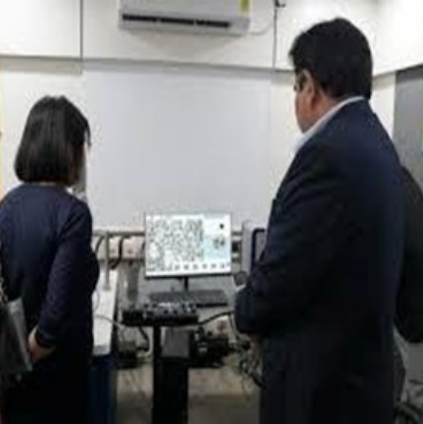
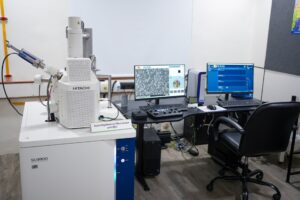
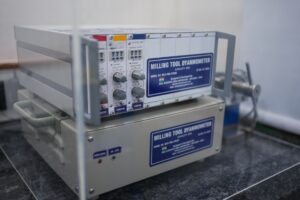
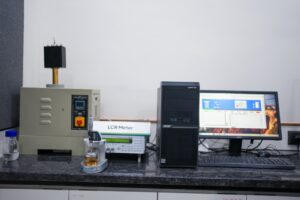
Micro Nano Research and Development Centre
This center focuses on advanced research in micro and nano-scale materials and manufacturing processes. It supports students in research activities, innovation, and development of next-generation engineering technologies.
Scholarships & funding
Financing and supporting your education
Get information on the various scholarships, grants, and student loans you can avail to fund your dream education.

Meritorious scholarships
Recognising academic excellence by providing scholarship opportunities to those who exceptionally pass board and entrance exams
Know more


Sports scholarships
Recognising athletic excellence by providing scholarship opportunities to those who have achieved distinction in sports at State, National, or International levels.
Know more

Alumni scholarships
Fostering lifelong connections by providing scholarship opportunities to the wards of PU alumni to continue the legacy of excellence.
Know more

Defense scholarships
Honoring the families of defense service persons by providing scholarship opportunities to their wards to study at PU
Know more

Stay up to date with Mechanical Innovations
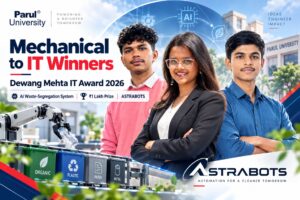
From Mechanical Engineering to a National IT Award: How Three Parul University Students Built an AI That Sorts Waste
Three Mechanical Engineering students entered an award built for IT and technology, and won it. At Parul University, Samruddhi Jadhav, Rana Jyot, and Rohan Kale turned their “wrong branch” into their biggest strength, taking the Dewang Mehta IT Award 2026 and a Rs 1 lakh prize for an AI-integrated waste-segregation system they are now building into a startup.
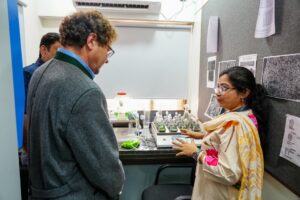
What Is Printed Electronics? How We Print Circuits, Sensors and Smart Labels
International visiting faculty at Parul University. The session was on how one can print a working electronic circuit, similar to printing a photograph, on paper or plastic or even fabric. This is printed electronics. This is leading to reshaping technology. Reshaping the industry of packaging to wearable health sensors.
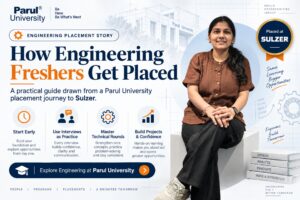
How to Get Placed as an Engineering Fresher: A Practical Guide
Landing your first engineering job can feel daunting, especially the technical interview. But placement is a skill you can build. Drawing on how one Parul University student prepared her way to a placement at Sulzer, here is a practical, fresher-friendly guide to getting placed, from using rejections as practice to cracking the technical round.
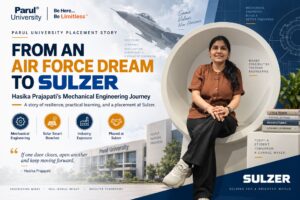
From an Air Force Dream to Sulzer: Hasika Prajapati’s Mechanical Engineering Journey
A dream of wearing the Indian Air Force Uniform. This path she couldn’t achieve but she didn’t give up. She went on to pursue mechanical engineering. Her four years at Parul University shaped her personality and confidence. This led to a placement at Sulzer. Her story is a motivation for others that if one door closes, you can open others and pursue your dreams.
Wearable Antenna Design: Smart Textiles, Body Effects and Safety Limits, Taught at Parul University’s Micro-Nano Research and Development Center
A wearable antenna has to work while pressed against a human body that absorbs radio energy, moves constantly and deforms the fabric it is built into. Every one of those conditions changes its behaviour, and it must satisfy safety limits before it is worn at all.
CST Studio Suite Antenna Design: Modelling, Parameterisation and Simulation, Taught at Parul University’s Micro-Nano Research and Development Center
Simulating an antenna is cheap. Fabricating one is not. That asymmetry is why antenna engineering happens in software first, and why the modelling discipline matters: a parameterised model can be optimised automatically, while a hard-coded one has to be rebuilt by hand for every change.
Diffuse Reflectance UV-Vis: How to Measure Solid and Powder Samples Correctly, from Parul University’s Micro-Nano Research and Development Center
Almost every UV-Vis guide assumes a clear liquid in a cuvette. Most materials research does not produce clear liquids. Measuring powders, pellets and thin films needs a different mode, different hardware and a different set of precautions, and getting them wrong quietly corrupts the data.
RF and Microwave Engineering Basics: Impedance, Return Loss, VSWR and Resonance, Taught at Parul University’s Micro-Nano Research and Development Center
Most radio frequency vocabulary describes one underlying problem: signal that should have radiated came back instead. Impedance matching, reflection, standing waves, return loss and VSWR are all different views of that single failure. Understood in sequence, they stop being a glossary.
Photocatalytic Degradation of Dyes: Building Catalysts That Work in Sunlight, Research Presented at Parul University’s Micro-Nano Research and Development Center
A photocatalyst that only works under ultraviolet light ignores most of the sunlight falling on it. One that works but cannot be recovered from the water becomes a pollutant itself. Research presented at Parul University tackled both problems, with results measured rather than asserted.
2D Materials for Environmental Sensing: Detecting Pollution at the Atomic Scale, Research from Parul University’s Micro-Nano Research and Development Center
In a material one atom thick, every atom is a surface atom. That single fact is why two-dimensional materials can detect pollutants at concentrations conventional sensors miss entirely. A review from Parul University’s Micro-Nano Research and Development Center maps where the field has reached.
What Is Prompt Injection? AI Security in the Age of Agentic AI and MCP
As AI systems move from answering questions to taking actions, they become software that can be attacked. Prompt injection, now ranked the number-one risk to AI applications, is the central threat, and agentic AI and the Model Context Protocol expand the attack surface. Here is what it means, and how to defend against it.
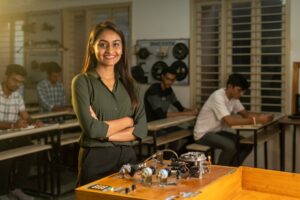
What Engineering Students Actually Build During Four Years of Engineering
During a B.Tech course, students slowly move from simple lab models to working machines, software, structures and final-year projects.

How Coding, Design, and Hardware Come Together to Build Complete Engineering Solutions
Complete engineering solutions are built when coding controls the system, electronics connect its parts, and mechanical design gives it a useful physical form.
Meet Our Expert Faculty

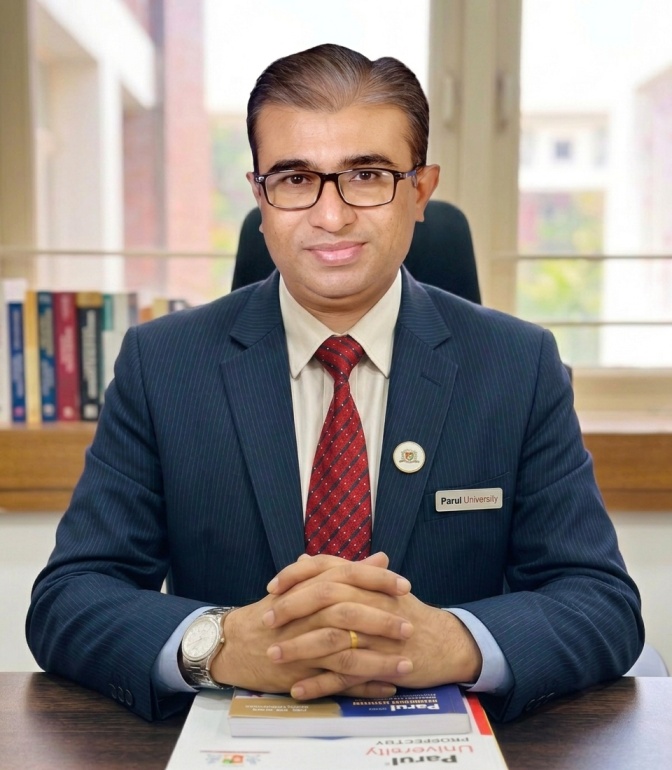
Dr. Mehulkumar Mahendrabhai Gor

Dr. Snehal Viranchibhai Trivedi
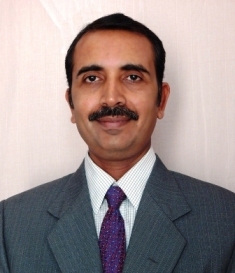
Dr. Bhaveshkumar Ganpatlal Mewada

Dr. Unnati Anand Joshi
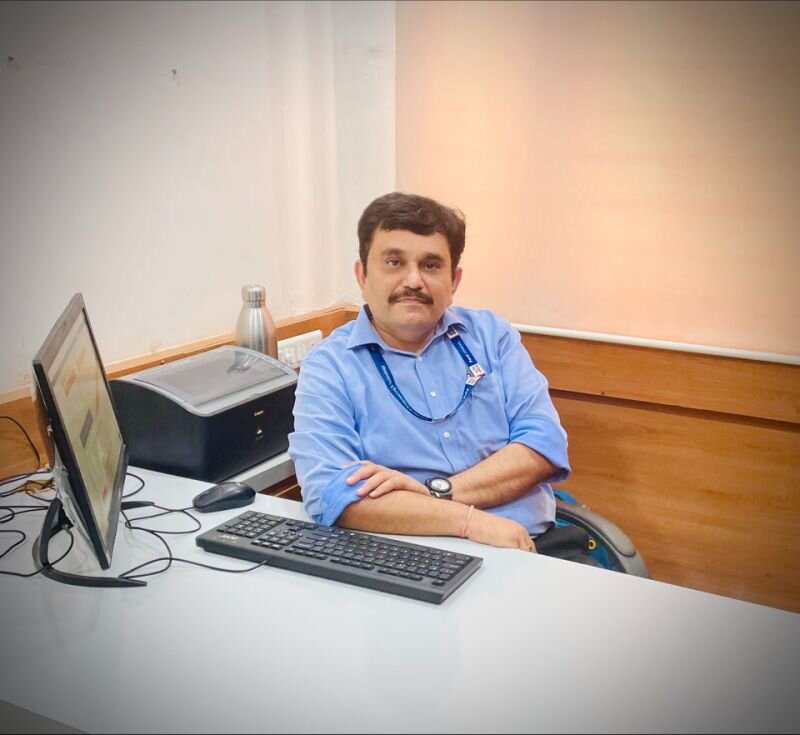
Dr. Anand Yagneshbhai Joshi
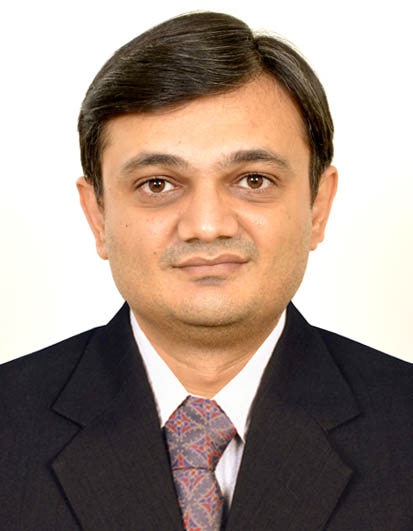
Dr. Vyomesh Raseshkumar Buch
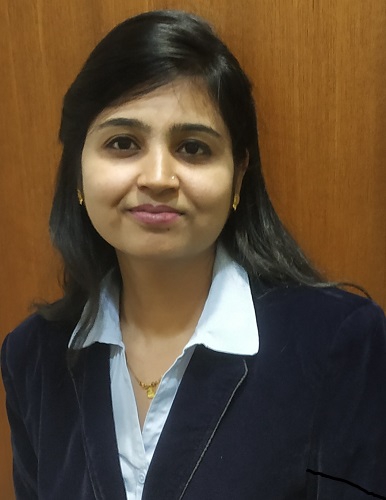
Ms. Swati Vinodchandra Prajapati
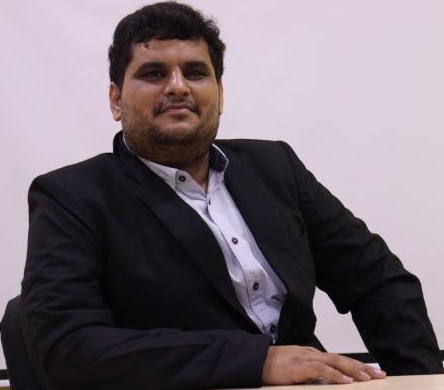
Mr. Imran Mohammedamin Molvi
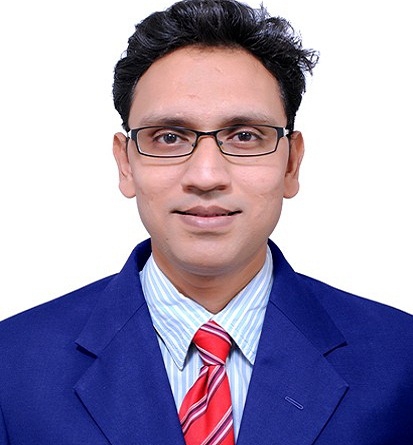
Mr. Nirav Hasmukhbhai Gandhi