Understanding how materials behave under friction is critical for designing durable components in automotive, aerospace, manufacturing, biomedical, and industrial applications.
Even the strongest materials can fail prematurely if they cannot withstand repeated rubbing, sliding, or contact pressure. To address this challenge, the Micro–Nano Research & Development Centre (MNRDC) at Parul University offers advanced Pin-on-Disc Tribometer Testing services for accurate wear and friction analysis.
Introduction to the Pin-on-Disc Tribometer
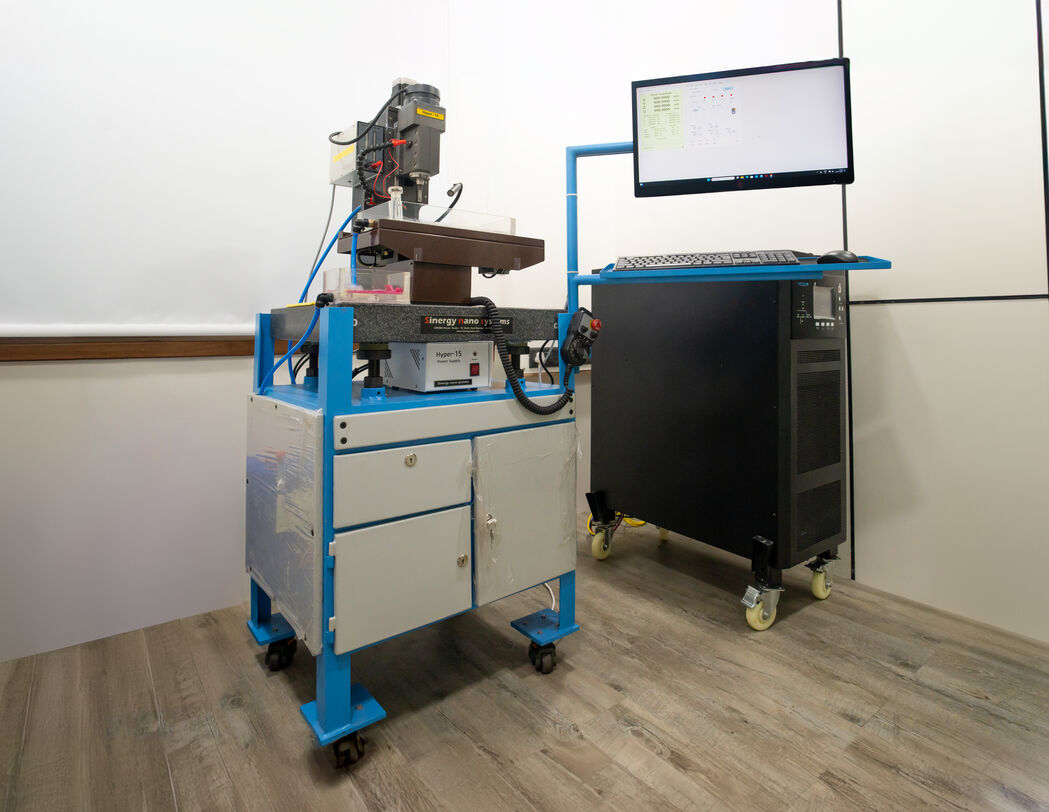
The Pin-on-Disc Wear Testing Machine (Tribometer), Model NTS – R&D Version – 03, is specifically designed to evaluate the tribological behaviour of materials. Tribology is the scientific study of friction, wear, and lubrication when two surfaces move against each other in contact.
This system enables researchers and industries to measure:
- Wear rate (material loss over time)
- Coefficient of friction
- Sliding distance performance
- Surface durability and damage
If surface tools like AFM measure how smooth a material is, the Pin-on-Disc Tribometer determines how long that smoothness survives under real-world friction conditions.
Working Principle
The working principle is straightforward yet scientifically precise.
A stationary cylindrical pin (specimen) is pressed against a rotating hardened disc under a controlled load. As the disc rotates, sliding occurs at the contact interface, generating friction. Over time, this friction leads to gradual material removal, known as wear.
Highly sensitive force sensors continuously record frictional force during the test. Using this real-time data, the software calculates the coefficient of friction (COF) throughout the experiment.
All tests at MNRDC are conducted according to the ASTM G99 standard, ensuring internationally accepted testing procedures and reliable, reproducible results.
Step-by-Step Testing Procedure
1. Sample Preparation
Specimens (typically cylindrical with flat ends) are cleaned, polished, and measured according to ASTM G99 guidelines.
2. Mounting
The disc is secured onto the rotating platform. The pin is mounted vertically in the holder using precision alignment tools.
3. Load Application
Dead weights are applied to generate the required normal force (e.g., 5 N, 10 N, 15 N). This simulates real-world pressure conditions such as brake pad contact.
4. Programming the Test
Parameters entered into the system include:
- Applied load
- Pin dimensions
- Rotational speed
- Test duration
- Target sliding distance
The time limit is customisable depending on when meaningful wear behaviour is observed
5. Sliding & Data Recording
Once initiated, the disc rotates and sliding begins. The system records one data point per second, capturing friction force and time-resolved wear behaviour.
The sensors are extremely sensitive. Even environmental vibrations can influence readings, ensuring high precision in measurements.
6. Test Completion & Wear Measurement
The machine stops automatically once the programmed time or sliding distance is reached. The pin is cleaned and weighed again to calculate wear rate from material loss.
Outputs Provided
MNRDC provides comprehensive data in Excel format, including raw and processed values for independent analysis.
1.Coefficient of Friction vs Time Graph
This graph shows how friction behaves during the entire test.
- A stable, low curve indicates smooth sliding.
- Fluctuations suggest instability or surface damage.
2.Wear Rate
Calculated from weight loss, this value indicates material durability. Lower wear rate = higher resistance.
3.Sliding Distance
Ensures fair comparison between materials tested under identical travel conditions.
The software also allows simultaneous comparison of up to six test results under identical parameters.
Types of Wear Tests Available
1. Dry Wear Test
No lubrication is used. This represents severe operating conditions and evaluates intrinsic material resistance.
2. Lubricated Wear Test
A lubricant chamber allows testing under oil, water, or chemical environments, simulating engine or underwater machinery conditions.
3. Pin Heating Condition Test
A heating attachment enables high-temperature testing to simulate extreme environments such as braking systems or high-speed mechanical components.
Materials Tested
The facility supports testing of:
- Metals (steel, aluminium)
- Polymers (nylon)
- Composites
- Coated or surface-treated materials
All specimens are solid and prepared for uniform contact during testing.
Industrial & Research Applications
Automotive Sector
- Brake pad durability
- Engine component wear
- Bearing performance
Aerospace
- Lightweight alloy durability
- Wear-resistant protective coatings
Manufacturing
- Tool material testing
- Surface-treated machine parts
Polymers & Biomedical
- Flooring durability
- Artificial joint materials (hip and knee implants)
Research & Development
- Comparison of new materials
- Validation of surface coatings
Why Pin-on-Disc Testing Matters
Wear is one of the primary causes of mechanical failure. Without proper tribological analysis:
- Machine components may fail prematurely
- Maintenance costs increase
- Product lifespan reduces
- Safety risks rise
Pin-on-Disc testing predicts real-life performance, helping industries select durable materials and optimise coatings before field deployment.
Integrated Material Characterisation Advantage
At MNRDC, tribological testing complements other advanced material characterisation tools:
- SEM analyses wear tracks and surface damage
- XRD identifies phase changes after wear
- AFM measures nanoscale roughness before and after testing
- Pin-on-disc quantifies friction and durability under sliding conditions
This integrated approach ensures complete understanding, from atomic structure to real-world performance.
Conclusion
The Pin-on-Disc Tribometer Testing facility at Parul University MNRDC provides accurate, standards-based wear and friction analysis for research and industrial needs. By simulating real sliding conditions under controlled parameters, it delivers reliable insights into material durability, friction behaviour, and coating performance.
In modern engineering, durability is not a guess; it is measured. And through advanced tribological testing, materials are validated long before they face real-world stress.