Top Research Projects from PU Students That Are Making Headlines
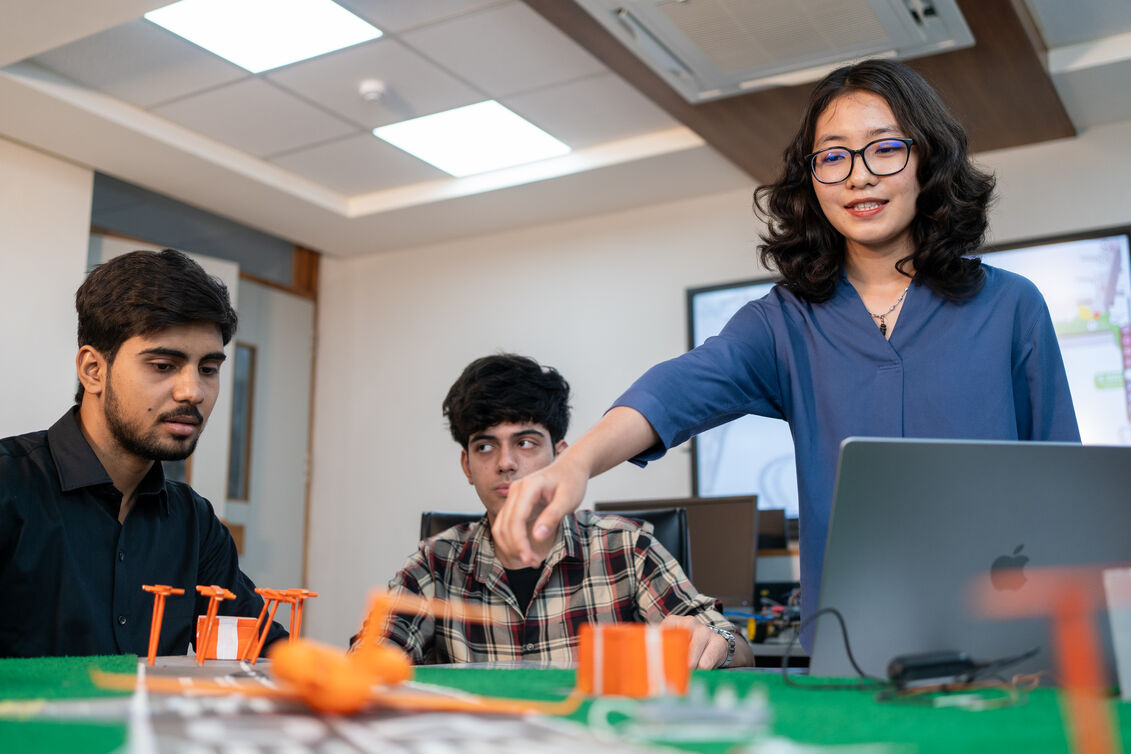
From global research exchanges to AI-powered learning apps, Parul University students are gaining national and international attention through high-impact Res & Tech innovation.
Research today sits at the core of academic and technological progress. Across disciplines, student-led Res & Tech projects are no longer limited to classrooms; they are solving real-world problems, winning national competitions, and contributing to global innovation. A growing number of student researchers are stepping into advanced domains like AI, image processing, embedded systems, and motion-based digital learning.
Several standout student projects have recently made headlines for their originality, impact, and scalability. These stories show how applied research, hackathon culture, and international exposure are shaping the next generation of innovators.
Global Research Exchange in Advanced Electronics
International research exposure has become a powerful catalyst for deep technical learning. In one such breakthrough initiative, two postgraduate researchers in Electronics and Telecommunications were selected for a fully funded one-year international research exchange at a leading Belgian research university.
Their research areas include:
- Image processing
- VLSI design
- Embedded systems
- Intelligent hardware architectures
These are high-impact Res & Tech domains that directly influence computer engineering, smart devices, and automation systems.
Why is This Feat Important?
Work in these fields supports innovation across sectors:
- Smarter visual recognition systems
- Faster and more efficient chips
- Advanced embedded controllers
- Improved computing performance
Such international research collaborations help students gain global lab exposure, advanced tool access, and cross-border academic perspectives. More importantly, they bring back applied knowledge that strengthens domestic innovation ecosystems.
During their farewell interaction, a senior academic mentor emphasised that research is not only about discovery but also about returning with insights and translating them into practical educational and technological advancement at home. That philosophy reflects the growing importance of knowledge circulation in modern Res & Tech development.
Hackathon Innovation That Tackles Screen-Time Learning
While some student researchers are advancing deep tech systems, others are solving everyday education challenges using applied AI.
Three engineering students recently developed an AI-powered motion-based learning platform designed to transform passive screen time into active learning. Built initially during a hackathon, the project quickly evolved into a nationally recognised Res & Tech solution.
The core idea was simple but powerful: digital learning should require physical interaction, not just visual attention.
The Problem They Identified
During a competitive innovation challenge focused on emerging technologies for social impact, the team studied digital learning behaviour patterns and identified several gaps.
Key Issues in Screen-Based Education
- High screen dependency
- Low physical engagement
- Passive content consumption
- Reduced retention and attention span
- Lack of movement-based interaction
They realised that while edtech platforms deliver content efficiently, they often ignore physical engagement and digital well-being.
That observation became the foundation of their solution.
The team first planned an AI-supported adaptive learning app. But under hackathon pressure, they refined the concept further by asking a sharper question: What if learning required movement, not just watching? This led to a Res & Tech pivot, combining AI with motion detection.
How Did Hackathon Constraints Help?
Time pressure improved execution quality by:
- Forcing focus on core features
- Eliminating unnecessary complexity
- Encouraging rapid prototyping
- Prioritising usability over feature overload
Instead of building a heavy platform, they built a working, scalable prototype.
How Does the Motion-Based AI Platform Work?
The app integrates artificial intelligence with motion tracking to create interactive learning sessions.
Core Features
- AI-driven adaptive difficulty
- Motion detection through camera input
- Physical-response learning tasks
- Engagement-based progress tracking
Learning Benefits
- Higher engagement levels
- Better memory retention
- Increased physical activity
- More immersive digital learning
This Res & Tech approach is especially effective for younger learners and for subjects that benefit from activity-based reinforcement.
Multi-Subject and Multi-Level Design
A major strength of the project is its scalability. The platform is not restricted to one subject or age group.
Current Modules
- English
- Mathematics
- Science
- Environmental Studies
Future Expansion Possibilities
- Engineering training
- Medical skill drills
- Architecture visualisation exercises
- Professional certification learning
Because the architecture is modular, new subject layers can be added without rebuilding the system. That’s a key reason judges rated it highly across competitions.
National Hackathon Recognition
The project earned top positions in three major national-level hackathons, validating both innovation and execution.
Awards Won
- Second Prize: ₹1,00,000
- First Prize: ₹25,000
- First Prize: ₹50,000
Beyond prize money, what stood out in jury feedback was:
- Strong real-world relevance
- Clear problem-solution alignment
- Cross-level education applicability
- Focus on digital well-being
Consistent recognition confirmed that the solution addressed a genuine and growing educational need. After the hackathons, the team continued refining the platform instead of stopping at the prototype stage.
Post-Competition Improvements
- Enhanced AI models
- Expanded subject coverage
- Better usability design
- Scalable architecture planning
Mentor feedback and educator interest helped the team recognise its broader adoption potential. What began as a timed competition build started moving toward a deployable Res & Tech learning system.
This project emerged from a hackathon ecosystem supported by Parul University, where interdisciplinary experimentation and applied problem-solving are actively encouraged.
Research That Connects Impact with Application
What connects both the international electronics research exchange and the AI motion-learning platform is applied relevance. These are not abstract academic exercises. They sit at the intersection of Res & Tech and real-world need.
One advances deep technical infrastructure. The other redesigns how humans learn through technology.
As more student researchers move into interdisciplinary domains, we can expect to see projects that blend hardware with AI, education with motion analytics, and research with scalable deployment. These are not distant goals, but active student-led realities already shaping what comes next.
Trending Topics

PU Achieves a Remarkable Debut in Global Rankings, Ranked Among Top 50 Indian Institutions in THE Impact Rankings 2025
Vadodara-based PU has made its mark on the global academic map by registering a remarkable...
November 20, 2025

Inspiring the Next Generation: A Strategic Dialogue with Dr. Tanu Jain IAS
Dr. Tanu Jain, Physician, Retired IAS officer, Co-founder of Tathastu ICS, and Assistant Director of...
August 7, 2025

When Vision Meets Value: Dr. Vikas Divyakirti Inspires Parul University
"The future belongs to those who bring meaningful change into others lifes," shared Dr. Vikas...
November 20, 2025


