Predictive forensics refers to the application of AI and ML to forensic investigation and crime prevention. It involves analysing historical crime data, recognising patterns in criminal behaviour, forecasting risk, and optimising resource allocation for law enforcement. The primary goal is to recognize trends, hotspots, and behavioural patterns that enable evidence-based preventive behaviours and strategies!
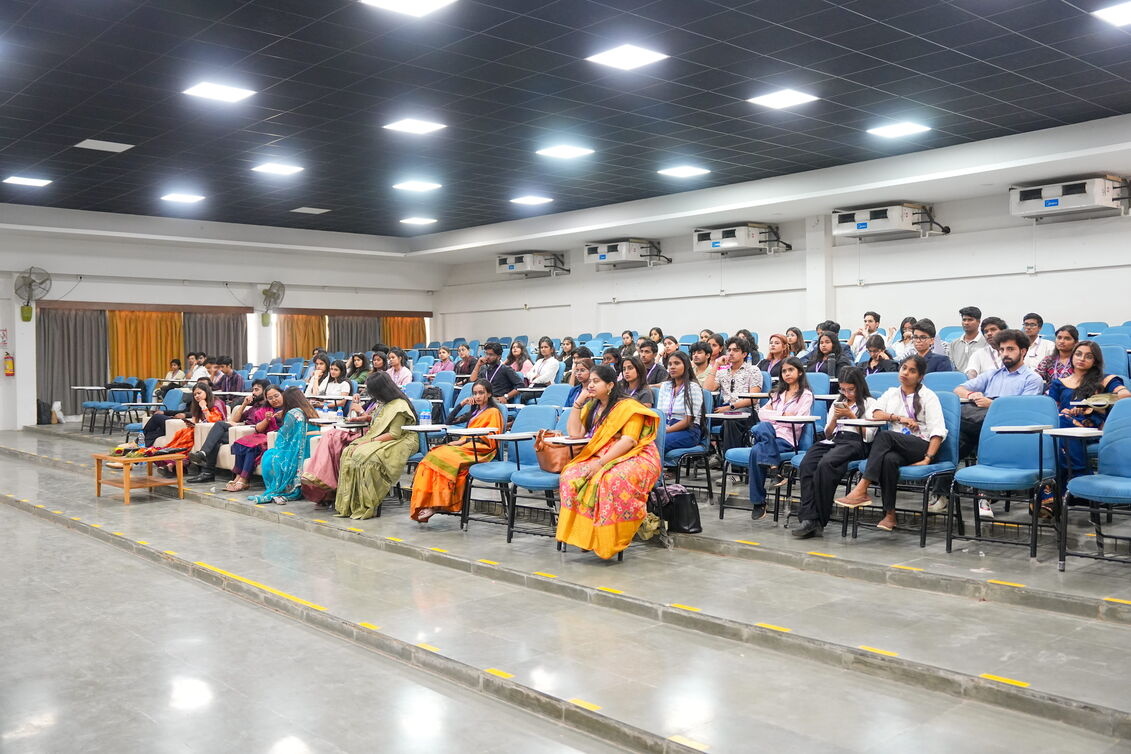
As revered in the predictive forensics AI crime investigation in India at Pramaan 3.0 at Parul University, Dr. Ankita Patel – Assistant Professor in the Department of Forensic Science at Gujarat University, Ahmedabad deliberated a session that moved from cinematic references (Minority Report, CSI) to real-world applications, making the technical content accessible to B.Sc. and M.Sc. forensic science students.
How Predictive Forensics Works: The Five-Step Model
Dr. Ankita Patel explained the working model in five structured steps:
• Crime Data Report – Aligned data including FIRs, arrest records, location details, and various time patterns.
• Feature Extraction – Identifying important variables such as crime type, location, time, suspect behaviour, repetitive behaviours and patterns.
• Machine Learning Integration- Algorithms process the data to identify hidden patterns that human research would miss.
• Decision-Making Support – Law enforcement uses these insights for deployment of personnel, resource allocation, and preventive strategies.
Is India Ready for Predictive AI in Forensics?
Dr. Ankita Patel stated that India has a more solid digital infrastructure for predictive forensics than most people realise.
NCRB - The National Crime Records Bureau
India’s central repository of national crime statistics publishes the annual Crime in India report with digitised FIR and crime datasets structured by state and district.
Forensic DNA Phenotyping: Predicting Appearance From Biological Evidence
As covering predictive forensics AI crime investigation in India, one of the most striking segments of the session was forensic DNA phenotyping, a world-class technique that goes beyond traditional DNA profiling, predicting a suspect’s physical appearance when no suspect has been identified.
The Algorithmic Toolkit: What Powers Predictive Forensics
Dr. Ankita Patel introduced 4 major algorithms which are popularly covered in forensic applications:
- Random Forests – used for recidivism prediction (assessing the risk of re-offending).
- K-Means Clustering – used for crime series linkage and connecting cold cases based on pattern similarity.
- Convolutional Neural Networks (CNNs) – used in facial reconstruction from partial data and CCTV image enhancement.
- Bayesian Networks – used in probabilistic genotyping for mixed DNA samples where multiple contributors are present.
Global Examples of Predictive Policing
This session covered implementations such as the LA Police Department as an early adopter of predictive policing tools, the Chicago Police Department’s Strategic Subject List (a risk-scoring system for individuals), and PredPol – a commercial predictive policing software that has been widely adopted.
The Ethical Line: Where AI Must Stop
Dr. Ankita Patel deliberated that significant time to the ethical boundaries –
– Over-dependance on machines – AI should assist human judgement, not replace it. The risk of treating algorithmic output as definitive rather than probabilistic is real.
– Misusage – Assigning crime probability scores to individuals raises fundamental questions such as how innocent they are in reality!
B.Sc. Forensic Science – Parul University
M.Sc. Forensic Science – Parul University
Frequently Asked Questions
1. What is predictive forensics?
Predictive forensics uses AI and machine learning to analyse historical crime data, recognise behavioural patterns, and generate risk forecasts that support law enforcement decision-making.
2. What is forensic DNA phenotyping?
Forensic DNA phenotyping (FDP) predicts physical appearance traits - eye colour, hair colour, skin tone - from biological evidence using SNP analysis and tools like HIrisPlex-S. It generates investigative leads when no suspect has been identified.
3. Is predictive policing used in India?
India has the digital infrastructure for predictive policing through NCRB (national crime statistics) and CCTNS (connecting 16,000+ police stations). Implementation of predictive AI systems is in early stages but the data foundation exists. So now mark your stamp in the world of forensics, wait no more and enroll now to create a benchmark for others to follow!


