₹4.8 Crores in 14 Months: When Students Mean Business
Student Founders, Real Revenue, Real Risk: Learning Outside Classrooms
While textbooks explain P&L statements, Parul students are generating them. ₹40 crores in revenue. Real customers. Real risk. Real learning.
Let’s be honest: most business education is theoretical. You study case studies from the 1990s, analyze companies you’ll never work for, and memorize frameworks you’ll forget by graduation.
Student founders at Parul University skip the simulation and jump straight into the game. And the stakes? They’re real.
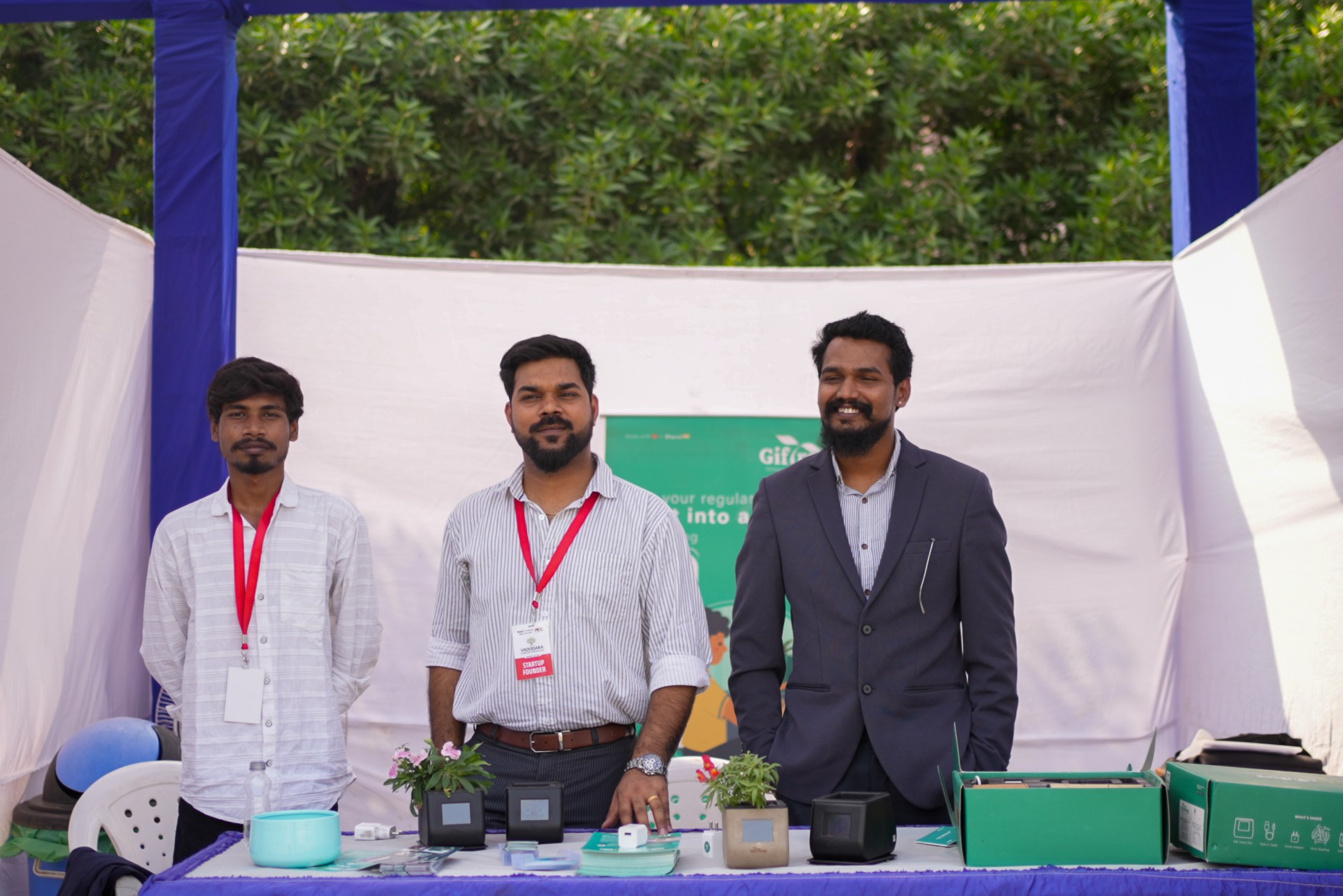
Fly Any Trip isn’t a class project. It’s a functioning travel tech startup that generated ₹4.8 crores in revenue in just 14 months.
The founders didn’t wait until graduation. They saw the gap between what travelers wanted (transparent pricing) and what platforms offered (hidden fees and last-minute surprises). Their tagline captures it perfectly: “Pay What You See.”
This wasn’t a weekend hackathon project. This was building real systems, negotiating with actual vendors, handling customer complaints, managing cash flow, and learning by doing.
The B2C side worked. The B2B side? That’s where things got complicated.
Competing against giants like MakeMyTrip in the B2B space meant constantly proving credibility. Potential clients questioned everything:
- Are you stable?
- Will you be around next year?
- Can you scale?
These aren’t theoretical challenges from a textbook. These are real negotiations with real businesses making real decisions about whether to trust a student-founded startup.
Poyni Bhatt, ex-CEO of SINE IIT Bombay, advised them to focus on B2C first build that foundation, achieve stability, then tackle B2B from a position of strength.
You can explore the broader travel tech ecosystem and related programs that support innovation in this space.
From ₹10 Lakh to ₹10.7 Crores: The ZebraLearn Journey
Anurag Sundarka’s trajectory tells you everything about compound growth and persistence.
- 2022: ₹10 lakh revenue
- 2023: ₹3.05 crore revenue
- 2024: ₹10.7 crore revenue
But those numbers don’t tell the full story. Before ZebraLearn, there was Saralife.com, a vegetable delivery venture that generated exactly ₹20,000 total.
Anurag calls it his “miserable failure.”
Yet that failure was essential. It taught him what initiative actually means: doing something nobody forces you to do.
ZebraLearn emerged from personal frustration. Anurag Sundarka wanted to publish a book but couldn’t navigate the traditional publishing system. So he built an entire platform for visual learning and interactive books.
They appeared on Shark Tank Season 4. Secured ₹1 crore from Ritesh Agarwal for 1.6% equity. Scaled systematically.
The lesson? Revenue growth isn’t linear. It compounds when you find product-market fit and execute consistently.
₹2 Lakh Monthly Revenue: Soulera's Patient Path
Not every startup needs to chase unicorn valuations. Sometimes sustainable revenue and genuine impact matter more.
Soulera generates approximately ₹2 lakh per month. Their business pipeline? Around ₹10 lakh.
They’ve helped 300+ students with expert counseling sessions. Their platform focuses on mental clarity, self-discovery, and career guidance services that require trust, credibility, and consistent delivery.
The founders understand their market. They’re not rushing to scale prematurely. They’re building systems, refining their offering, and establishing credibility.
This is patient capital and patient growth. No shortcuts. No hype. Just sustainable progress.
The Real Cost of Entrepreneurship: Beyond Money
Revenue numbers are worthy. Funding announcements get attention. But the real cost of student entrepreneurship is rarely discussed.
- Time
- Energy
- Mental health
- Social life
- Family expectations
Mr. Pareek from Scholify spoke candidly at VSF – Vadodara Start-up Festival 6.0 about what entrepreneurship actually demands.
Startups demand high risk, intense commitment, and long working hours. Family time gets neglected not intentionally, but because the dedication required is immense.
He shattered the myth that startups equal freedom. Yes, you’re your own boss. But you’re also on call 24/7. Problems don’t wait for office hours.
Kavish Gadia from ExcelOne emphasized managing five key aspects:
- Physical fitness
- Emotional well-being
- Mental well-being
- Material wealth
- Personal peace
His “jar model” analogy is simple but powerful.
Life is a jar.
- Rocks are non-negotiables (health, family)
- Pebbles are commitments (work)
- Sand is growth (hobbies)
- Water is a distraction
Put rocks in first. If you fill the jar with sand and water, there’s no room for rocks.
Student founders at Parul learn this lesson early. They juggle term papers and pitch decks. Lab reports and investor meetings. Group projects and team management.
It’s brutal. But it’s also preparation for what comes next.
The Rejection Economy: Learning to Handle "No"
Here’s what business school doesn’t prepare you for: constant rejection.
Investors say no. Customers say no. Partners say no. The market says no.
Yogesh Brahmankar from AICTE emphasized that rejection cycles are natural. They’re not personal failures. They’re market feedback.
Student founders face this earlier than most. A professor rejects their project proposal. A potential customer ghosts them. An investor passes on their pitch.
Each rejection builds resilience. Not because it feels good, but because it becomes familiar. The sting fades. The lesson remains.
Rajat Singhania from HyLyt shared that he manages six different startups now. But he started as an introverted school student who could barely speak in public.
What changed? Repeated exposure to discomfort. Every pitch got slightly easier. Every rejection stung slightly less.
Cash Flow Reality: When Revenue Doesn't Mean Profit
Generating revenue and making profit are two very different skills.
Many student founders celebrate their first ₹1 lakh in revenue. Then they look at their bank account and realize they spent ₹1.2 lakh to get there.
This is real-world financial literacy. Cash flow management. Unit economics. Customer acquisition cost versus lifetime value.
The startups generating ₹40+ crores collectively through PIERC learned these lessons through trial and error.
- They made payroll mistakes
- They mismanaged inventory
- They underpriced services
But they learned. And more importantly, they learned while the stakes were manageable.
Better to discover you can’t manage cash flow with ₹50,000 than with ₹50 lakh.
The Credibility Challenge: Earning Trust as a Student Founder
Age discrimination is real in business. When you’re 21 and pitching to 45-year-old executives, you face an uphill battle.
- “Are you serious about this?”
- “What happens when you graduate?”
- “Can you handle enterprise contracts?”
These questions don’t get asked if you’re 35 with an MBA and industry experience. They get asked because you’re a student.
Student founders overcome this by delivering results. Not promised results.
Destinofy.ai didn’t convince construction companies with pitch decks. They showed them the technology working in real-time.
- Minutes instead of hours
- Precision instead of guesswork
Rideaway didn’t debate the market size for student mobility. They put scooters on the ground and let the usage numbers speak.
Action beats credentials every time.
Investment vs. Bootstrap: Choosing Your Path
PIERC has facilitated ₹14.53 crores in direct funding to startups. But funding isn’t always the answer.
Some startups need capital to scale manufacturing, hardware, and inventory-heavy businesses. Others can bootstrap and grow organically.
The founders pitching on Shark Tank understood this. When asked about royalty deals, they advised avoiding them.
“Royalty is similar to taking loans. Equity is always more valuable than debt.”
This is sophisticated financial thinking from students who’ve lived through actual negotiations.
They’re not regurgitating textbook theory. They’re sharing battle-tested wisdom.
The Team Dynamics Nobody Talks About
Co-founder relationships are harder than any other relationships. You’re building a company, managing stress, making high-stakes decisions, and doing it all with peers who might also be your friends.
Poyni Bhatt stressed the importance of exit mechanisms and dispute mechanisms from day one.
Not because you expect failure, but because clarity prevents litigation later.
She also warned about imbalanced equity distributions.
Investors won’t touch a startup where one founder owns 80% and the others split 20%.
These aren’t theoretical scenarios. These are real conflicts that destroy real companies.
Student founders at Parul University navigate these dynamics early. They learn to have difficult conversations while the stakes are lower.
Market Validation: The Customer Knows Best
Your idea is brilliant. Your execution is flawless. The market doesn’t care.
The market cares about one thing: does this solve my problem better than the alternatives?
ZebraLearn found their market after pivoting. “Fly Any Trip” validated transparent pricing through actual bookings. Eternia confirmed demand by seeing how quickly students adopted the platform.
Market validation isn’t a survey. It’s not asking people if they’d use your product.
It’s watching them actually use it and ideally, pay for it.
Student founders learn this brutally and quickly. Campus is an honest market.
Your peers won’t use your app out of pity. They’ll use it if it works.
The 1400+ Jobs Created: Impact Beyond Revenue
Here’s what matters more than revenue: the 1400+ jobs created by PIERC startups.
Those aren’t statistics. They’re people earning salaries, supporting families, and building careers.
Every student who starts a company and hires even one person has shifted from job seeker to job creator. That shift compounds across an economy.
This is the metric that actually matters for India’s development.
Not how many engineers graduate. How many create opportunities for others.
The Unfair Lessons from Real Risk
Classroom learning is safe. You can fail a test and retake it. You can bomb a presentation and move on.
Real entrepreneurship? There’s no retake. There’s only iterate or quit.
Student founders at Parul experience this reality early:
- Money is finite. When the bank account hits zero, decisions get real fast.
- Time doesn’t pause. Competitors don’t wait for you to finish your semester.
- Customers are ruthless. They don’t care about your challenges. They care about solutions.
- Relationships matter more than intelligence. The right mentor, investor, or partner changes everything.
- Execution beats ideas. Everyone has ideas. Few people ship.
These lessons stick because they’re learned through consequence, not lecture.
Why This Path Isn't for Everyone (And That's Okay)
Let’s be clear: entrepreneurship isn’t the only valid path. Most people shouldn’t start companies.
Corporate careers are honorable. Joining a mission-driven company is valuable. Building expertise within an organization creates impact.
But for students who feel the pull toward building something themselves, delaying that exploration doesn’t make sense.
You’ll never have more freedom, fewer obligations, or lower financial pressure than you do in college.
The opportunity cost of trying now?
- Maybe you graduate in six months
- Maybe you miss some social events
The opportunity cost of waiting?
You’ll never know what you could have built.
The Bottom Line
Student founders at Parul University aren’t playing a startup. They’re building real businesses with real revenue, real customers, and real consequences.
- ₹40 crores in collective revenue
- 1400+ jobs created
- Thousands of customers served
But more importantly: hundreds of students who learned lessons no classroom could teach.
They learned that rejection is survivable. That cash flow matters more than vanity metrics. That teams are harder to build than products. That persistence compounds.
These aren’t theoretical lessons. They’re earned through late nights, difficult pivots, customer complaints, and small wins that accumulate into real growth.
This is education in its truest form: learning by doing, with real stakes and real rewards.
FAQs
Q1: How much revenue have Parul student startups generated?
Collectively, startups supported through PIERC have generated over ₹40 crores in revenue while creating 1400+ jobs across sectors.
Q2: Can students realistically manage academics and real businesses?
Yes, but it requires discipline and prioritization. Many founders balance coursework with operations by focusing on high-impact activities and building strong teams.
Q3: What makes startup learning different from classroom learning?
Startup learning involves real consequences. Cash flow mismanagement, customer dissatisfaction, and competitive pressure create lessons that theory alone cannot replicate.
Q4: Is funding necessary to build a successful student startup?
Not always. While PIERC has facilitated ₹14.53 crores in funding, many startups bootstrap first and raise capital only when scaling requires it.
Q5: What skills do student founders develop that others don’t?
They develop resilience, negotiation ability, financial literacy, leadership under pressure, market validation skills, and decision-making in uncertainty.


