From Chemistry Project to Clean Energy Platform
Yash Tarwadi wasn’t trying to revolutionize India’s solar industry. He was trying to finish his Chemical Engineering project.
The assignment: build a working desalination system to convert seawater into usable water. The location: Surat, where Tarwadi was studying at university. The timeline: one academic year.
Most students would have built the prototype, submitted the report, gotten the grade, moved on.
Tarwadi built the prototype. It worked recycling 20 liters of water daily. Student Startup and Innovation Policy (SSIP) gave them ₹2 lakh to develop it further. The Gujarat government, impressed by results, added ₹30 lakh more.
The project was succeeding beyond expectations. Then they hit an unexpected problem: they needed sustainable power to run the system.
That problem of how to power a desalination prototype accidentally led Tarwadi to discover something much bigger. Something that would eventually build Solnce Energy, India’s first online bidding platform for solar installations, earning recognition from UNDP, Piyush Goyal, and international companies interested in licensing the technology.
But the journey from chemistry lab to solar revolution wasn’t linear. It was messy, frustrating, and full of insights that nobody teaches in engineering classes.
The 25% ROI That Nobody Wanted
When Yash started researching power sources for their desalination system, solar panels made perfect sense.
Then he discovered something that didn’t make sense at all: Solar panels offered 25-30% Return on Investment. Yet customer adoption was terrible.
Let that sink in. An investment returning 25-30% annually better than most mutual funds, stocks, or fixed deposits and people weren’t buying.
The economics were clear. The environmental case was obvious. Government subsidies made it more attractive. Yet widespread adoption wasn’t happening.
Why?
Most engineering students would shrug and move on. Not their problem. They needed power for their prototype if solar didn’t work, they’d find alternatives.
Tarwadi got curious instead.
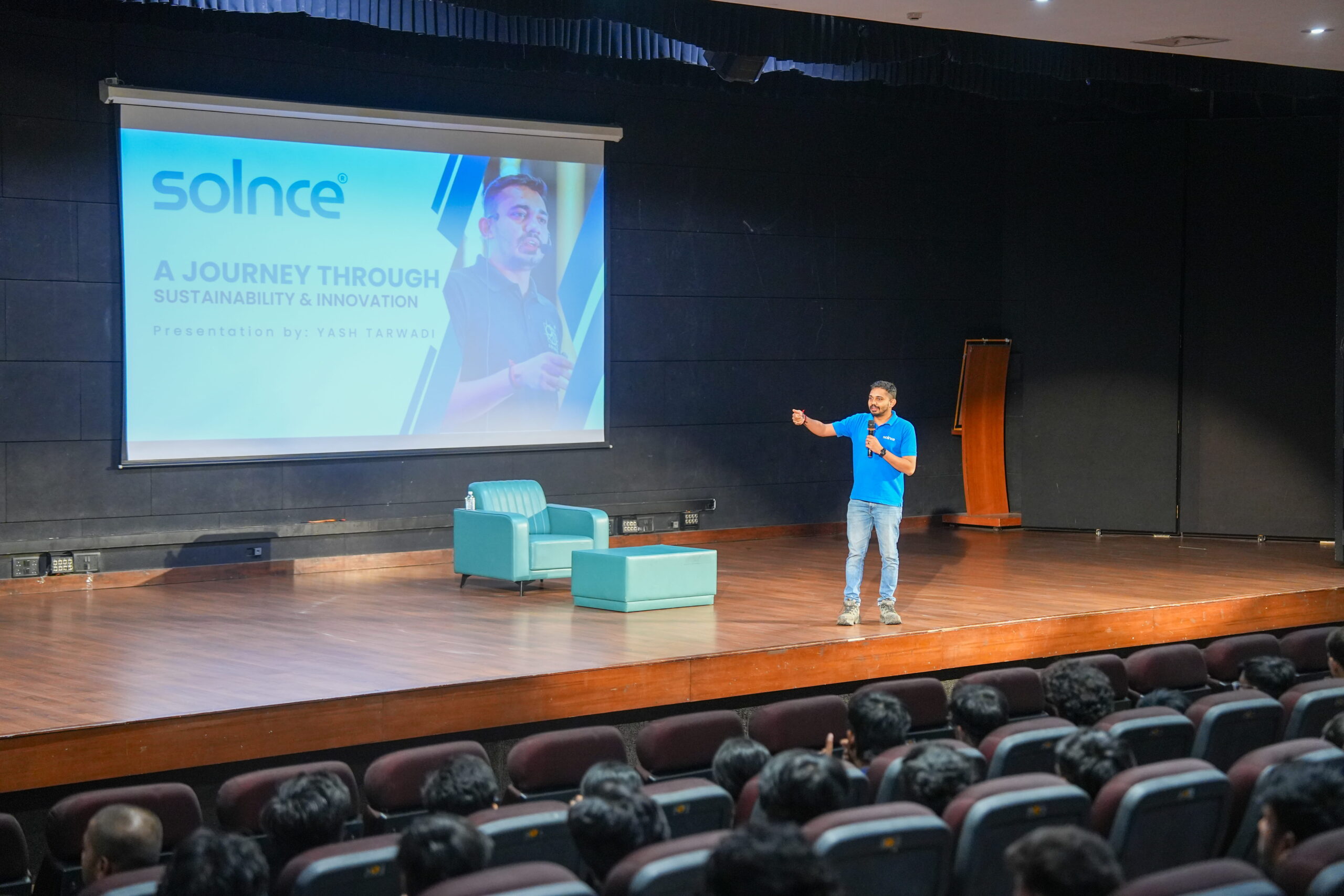
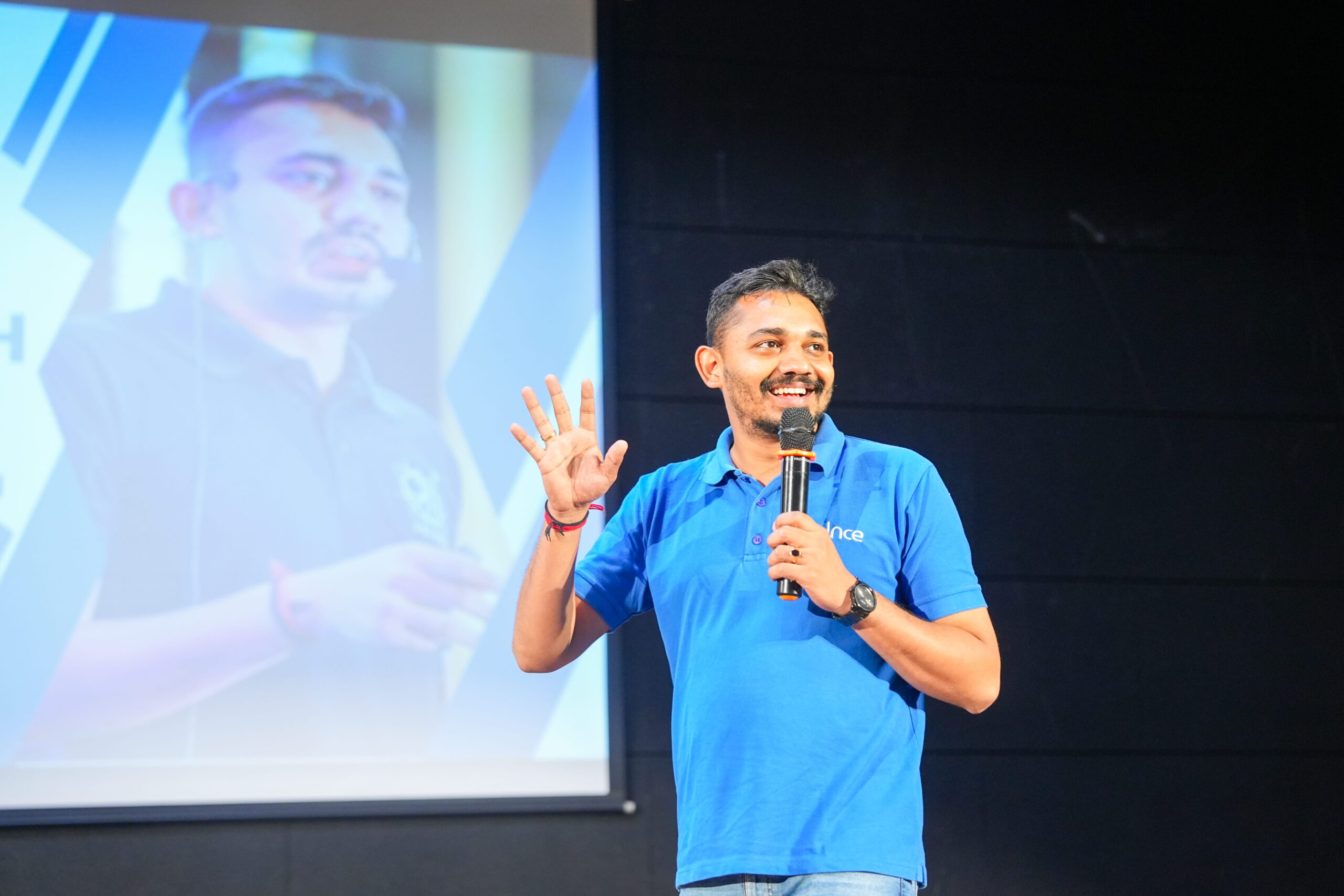
“I started talking to people,” he explained during his signature talk at VSF – Vadodara Start-up Festival 6.0. “Not just researching online. Actually asking homeowners: why haven’t you installed solar panels?”
The answers revealed a problem hidden beneath the economic opportunity.
The process was exhausting.
Getting solar installed meant:
- Week 1: Research companies. Find contact numbers. Make calls. Schedule appointments.
- Week 2: Tata Power Solar representative visits. Check roof space. Measures dimensions. Assesses electricity usage. Notes down details. Says they’ll send a quote.
- Week 3: Quote arrives. ₹2.8 lakh for installation. Seems reasonable.
- Week 4: Adani Solar representative visits. Same process. Measures space. Quote: ₹3.1 lakh. Higher than Tata. Why?
- Week 5: Waaree Energies representative visits. Same process again. Quote: ₹2.6 lakh. Lowest so far. But is it really the best?
- Week 6: Trying to understand why prices vary. Different companies explain different factors. Location. Service charges. Installation complexity. Panel quality. Inverter specifications.
- Week 7: Still comparing quotes. Still confused.
Multiple site visits. Varying quotes with no standard format. Location-based pricing that seemed arbitrary. Service charges nobody could explain clearly. Weeks of back-and-forth before even making a decision.
That’s why 25-30% ROI wasn’t enough. The friction was killing adoption.
Tarwadi realized: the product was fine. The process was broken.
The Insight That Changes Everything
Most people identify that insight and stop there. “Someone should fix this process.”
Tarwadi had a different thought: “What if I fix this process?”
Not “someone.” Him. Right now. While still finishing his Chemical Engineering degree.
The conventional path was clear:
- Finish degree
- Get placed at good company
- Gain “experience” in energy sector
- Build savings
- Network with industry people
- Then maybe start something
Tarwadi chose different path:
- Use SSIP grant experience to understand startup mechanics
- Apply PIERC resources at Parul University for infrastructure
- Build platform while problem was fresh in his mind
- Test with real customers immediately
- Scale based on validation
The risk was real. The opportunity cost was massive. He was skipping conventional career paths to solve a problem in an industry he had zero experience in.
But he had something more valuable than experience: fresh perspective uncontaminated by “how things are done.”
Building India's First Solar Bidding Platform
Solnce Energy’s core innovation wasn’t solar technology. The panels, inverters, and installation processes already existed.
The innovation was removing friction from the decision-making process.
Here’s how it works:
- Step 1: Customer uploads electricity bill photo
The platform extracts consumption data automatically. No forms to fill. No representative was needed. Just upload a bill. - Step 2: System calculates requirements
Based on consumption patterns, the platform determines appropriate solar capacity, estimated installation cost, expected payback period, projected savings. - Step 3: Verified installers bid
Multiple DISCOM-approved installers across the region receive project details and submit competitive bids. Real-time. Transparent. - Step 4: Customer sees optimized pricing
All bids appear on the customer’s device immediately. Complete pricing. No hidden charges. No location-based variations that aren’t justified. No service fees nobody can explain. - Step 5: Selection and installation
Customer chooses installer. The platform manages communication. Installation happens. The customer pays. Installer receives payment minus small platform commission.
No site visits until installation day. No confusing quotes. No weeks of indecision. No wondering if you got the best price.
The entire discovery-to-decision process: compressed from weeks into hours.
The Technology That Seemed Obvious (But Wasn't)
After Solnce Energy gained traction, traditional solar companies had an obvious question: “Why didn’t we think of this?”
Because they were optimizing for their business model, not customer experience.
Traditional solar company incentives:
- Send representatives for site visits (creates commitment, harder to back out)
- Vary pricing based on negotiation (maximize revenue per customer)
- Unclear service charges (padding on top of actual costs)
- Limited transparency (prevents easy comparison)
These practices maximize short-term revenue per transaction. They also destroy trust and create friction.
Solnce Energy flipped the model:
Platform incentives:
- No site visits until installation (reduce friction, increase conversions)
- Transparent pricing (build trust, enable comparison)
- Clear service structure (commission on transaction, not hidden fees)
- Complete visibility (customers see everything)
This maximizes transaction volume through reduced friction. Lower revenue per transaction, dramatically higher conversion rate.
Traditional companies could have built this. They didn’t because they were solving for different variables. They optimized for maximum extraction per customer. Solnce optimized for maximum transactions.
The insight only works if you start from customer frustration rather than industry practice.
The Virtual Net Metering Innovation
While building the bidding platform, Tarwadi discovered another adoption barrier: rooftop space limitations.
Many customers wanted solar but didn’t have sufficient roof space for panels that would meaningfully reduce their bills. Apartments, small homes, shaded roofs are all legitimate barriers.
Traditional solar companies said: “Sorry, not enough space. Can’t help you.”
Solnce Energy said: “What if you don’t need your own roof?”
They introduced Virtual Net Metering / Community Solar:
How it works:
Customers invest in shared solar parks built by Solnce Energy partners. Instead of panels on their roof, they own a percentage of larger solar installations elsewhere.
Power generated by their percentage flows into the grid. Their electricity provider tracks generation and consumption, providing net metering credits on monthly bills.
Effectively, the customer is generating solar power remotely.
Everything is managed digitally through Solnce’s all-in-one app. Investment tracking. Generation monitoring. Bill credit calculation. Support.
This innovation expanded the addressable market significantly. Suddenly, customers without suitable roofs could still participate in solar energy.
The business model transformed: Not just facilitating installations, but enabling solar participation for customers previously excluded.
The Growth Trajectory: Co-working Space to 2,000 Sq. Ft.
Success in startups is often measured by funding raised or valuations achieved. Tarwadi measured it differently: operational expansion based on actual revenue.
Phase 1: Government co-working space
Started here. Free infrastructure from Gujarat government startup program. Minimal overhead. Focus on building platforms and validating models.
Phase 2: First office (300 sq. ft.)
After initial traction, I rented a small office. Enough space for the core team. Still lean operations. Reinvesting revenue into growth.
Phase 3: Current office (2,000 sq. ft., Avadh Kontina, Vadodara)
Expanded after sustained revenue growth. Proper workspace for growing a team. Meeting rooms for installer partners. Customer support infrastructure.
This progression from free space to 2,000 sq. ft.represents something important: growth funded by revenue, not speculation.
No massive funding round enabling premature scaling. No investor pressure to grow before the model proved sustainable. Just steady expansion matched to actual business needs.
The Recognition That Validates
Yash collected impressive list of external validations:
$5,000 Grant from UNDP
The United Nations Development Programme recognized Solnce Energy’s contribution to sustainable development goals. Not just Indian recognition global.
Invitation to UN Office, New Delhi
Presented the platform to UN officials studying scalable clean energy solutions. Proof that the model had replication potential beyond Gujarat.
Award from Piyush Goyal
India’s Minister for New and Renewable Energy recognized the innovation in renewable energy accessibility. Ministerial-level acknowledgment of impact.
Exhibition at GITEX Global 2023, Dubai
Y20 presentation at one of the world’s largest technology exhibitions. International exposure to potential partners and investors.
Interest from UK-Based Company
Foreign companies expressed interest in licensing the technology for their market. Validation that the model works beyond Indian context.
Multiple Chamber of Commerce Awards
Local and regional business organizations recognized the entrepreneurial achievement and business impact.
Coverage in Leading Publications
Newspapers and industry magazines featured the story, spreading awareness.
These validations matter, but not for the reason most people think.
External recognition doesn’t make business successful. Customers paying money makes business successful.
External recognition makes challenges easier to navigate. When you face regulatory obstacles, ministerial awards help. When you need partners, UN recognition opens doors. When you pitch investors, international exhibitions provide credibility.
Tarwadi collected these validations not as goals themselves, but as tools enabling business growth.
The $10,000 Crore Market Opportunity
During his VSF – Vadodara Start-up Festival 6.0 talk, Tarwadi made bold statement:
“The solar market is vast enough to support companies reaching ₹10,000 crore valuations.”
This wasn’t speculation. It was market math.
India’s rooftop solar potential: 124 GW
Current installations: ~11 GW
Gap: 113 GW (~90% untapped)
Average installation cost: ₹60,000 per kW
Total addressable market: 113 GW × 60,000 = ₹67.8 lakh crore
Even capturing 0.15% of this market means ₹10,000 crore business opportunity.
But here’s what makes Solnce Energy’s model powerful:
Traditional solar companies must own installation infrastructure:
- Trucks for transportation
- Warehouses for equipment
- Installation teams
- Maintenance crews
Heavy asset model. High capital requirements. Difficult to scale rapidly.
Solnce Energy owns none of this. They’re a platform connecting customers with thousands of installers who already own infrastructure.
Asset-light, technology-driven model. Low capital requirements. Rapid scaling possible.
Small commission per transaction. High transaction volume. Multiplied across a growing market.
That’s the path to ₹10,000 crore valuation.
The Solar Panel Technology Evolution
Tarwadi shared interesting technical insight during Q&A at VSF – Vadodara Start-up Festival 6.0.
A student working on recyclable solar panels asked about market potential. Tarwadi’s response revealed how fast the industry evolves:
“Solar panels contain approximately 20 grams of silver. Recycling becomes economically relevant as installations scale.”
More importantly: “When I started, panels were around 330 Wp (watts peak). Now we’re working with panels reaching 750 Wp. Technology is evolving rapidly.”
This evolution matters for Solnce Energy’s business model. Better panels mean:
- Smaller space requirements (same power, less area)
- Better economics (higher output per investment)
- Easier adoption (more customers meet space requirements)
The platform benefits from technology improvements without developing technology themselves.
That’s the leverage in the marketplace model. Every innovation by panel manufacturers makes Solnce’s value proposition stronger without requiring R&D investment.
What Made This Possible: The SSIP Foundation
Yash’s journey started with a ₹2 lakh SSIP grant for the desalination project. That initial funding did more than finance a prototype; it validated that students could receive real support for real ideas.
Without SSIP:
- Desalination project stays academic exercise
- Solar adoption problem goes unnoticed
- Solnce Energy never forms
With SSIP:
- ₹2 lakh validates concept
- Gujarat government adds ₹30 lakh
- Platform development becomes viable
- PIERC infrastructure provides ongoing support
The grant didn’t guarantee success. It enabled an attempt.
Many SSIP-funded projects fail. That’s the point. You can’t predict which student idea will become a ₹10,000 crore company. You can create an environment where attempting is possible.
Tarwadi took the attempt seriously. Used resources effectively. Validated market need. Built a sustainable business model.
SSIP enabled the start. Execution determined the outcome.
The Rejection Resilience Philosophy
During his talk, Tarwadi shared something rarely discussed in success stories:
“Every rejection was extremely difficult for me to handle.”
He’d faced multiple rejections:
- Investors who didn’t understand the model
- Partners who didn’t believe in platform approach
- Customers who preferred traditional solar companies
- Industry veterans who dismissed “college kid’s idea”
Each rejection hurts. Each one created doubt. Each one made continuing harder.
Then he said something profound:
“But here’s what I realized: if I hadn’t mentioned these rejections, nobody in this room would know they happened. It’s often only the individual who judges themselves harshly. You shouldn’t fall back due to rejection because the startup journey is fundamentally uncertain.”
This insight cuts through motivational nonsense about “turning rejection into fuel” or “proving doubters wrong.”
Rejection just… happens. It’s a neutral event. Your interpretation determines impact.
If you interpret rejection as a verdict on your capability, you quit.
If you interpret rejection as information about a specific situation, you adjust and continue.
Tarwadi chose the latter. Not because he had a special resilience gene. Because he focused on actual feedback from actual customers rather than opinions from people not using the product.
Lessons from Chemistry Lab to Solar Revolution
1. Problems hide in the process, not the product
Solar panels worked fine. The installation process was broken. Fix the process, unleash the product.
2. Personal experience beats industry expertise
Tarwadi had zero solar industry experience. That was an advantage. He saw inefficiencies experts ignored because “that’s how it’s done.”
3. Technology should reduce friction, not add complexity
The platform succeeded because it simplified decision-making, not because it introduced complex new technology.
4. Asset-light scales faster than asset-heavy
Owning a marketplace scales better than owning infrastructure. Platform thinking beats traditional business thinking.
5. Market size matters more than market share
Even 0.15% of the enormous market is a huge business. Don’t need to dominate. Need to capture a small percentage of a large opportunity.
6. Recognition opens doors, customers pay bills
Awards and press matter for partnerships and credibility. But revenue comes from solving customer problems.
7. Start with grants, scale with revenue
SSIP funded the start. Revenue funded the scale. Right sequence matters.
The Advice Tarwadi Gives Student Entrepreneurs
At the end of his VSF – Vadodara Start-up Festival 6.0 signature talk, students asked about starting their own ventures. Tarwadi’s advice was specific:
“On-ground learning is unmatched.”
No classroom teaches what talking to 100 potential customers teaches. No textbook explains how real businesses operate like working with actual installers teaches.
“Interact directly with customers.”
Don’t rely on surveys or research reports. Go where customers are. Ask why they haven’t solved this problem already. Listen to their frustrations.
“The startup journey is full of uncertainty and rejection.”
Accept this before starting. If you need certainty, choose a different path. Entrepreneurship is fundamentally about operating without guarantees.
“You can scale to ₹10,000 crore in the right market.”
Don’t think small because you’re starting in Surat instead of Bangalore. If the market is large and the model is sound, location matters less than execution.
“Apply for SSIP and use PIERC resources.”
Infrastructure exists. Funding is available. Mentorship is accessible. Not using these resources is leaving money on the table.
From Desalination to Destination
Yash Tarwadi started trying to power a desalination prototype. He ended up building India’s first solar bidding platform.
The journey wasn’t linear:
- Chemical Engineering project
- ₹2 lakh SSIP grant
- ₹30 lakh Gujarat government funding
- Discovery of solar adoption problem
- Platform development
- Growth from co-working space to 2,000 sq. ft.
- UNDP grant and Piyush Goyal award
- International recognition and licensing interest
But the journey was logical.
Each step followed the previous step. Each problem led to the next insight. Each small win enabled the next larger attempt.
That’s how chemistry labs lead to solar revolutions.
Not through grand plans executed perfectly. Through persistent attention to problems worth solving, willingness to learn from customers, and refusal to accept “that’s how it’s done” as the final answer.
Frequently Asked Questions (FAQs)
1. What is Solnce Energy?
Solnce Energy is India’s first online solar bidding platform connecting customers with verified installers.
2. How does the bidding platform reduce friction?
It eliminates multiple site visits and provides transparent, competitive quotes in real time.
3. What is virtual net metering?
It allows customers without rooftop space to invest in shared solar parks and receive bill credits.
4. How did Solnce Energy begin?
It evolved from a Chemical Engineering desalination project supported by SSIP funding.
5. Is Solnce Energy asset-heavy?
No, it operates as an asset-light digital marketplace.
Yash Tarwadi spoke at VSF – Vadodara Start-up Festival 6.0 on January 21, 2026, at Parul University, Vadodara. Solnce Energy continues expanding its solar bidding platform. PIERC accepts startup applications year-round: pierc@paruluniversity.ac.in | www.pierc.org
Solve the friction. Scale the impact.


