The unglamorous survival guide nobody shares from ghost clients to empty bank accounts, here’s how student entrepreneurs actually stay alive when everything’s going wrong.
Let’s start with the truth they don’t put in the pitch deck.
You will be ignored. Your emails will sit unread. Your calls won’t be returned. Your “perfect solution” will be dismissed by people who need it most.
You will face delayed payments. That invoice marked “Net 30” will become Net 60, then Net 90, then “we’ll get back to you.” Your bank account will show two digits while you wait.
You will experience zero traction. Weeks of work producing zero customers. Months of building yielding zero revenue. That hockey-stick growth curve staying stubbornly horizontal.
And you’ll need to keep going anyway.
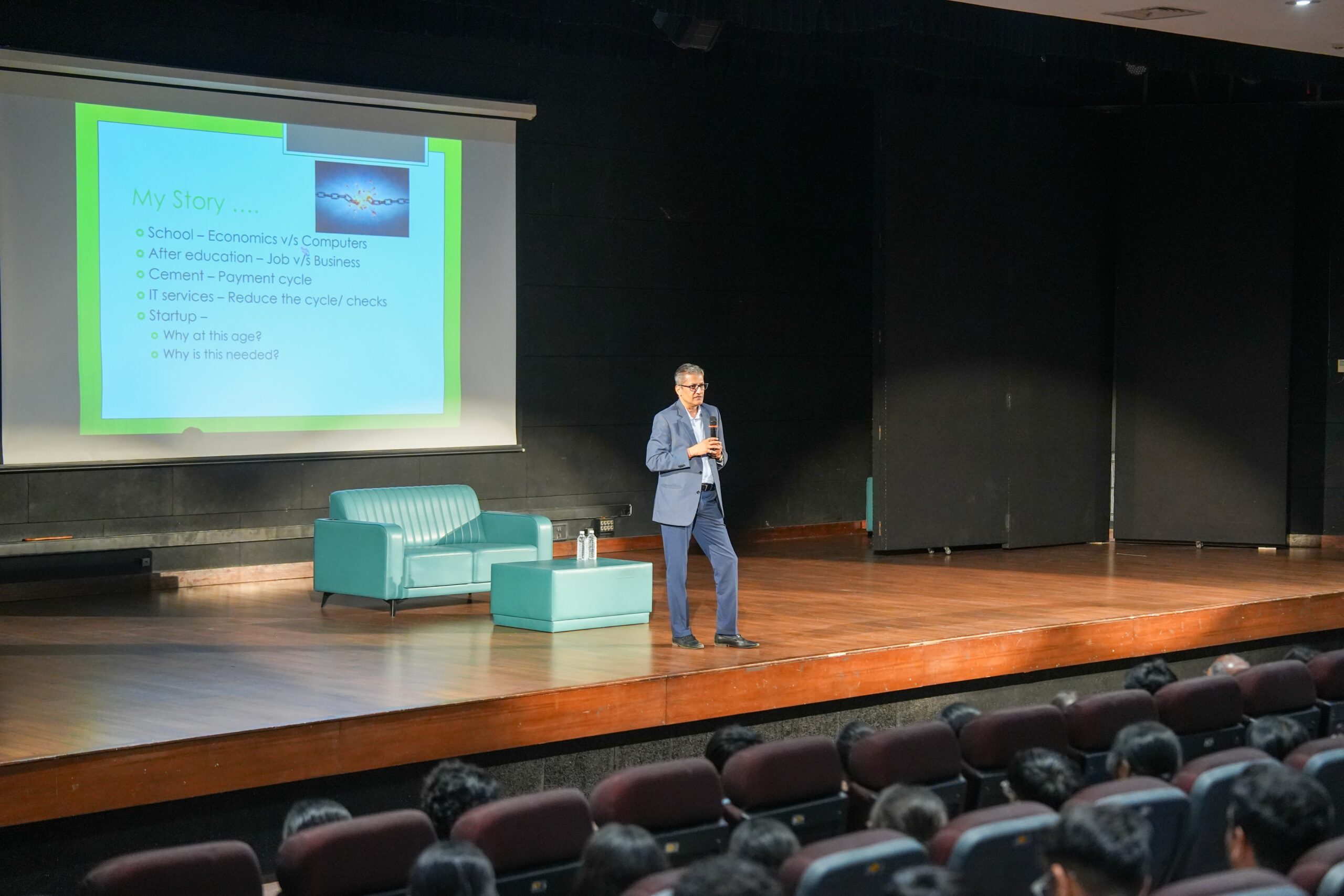
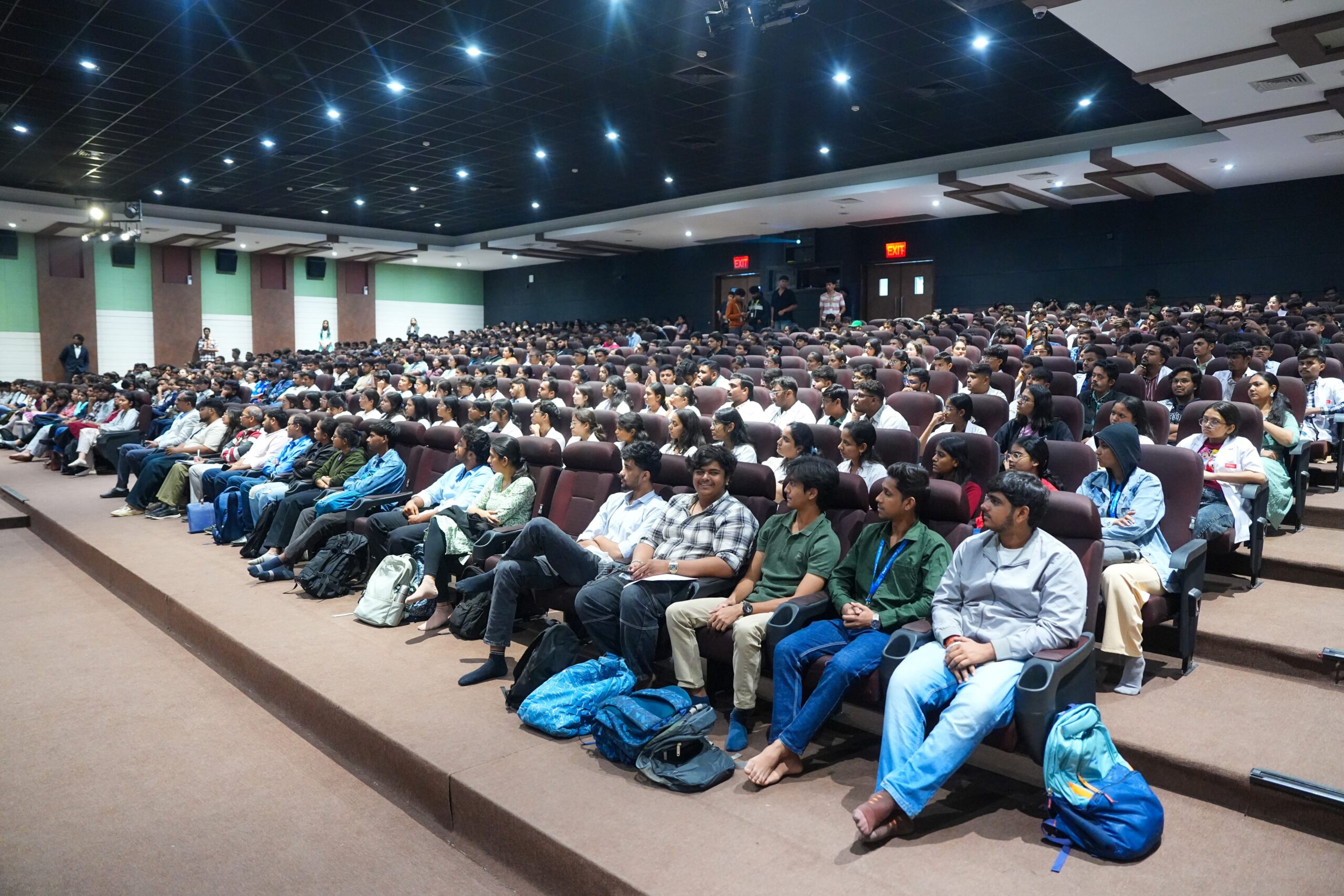
This is the part of student entrepreneurship nobody talks about at demo days. But at Vadodara Startup Festival 6.0, hosted by PIERC (Parul Innovation & Entrepreneurship Research Centre) at Parul University, the founders actually discussed it.
Not the Instagram version. The survival version.
Rejection Level 1: When You're Too Small to Notice
Rajat Singhania (founder of HyLyt and yuniTALK) described himself as “highly introverted” during his school days.
Think about what that means for an entrepreneur.
Your business model requires you to pitch, network, sell, convince and your natural inclination is to avoid all of that.
The rejection here isn’t even active. People don’t say no. They just don’t engage.
His solution: Systematic exposure to the thing that terrified him.
Not motivation. Methodology.
He outlined the reality: “Entrepreneurs must be shameless when it comes to selling. If you cannot sell, you cannot be an entrepreneur. Things must get done one way or another.”
That’s brutal honesty about handling rejection: You don’t overcome the fear. You do it afraid.
Every pitch that gets ignored teaches you what doesn’t work. Every silence sharpens your approach. Every ghost teaches you to follow up differently.
The student advantage here: You can be ignored 50 times with lower ego damage than being ignored 50 times as an established professional.
Your reputation isn’t on the line yet. Use that freedom.
Rejection Level 2: When People Actually Laugh
Yogesh Brahmankar (Innovation Director, AICTE) outlined four stages every entrepreneur faces:
Stage 1: People ignore you
Stage 2: They laugh at you and demotivate you
Stage 3: They resist you
Stage 4: They take credit for your success
Stage 2 is where most student entrepreneurs quit.
Not because the laughing hurts (though it does). But because it confirms the fear that maybe you’re wrong, maybe the idea is stupid, maybe you should just get a job like everyone else.
The founders who spoke at VSF – Vadodara Start-up Festival 6.0 had a different framework:
When people laugh, you’re in Stage 2. That means progress, not failure.
Anurag Sundarka (ZebraLearn co-founder) failed spectacularly with Saralife.com ₹20,000 in total sales before shutdown.
People definitely laughed.
His response: “As a startup, we failed multiple times and each time we got back stronger.”
That’s the handling mechanism: Expect laughter. Persist anyway. Use failure as calibration, not confirmation of incompetence.
ZebraLearn’s trajectory after the laughs:
- 2022: ₹10 lakh revenue
- 2023: ₹3.05 crore revenue
- 2024: ₹10.7 crore revenue
- Shark Tank Season 4: ₹1 crore deal with Ritesh Agarwal
The people who laughed at the vegetable business aren’t laughing at the ₹10 crore company.
Delayed Payment Reality: The Cash Flow Nightmare
Here’s what happens in real student startups that nobody admits upfront:
You deliver the work. The client says “invoice us.” You invoice. Then you wait.
And wait.
And wait.
Meanwhile, your costs don’t wait. Servers charge monthly. Team members need payment. Suppliers expect their money.
EasyRugs founders (Samrath Singh Nagpal and Harnaam Kaur) encountered this differently not as delayed payment from clients, but as delayed revenue from operational inefficiency.
They’d ship products on time. Last-mile delivery would take weeks longer than expected.
Customer perception: EasyRugs is slow.
Reality: Third-party logistics partners they couldn’t control.
They couldn’t pay their way out of it (student budget limitations). They had to solve it operationally.
Their handling mechanism:
- Brutal Honesty with Customers Set expectations based on reality, not optimism. Under-promise, over-deliver.
- Logistics as a Core Business Model Stop treating it as an afterthought. Plan for delays. Build buffers into timelines.
- Vendor Relationship Management can’t control third parties completely, but can improve communication and incentive alignment.
The lesson for handling delayed payments: You can’t eliminate them. You can only plan for them.
Practical tactics student founders at Parul University use:
- A) The 2X Cash Buffer Rule If you think you need 3 months runway, raise for 6. Delayed payments will eat the difference.
- B) The Milestone Payment Structure Don’t deliver everything then invoice. Break into milestones. Get paid incrementally.
- C) The Retainer Model When possible, shift to retainer or subscription rather than project-based payment.
- D) The PIERC Safety Net Ecosystems like PIERC provide funding support (₹14.53 crores+ deployed) specifically to bridge these gaps for student startups.
You can’t control client payment timelines. But you can control your runway planning.
Low Traction: When Nobody's Using Your Product
This is the rejection that hurts most.
Not “no” from a potential customer. Not delayed payment from a client. But silence from the market.
You built it. They didn’t come.
Kavish Gadia (CEO of ExcelOne, Founder of Stones2Milestones) shared something vulnerable at VSF – Vadodara Start-up Festival 6.0:
His first business attempts involved serious struggle. Not overnight success. Not hockey-stick growth. Long, hard years of persistence before breakthrough.
He outlined five aspects entrepreneurs must manage:
- Physical fitness
- Emotional well-being
- Mental well-being
- Material wealth
- Personal peace
When traction is low, all five suffer.
Physically: You’re grinding 80-hour weeks for zero results.
Emotionally: Every metric confirms you’re failing.
Mentally: Doubt compounds daily.
Materially: Bank account hemorrhaging, income nonexistent.
Peace: What’s that?
The handling mechanism he emphasized:
“One quality every entrepreneur must possess is the willingness to try ‘just one more time.'”
Not indefinitely. Not stupidly. But one more iteration. One more approach. One more test.
Because often, the difference between zero traction and product-market fit is proximity, not direction.
You’re close. You quit. Someone else makes the same product six months later with minor tweaks and crushes it.
The student founders handling low traction best use this framework:
- Define “Traction” Clearly Not just revenue. Could be user engagement, retention rate, feature usage, qualitative feedback.
- Measure the Right Metrics Early-stage traction looks different than growth-stage traction. Measure what matters for your stage.
- Set Micro-Milestones “10 paying customers by month 3” is better than “profitable by year 1.” Achievable targets provide momentum.
- Pivot Based on Data, Not Fear Low traction means test different approaches. Not abandon the mission.
- Use Campus as Laboratory Student entrepreneurs at Parul University have a built-in test market: thousands of students. Get feedback before wider launch.
The Co-Founder Conflict: When Your Partner Becomes the Problem
Poyni Bhatt (ex-CEO of SINE, IIT Bombay) ran a masterclass specifically addressing what breaks student startups:
Co-founder exits.
Here’s the scenario: You’re facing rejection from customers, delayed payments from clients, zero traction in the market.
And then your co-founder quits.
Take their skillset, knowledge, relationships, and equity drama with them.
This is the rejection that can kill startups.
Her framework for handling it:
Prevention > Cure
Test these four parameters before committing:
- Commitment: Do they show up when it’s hard, or only when it’s exciting?
- Compatibility Can you work together under stress? (Test this before incorporating, not after.)
- Chemistry Do your work styles complement or constantly clash?
- Common Vision Are you building toward the same destination, or just traveling together temporarily?
If co-founder exit happens anyway:
- A) Clarify equity and IP immediately Don’t let it drag. Clean exits better than messy divorces.
- B) Communicate honestly with stakeholders Investors, team, customers they’ll find out. Control the narrative.
- C) Identify the capability gap What did the existing co-founder handle? How will you fill it?
- D) Assess whether to continue Some startups survive co-founder exits. Some shouldn’t. Honest evaluation required.
The student advantage: Campus provides replacement co-founder possibilities that post-graduation environments don’t.
The Four-Stage Persistence Model
Yogesh Brahmankar’s four stages provide the roadmap for handling ongoing rejection:
Stage 1: Ignore → Your Response: Keep Building
Nobody cares about your startup yet. That’s fine. Build anyway. Use the invisibility to experiment without scrutiny.
Stage 2: Laugh → Your Response: Use It as Fuel
People mocking your idea means you’re visible enough to threaten their worldview. Good sign, actually.
Stage 3: Resist → Your Response: Document Everything
Active resistance means you’re threatening someone’s business model or belief system. Document wins. You’ll need proof later.
Stage 4: Credit Theft → Your Response.
The same people who resisted now claim they helped. Annoying but irrelevant. Success is the answer.
This framework reframes rejection from “something’s wrong with my startup” to “I’m at Stage X of the standard journey.”
The Shameless Selling Requirement
Multiple VSF – Vadodara Start-up Festival 6.0 speakers emphasized something uncomfortable:
You have to be shameless when it comes to selling.
What that actually means:
Not: Scammy manipulation or dishonest tactics.
But: Willing to pitch when it’s uncomfortable, follow up when it feels pushy, ask for the sale when rejection seems likely.
Yogesh Brahmankar’s version:
“Entrepreneurs should be shameless when it comes to selling. According to him, if you cannot sell, you cannot be an entrepreneur. Things must get done one way or another.”
Here’s the handling mechanism for sales rejection:
- Separate yourself from your pitch “They said no to my offer” ≠ “They said I’m worthless”
- Track rejection patterns If 90% say no for the same reason, that’s data, not coincidence. Adjust accordingly.
- Celebrate near-misses “Not right now” is different than “absolutely not.” Track the “warm metrics” separately.
- Build a rejection quota Need 100 rejections before 10 yeses. Every no brings you closer to yes.
- Role-play the shameless part Practice pitching until it feels less like exposure and more like routine.
Student founders at PIERC get practice in low-stakes environments:
- Demo days with investor feedback
- Pitch competitions with structured critique
- Peer presentations where failure has no consequence
Build shamelessness as skill, not personality trait.
The Initiative Principle: When Nobody Tells You What to Do
Anurag Sundarka defined initiative perfectly:
“Something that no one tells you to do or forces you to pick up.”
When you’re handling rejection, delayed payments, and low traction, initiative is the only thing keeping you moving forward.
Nobody will tell you to keep going. Market signals say stop. The bank account says pivot. Friends say get a job.
Initiative means doing it anyway.
His specific advice for students:
“College is the best place to take initiatives because students have the luxury to fail without catastrophic consequences.”
Translation: Use your student status as permission to handle rejection badly, recover, and try again.
You can afford multiple failures now. Later, each failure costs exponentially more.
The PIERC ecosystem supports this through:
- Startup Programs from idea stage to growth stage
- Mentorship from founders who’ve survived the same rejections
- Funding (₹14.53 crores+) reducing financial pressure
- Community of other founders experiencing simultaneous struggles
You’re not handling rejection alone. 250+ startups have gone through the same ecosystem facing the same challenges.
The "Just One More Time" Philosophy
Kavish Gadia’s parting message at VSF – Vadodara Start-up Festival 6.0:
“The one quality every entrepreneur must possess is the willingness to try ‘just one more time.'”
Here’s how that philosophy plays out practically:
Rejection Scenario: Client ghosted after promising deal. Just One More Time: Follow up once more with a different approach.
Delayed Payment Scenario: Invoice 60 days overdue, client not responding. Just One More Time: One more call, this time to accounting directly instead of point of contact.
Low Traction Scenario: Marketing campaign generated zero signups. Just One More Time: One more test with different messaging/channel/audience.
This isn’t about stupid persistence. It’s about distinguishing between “this approach failed” and “this mission is wrong.”
Approach failure: Try a different method.
Mission failure: Pivot or quit.
Most student founders quit after approach failure, thinking it’s mission failure.
“Just one more time” creates the distinction.
The Practical Survival Checklist
Based on VSF – Vadodara Start-up Festival 6.0 sessions and PIERC ecosystem experience, here’s the actual checklist for surviving rejection, delayed payments, and low traction:
Financial Survival:
- 6-month runway minimum (not 3)
- Multiple funding sources identified
- Milestone-based payment structures where possible
- Emergency fund separate from operating budget
Emotional Survival:
- Peer support group (other student founders)
- Mentor relationships for perspective
- Defined “quit conditions” (so daily struggles don’t trigger premature exits)
- Non-work identity preserved (you ≠ your startup)
Operational Survival:
- Clear metrics defining “traction” for your stage
- Feedback loops with actual users (not just analytics)
- Weekly retrospectives identifying what’s working
- Monthly reviews assessing if approach needs changing
Strategic Survival:
- Core problem-solution fit validated
- Market understanding beyond assumptions
- Competitive advantage clearly articulated
- Pivot triggers identified in advance
Why Student Entrepreneurship at Parul University is Different
The ecosystem matters when you’re handling rejection and struggle.
PIERC provides:
Institutional Buffer Your startup can fail without your education failing. Rare combination.
Resource Access ₹14.53 crores+ in funding, co-working spaces, prototyping facilities reduces economic pressure while you figure out product-market fit.
Community Density 250+ startups incubated means high density of people handling identical struggles simultaneously.
Structured Programs Incubation program, growthpad program, need-based support each designed for specific stages and challenges.
Mentor Network Access to founders who’ve survived rejection, delayed payments, and low traction and made it to the other side.
This infrastructure doesn’t eliminate struggle. It makes survival during struggle more probable.
The Final Framework
Rejection isn’t failure. It’s feedback.
Delayed payments aren’t personal. They’re systemic business reality requiring operational planning.
Low traction isn’t a verdict. It’s a signal that the current approach needs adjustment.
The handling mechanism is simpler than it feels:
- Expect all three (rejection, delays, low traction) as defaults, not exceptions.
- Plan operationally for the predictable parts (cash flow, runway, payment structures).
- Build emotionally for the unpredictable parts (peer support, mentorship, clear quit conditions).
- Persist strategically, not stupidly one more iteration when data supports it, pivot when data demands it.
- Use student status as permission to fail visibly, learn publicly, recover quickly.
Anurag Sundarka’s final directive at VSF – Vadodara Start-up Festival 6.0 captures it:
“Your job is to try, and you try it well.”
Not to succeed immediately.
Not to avoid rejection.
Not to find perfect timing.
Just to try well.
And when you’re a student entrepreneur at institutions like Parul University, supported by ecosystems like PIERC, you get something rare:
The infrastructure to try, fail, learn, and try again without the catastrophic consequences that make failure fatal.
That’s not a guarantee of success.
It’s just dramatically better odds of survival.
And survival through rejection, delayed payments, low traction, and everything else, is the prerequisite for success.
FAQs
1. Why do student entrepreneurs face rejection while building startups?
Rejection is common because early-stage startups often lack credibility, resources, or proven traction. It becomes part of the learning process for founders.
2. How can entrepreneurs handle delayed client payments?
Founders often use strategies like milestone-based payments, maintaining a cash runway, and building strong client communication to manage delayed payments.
3. What does low traction mean for a startup?
Low traction means a product or service is not gaining users, customers, or revenue at the expected pace, signaling the need to refine the product or market strategy.
4. Why is persistence important for entrepreneurs?
Persistence helps founders continue experimenting, improving their approach, and learning from failures until they discover what works in the market.
5. What role does PIERC play in supporting student startups?
PIERC at Parul University provides incubation, mentorship, funding opportunities, and startup programs that help students build and scale ventures.


