Just like everyone, they were looking to book their flights. The flight showed up in search results at ₹3,000. Click to book. Suddenly there’s a “convenience fee” of ₹200, “payment processing” adds ₹150, insurance is mysteriously pre-selected for ₹300, seat selection costs ₹400, meal ₹350, baggage ₹800.
Final checkout price: ₹5,200.
“We realized this wasn’t accidental,” Anshuman Singh explained during their January 2026 presentation at Vadodara Startup Festival 6.0 at Parul University. “The entire industry is designed around pricing opacity. Confusion maximizes revenue. Everyone does it.”
Most frustrated customers pay and complain to friends. These three decided transparency might actually sell.
Ten months after founding AnyTrip with the tagline “Pay What You See,” they’d generated ₹2.8 crore in revenue, grown to 30 team members, and earned recognition as one of Gujarat’s top 15 travel-tech startups.
The Industry Built on Deception
Travel booking platforms optimize for one metric: maximum revenue per transaction. The playbook is standardized across MakeMyTrip, Cleartrip, Goibibo, Yatra:
- Step 1: Show attractive base price in search results. Get users invested.
- Step 2: Add mandatory fees during checkout. “Convenience charges,” “processing fees,” “service charges” that don’t actually service anything.
- Step 3: Pre-select optional add-ons. Force users to actively uncheck rather than opt in.
- Step 4: Hide real price until final step. Sunk cost fallacy makes abandonment less likely.
- Step 5: Create urgency. “Only 2 seats left!” pressure immediate checkout.
The strategy works brilliantly for short-term revenue. It destroys trust completely.
The AnyTrip founders understood: trust destruction creates market opportunity. An entire industry running on intentional confusion leaves massive openings for someone willing to just… not do that.
Ten Months: March to January
Revenue began March 2025. By January 2026, AnyTrip had hit ₹2.8 crore.
- Months 1-2: Build minimum viable product. Core feature: show honest pricing. Launch to a small audience, iterate fast.
- Months 3-4: First customer traction through founders’ networks. Early users became advocates when promised transparency was actually delivered.
- Months 5-6: Systematic customer acquisition. Targeted campaigns emphasizing price transparency. Comparison content showing AnyTrip versus competitor checkout prices.
- Months 7-8: Team expansion. Grew to 20 full-time employees plus 10 interns. Each hire served a specific scaling need.
- Months 9-10: Recognition and validation. Gujarat ecosystem noticed. Top 15 travel-tech startup recognition. Media coverage. B2B inquiries arriving.
That timeline compresses massive effort into a clean narrative. Reality included failed experiments, technology problems, customer service disasters, cash flow stress, countless late nights debugging payment integrations.
But the core value proposition never wavered: show honest prices, deliver what you promise, build trust through consistency.
The B2B - Business to Business Problem
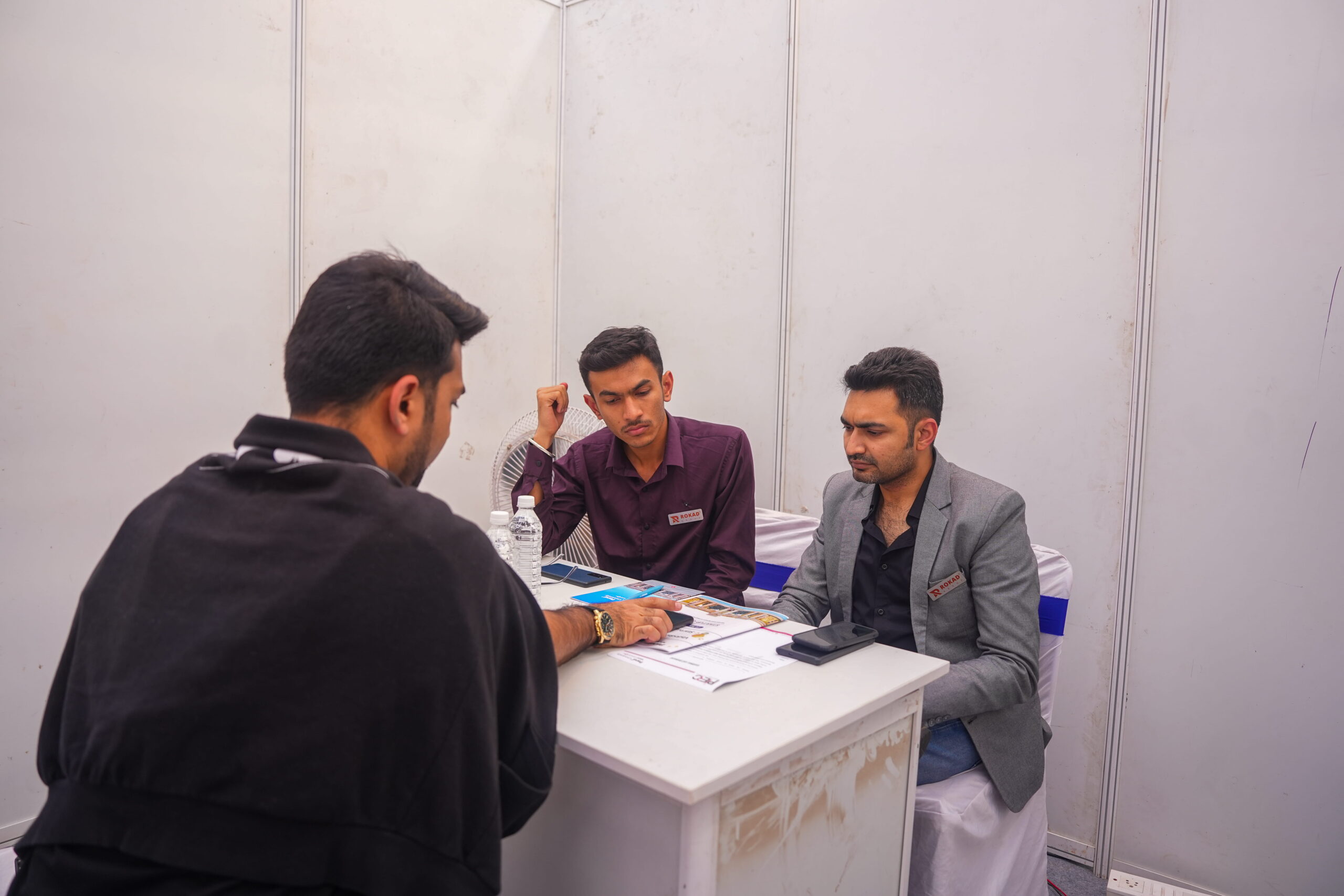
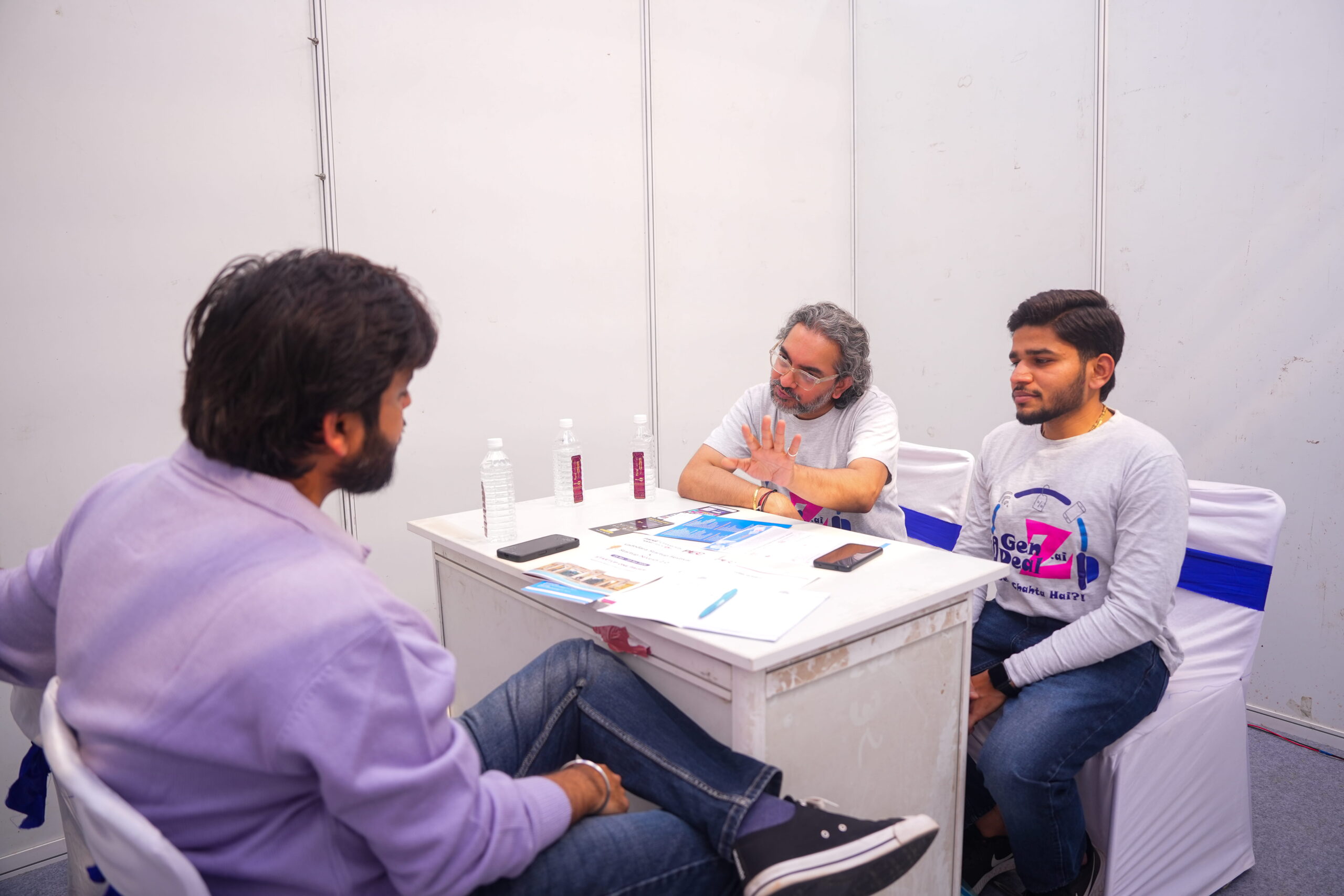
At VSF – Vadodara Start-up Festival 6.0, the AnyTrip team did something unusual: they talked openly about what wasn’t working.
“We’re facing serious challenges in the B2B segment,” they acknowledged. “Corporate travel operates completely differently than consumer booking. Partnerships are difficult, scalability issues exist.”
Here’s why B2B is hard for AnyTrip:
- Corporate decision-makers aren’t the travelers. Individual consumers directly benefit from transparent pricing they’re paying their own money. Corporate travel managers optimize for administrative simplicity, reporting ease, negotiated rates, relationship management. Transparent pricing matters less when someone else’s card pays.
- Procurement favors established vendors. Large companies have existing relationships with MakeMyTrip or corporate travel management companies. Multi-year contracts create switching costs.
- B2B requires different technical capabilities. Corporate travel needs expense integration, approval workflows, policy enforcement, centralized reporting, multi-user management. The consumer platform handles individual bookings simply.
- The trust deficit hits harder. Individual consumers risk one booking. Corporate travel managers risk company relationships, employee satisfaction, and operational disruption.
During masterclass sessions at VSF – Vadodara Start-up Festival 6.0, Poyni Bhatt offered clear advice when another founder asked about B2B trust deficit: “Continue focusing on B2C. Build it strongly and achieve a solid pedestal before entering B2B. The issue lies in branding, not capability.”
AnyTrip’s current strategy:
- Dominate B2C segment first
- Generate case studies from satisfied customers
- Build credibility metrics (transaction volume, satisfaction scores)
- Develop B2B features methodically
- Target soft B2B first (small companies without entrenched vendors)
The strategy requires patience. But AnyTrip isn’t VC-backed; they’re building sustainably from revenue, which means a different timeline.
The Campus Advantage
All three founders were Parul University students when they started. That wasn’t coincidental, it was essential.
Co-founder selection through extended observation. They’d worked together on multiple projects before formalizing AnyTrip. They already knew how each person handled stress, communicated during disagreements, and managed deadlines.
Campus provides years to assess compatibility. The professional world gives months at best.
PIERC infrastructure eliminated startup costs. Co-working space without rent. Mentorship without consulting fees. Networking events without ticket prices. Legal guidance without lawyer rates. Prototyping facilities without equipment investment.
The peer community reduced isolation. Other founders work on different problems but share similar struggles. Emotional support and practical advice.
Academic resources supported development. Faculty expertise, library access, computing resources, testing environments.
Flexible schedules enabled intense work. The student schedule allows focused startup sprints between academic commitments.
“The PIERC team provided immense support,” AnyTrip founders emphasized during VSF – Vadodara Start-up Festival, encouraging other students to approach PIERC with scalable ideas.
Path to ₹15-20 Crore
Current: ₹2.8 crore in ten months
Target: ₹15-20 crore in next phase
Getting there requires:
- Expanding beyond flights. Natural expansion includes hotels, holiday packages, experiences, car rentals. Same transparent pricing model.
- Geographic reach. Currently serving Gujarat and nearby regions. National expansion requires regional partnerships, local payments, state-specific marketing.
- Technology infrastructure upgrades. Better caching, faster search, improved mobile experience, enhanced security.
- Customer retention programs. Loyalty programs, personalized recommendations, travel credits.
- Strategic B2B entry. Once a consumer brand is unshakeable.
The team isn’t rushing. Multiple VSF – Vadodara Start-up Festival speakers emphasized patience as a crucial entrepreneurial skill.
The Competitive Reality
MakeMyTrip dominates with a market cap exceeding $8 billion. Cleartrip has 18 years of brand recognition. Goibibo serves millions monthly. Yatra has operated since 2006.
Why would customers choose a student-founded startup?
Because none of them solve the honesty problem.
MakeMyTrip shows one price, and adds fees at checkout. So does Cleartrip. So does Goibibo. Industry standard is deliberately misleading pricing.
AnyTrip realized they didn’t need to beat giants on every dimension: technology, marketing budget, brand recognition, airline partnerships. They needed to be genuinely better on the single dimension that matters most: honest pricing.
Giants can’t easily copy transparency without sacrificing a revenue model built on opacity. Switching to honest pricing means lower revenue per transaction. Public companies optimize for quarterly results.
AnyTrip has freedom to build around different principles because they’re not answering to investors demanding growth at any cost.
Lessons for Student Founders
Key lessons from the AnyTrip journey:
- Start with problems you’ve personally experienced. Best businesses solve problems founders deeply understand. Personal experience provides insights market research can’t.
- Validate through revenue, not awards. AnyTrip proved their model by generating ₹2.8 crore in ten months, not winning pitch events.
- Build a team that shares core values. Three co-founders aligned on transparency as non-negotiable. That alignment prevents strategic disagreements.
- Use campus resources strategically. PIERC infrastructure would cost lakhs externally. Not using it is leaving money on the table.
- Be honest about challenges. Acknowledging problems helps find solutions and attracts the right support.
- Focus obsessively on one thing. AnyTrip focused completely on transparent pricing and executed brilliantly.
- Scale thoughtfully, not recklessly. Growing from 3 to 30 in ten months is rapid but not reckless.
- Ignore conventional timeline pressure. Bootstrap companies scale slower but build sustainability.
The Broader Shift
AnyTrip represents something larger than individual success. They’re part of a movement reshaping how Indian universities approach entrepreneurship.
Traditional model: University prepares students for placement. Success equals securing a job.
PIERC model: Entrepreneurship is a legitimate, respectable, supported career path.
The infrastructure exists:
- 250+ startups incubated since 2015
- ₹100+ crore raised by PIERC-supported startups
- ₹40+ crore in startup-generated revenue
- 1,400+ jobs created
AnyTrip proves the model works.
The Student Startup Playbook
- Months 0-3: Validate the problem. Talk to potential customers. Understand if the problem is widespread and painful enough that people would pay.
- Months 3-6: Build minimum viable product. Core feature that solves the main problem. Launch to a small audience. Iterate based on feedback.
- Months 6-9: Acquire first customers. Revenue validates assumptions faster than anything else.
- Months 9-12: Refine and scale. Once product-market fit is proven, invest in growth systems.
- Beyond year 1: Strategic expansion from position of strength.
The entire journey is easier with institutional support. PIERC provides resources that would cost lakhs externally.
Multiple speakers at VSF – Vadodara Start-up Festival 6.0 emphasized: “College is the best time to take initiatives. Financial pressure is minimal, time is flexible.”
The Honest Business Model
Three students, one shared frustration, ten months of focused execution. Result: ₹2.8 crore revenue, top travel-tech recognition, foundation for scaling to ₹15-20 crore.
That’s not luck. That’s what happens when real problems meet genuine solutions, supported by an ecosystem believing campus entrepreneurship changes economic futures.
AnyTrip proves honesty isn’t just morally superior it’s commercially viable. Building business around transparency creates competitive advantage in industry running on opacity.
The travel industry will continue optimizing for maximum revenue per transaction. AnyTrip will continue optimizing for maximum customer trust per transaction.
Different strategies, different timelines, different definitions of success.
As the founders concluded: “We’re building credibility and brand strength. Entering B2B only after solid market positioning. The challenge is branding, not capability.”
That patient, principled approach might seem naive in the startup ecosystem celebrating growth hacking. But ₹2.8 crore in ten months suggests there’s nothing naive about building company customers actually trust.
The blueprint exists. Campus infrastructure supports it. Student founders are executing it.
Your move, AnyTrip.
Frequently Asked Questions
1. What is AnyTrip India Pvt. Ltd.?
AnyTrip India Pvt. Ltd. is a travel-tech startup founded by three Parul University students in 2024. Built on the principle of transparent pricing, the platform follows the tagline “Pay What You See,” eliminating hidden fees and surprise charges in flight bookings.
2. How did AnyTrip generate ₹2.8 crore in just 10 months?
AnyTrip focused on solving a real customer pain point—pricing opacity in travel bookings. By delivering honest, all-inclusive pricing upfront and building customer trust, they achieved strong word-of-mouth growth and scaled to ₹2.8 crore in revenue between March 2025 and January 2026.
3. What makes AnyTrip different from other travel booking platforms?
Unlike many traditional travel platforms that add hidden fees during checkout, AnyTrip displays complete pricing upfront. No pre-selected add-ons, no artificial urgency tactics, and no surprise charges, just transparent, real-time pricing.
4. How did Parul University and PIERC support AnyTrip’s growth?
Through PIERC (Parul Innovation & Entrepreneurship Research Centre), the founders received access to co-working space, mentorship, networking opportunities, legal guidance, and structured incubation programs. This campus ecosystem reduced startup costs and accelerated growth.
5. Can college students really build a successful travel-tech startup?
Yes. AnyTrip’s success proves that with the right ecosystem, mentorship, and execution strategy, students can build revenue-generating startups even before graduation. Campus incubation programs like PIERC provide infrastructure and support to make this possible.
AnyTrip India Pvt. Ltd. was founded in 2024 by three Parul University students. Recognized as one of Gujarat’s top 15 travel-tech startups. Featured at VSF – Vadodara Start-up Festival 6.0 in January 2026. PIERC accepts applications year-round: pierc@paruluniversity.ac.in | www.pierc.org


