The Question That Changed Everything
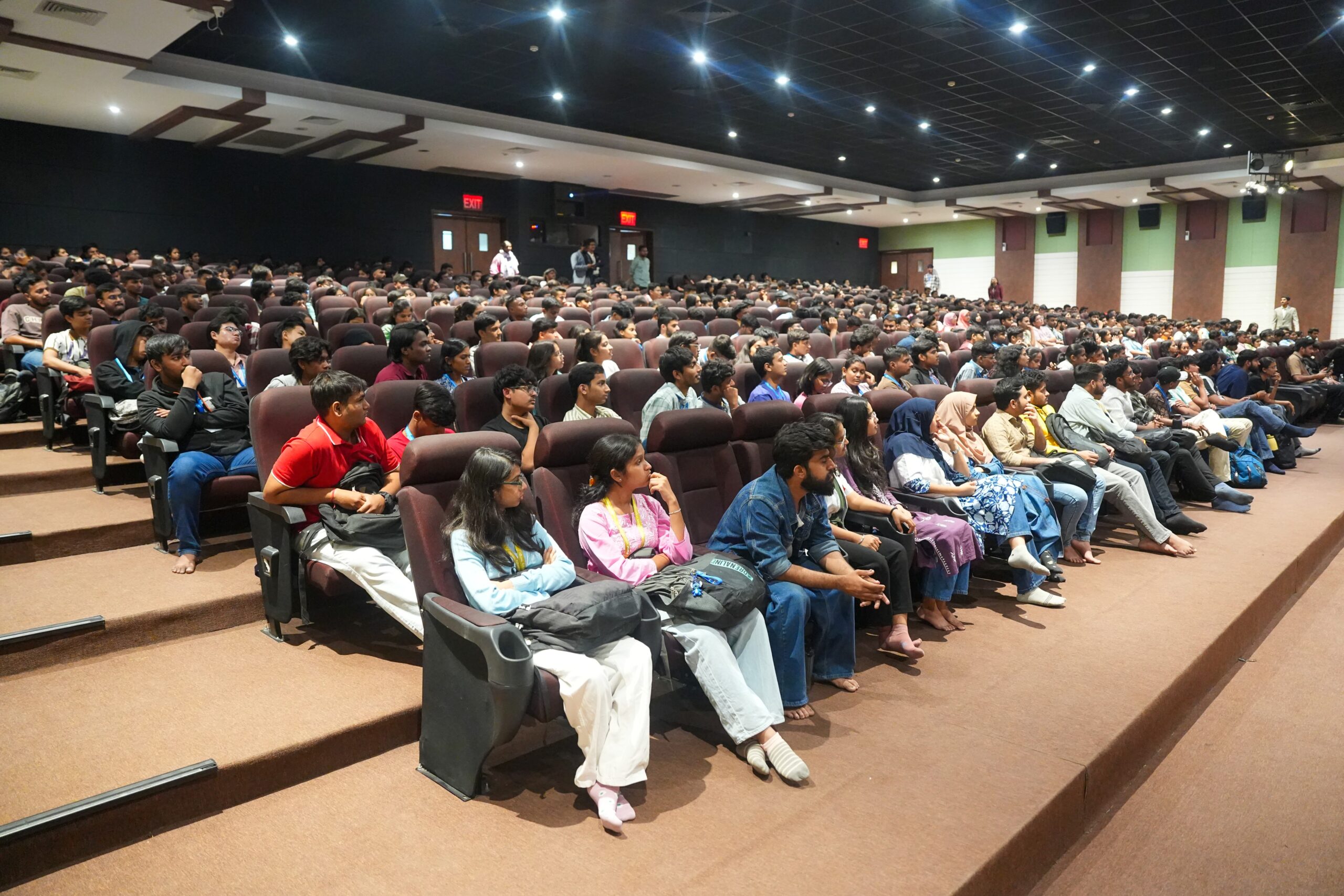
Picture this: A packed auditorium at Parul University. Hundreds of students are expecting another corporate success story. Instead, a speaker throws out a challenge: “When was the last time you did or learned something for the first time?”
One hand goes up.
A student mentions learning ukulele for a month. The speaker hands him a book The Breakthrough by Megha Bajaj. Then comes the punch: “The world is waiting for you, only if you take a single step. And here, that step was raising your hand.”
This wasn’t some motivational gimmick. This was Kavish Gadia, CEO of Stones2Milestones (S2M) and ExcelOne, speaking from a place where most successful entrepreneurs won’t touch brutal honesty about failure, accent discrimination, and the messy middle of building something real.
When Your Sisters Mock Your English
Gadia’s origin story isn’t Silicon Valley glamorous. It’s Jhunjhunu, real home to BITS Pilani, middle-class aspirations, and the kind of academic pressure that produces either excellence or breakdown.
He was always the topper. School gold medalist. The kid who made other parents jealous. But here’s what the report cards didn’t show: his English was, in his own words, “miserable.”
His three sisters went to boarding school. Every summer vacation became a linguistic nightmare. They’d come home and laugh at his mispronunciations even simple words tripped him up. For a kid who aced every exam, this cut deep.
Then came the wake-up call that launched a thousand stories: A rival parent approached him. The father of the perpetual second-ranker said something devastatingly simple: “Anyone can come first at school level. If you really have it, clear CAT.”
Plot twist? Gadia thought CAT meant an actual cat. Like, a house pet.
When he realized it was an entrance exam, he didn’t hide his ignorance. He prepared. He cracked it. IIM Lucknow, 2005 batch.
Breakthrough No. 1: Complete.
The IIM Reality Check Nobody Talks About
Here’s where most success stories get sanitized. Not this one.
First trimester at IIM Lucknow = complete meltdown. The English that got mocked at home? Now it’s actively holding him back in presentations, group discussions, case studies. He’s surrounded by people who speak the language like it’s breathing.
End of first trimester: A presentation is scheduled.
Decision point: Quit or commit.
He chose the harder path. Told himself he’d learn English perfectly and nail that presentation. The Rajasthani accent that made others snicker? He owned it, worked through it, practiced until his jaw hurt.
Breakthrough No. 2: He delivered. Not just passed, excelled.
Result? Fourteen job offers. KPMG Corporate Finance. Top consulting firms. The works. This is the part where most graduates take the safe path, the six-figure salary, the LinkedIn humble-brag.
Gadia saw something else.
The Train Station Epiphany That Births Real Startups
With 14 job offers in hand, returning home should have been pure triumph. Instead, standing at a central railway station, he noticed something that would define the next two decades of his life.
Two or three children. Poorly dressed. Covered in dust and coal. Street kids with the kind of life lottery that never pays out.
He started crying. Right there. In public.
The realization hit him like physics: “The only difference between me and those children is that I was fortunate enough to be born into a family that could provide for me.”
This is where real entrepreneurship starts. Not from market gaps identified in Excel sheets. Not from Y Combinator application forms. From something deeply rooted within. From emotional debt you can’t shake.
He made a promise to himself: One day, he’d do something for children like them.
That promise became Stones2Milestones in 2008.
Building an EdTech Empire While Everyone Chased Coding Bootcamps
While Byju’s was raising billions and Unacademy was going viral, Gadia was solving a problem most edtech startups ignored: Early childhood English literacy.
S2M focuses on ages 3-10. The window where language acquisition is hardwired, not memorized. Their flagship app, Freadom, doesn’t just teach English it builds readers, speakers, and thinkers using AI-driven personalization.
But here’s the genius nobody talks about: S2M isn’t just an app company.
It’s three things:
- An investment bank (because sustainable businesses need capital intelligence)
- A school called Amrit Vidyalaya (established 2015, goal: 50 schools by 2035)
- A Stanford University cell (because global partnerships matter)
Six hundred people work there now. Not in Bangalore. Not in Gurgaon. Building quietly, scaling thoughtfully.
Meanwhile, Gadia also runs ExcelOne (PISA for Schools – India) a PISA-based assessment for 15-year-olds measuring proficiency in reading, mathematics, and science against international standards. Because he understands something critical: You can’t improve what you don’t measure.
The Five Pillars Philosophy (That Actually Makes Sense)
At VSF – Vadodara Start-up Festival 6.0, Gadia didn’t sell dreams. He shared a framework he wishes someone had given him at 22:
1. Physical Fitness
“The biggest gift in life is the body we are given. If we take care of it, it will take care of us.”
Translation: You can’t build a ₹50 crore company if you’re running on coffee, burnout, and denial. Daily runs aren’t optional. They’re strategic.
2. Emotional Wellbeing
“Being there for your concentric circle and prioritizing relationships.”
Translation: Your family doesn’t stop mattering because you founded a startup. If you skip this, you’ll “succeed” into loneliness.
3. Mental Wellbeing
“The only way to stay mentally fit is to remain curious, read books, find answers, and when you feel you know enough, start writing and solving unanswered questions.”
Translation: Read. Write. Build. In that order. Mental fitness isn’t meditation apps. It’s intellectual honesty.
4. Material Wealth
“Important for a comfortable lifestyle and supporting all the other aspects.”
Translation: Money matters. Anyone who says otherwise is lying or already rich. But it’s a tool, not a destination.
5. Peace and Satisfaction
“It is better to lose the first four than to lose peace.”
Translation: If you sacrifice your peace for growth, you’ll achieve hollow victories. This is the pillar that makes everything else worth it.
The Jar Concept (Best Work-Life Balance Advice You'll Hear)
Student question: “How do you maintain work-life balance?”
Most speakers dodge this. Gadia didn’t.
The Jar Concept:
- Rocks = Non-negotiable priorities (daily run, speaking to children every day virtually or in person)
- Pebbles = Commitments like meetings, responsibilities
- Sand = Personal growth, hobbies
- Water = Distractions, minor tasks
The Rule: Rocks go in first. Always. Otherwise, there’s no space for them.
Why this works: It acknowledges that jars are finite. You can’t fit everything. The question isn’t “Can I do it all?” It’s “What goes in first?”
The Brutal Truth About Entrepreneurship Nobody Wants to Say
Gadia said something at VSF – Vadodara Start-up Festival 6.0 that should be required reading for every startup founder:
“There are no stories of failed entrepreneurs.”
Wait, what?
Here’s what he means: When an entrepreneur decides to start something, they stand at the edge of either being remembered in business history or not being remembered at all, not even as a failed entrepreneur.
The math is simple: If you fail, you’re forgotten. If you succeed, you’re celebrated. There’s no middle ground, no participation trophy, no “well, at least you tried” in the history books.
But here’s the twist: If you’re brave enough to choose entrepreneurship when everyone else picks jobs and placements, you’ve already succeeded in taking the biggest risk. Even if you fail at the business, you succeed in not being a coward.
Translation: Entrepreneurship makes the biggest sacrifices. You don’t get credit for trying. You only get remembered if you make it. And that’s precisely why it’s worth doing.
What "Just One More Time" Actually Means
As he wrapped up, Gadia shared the one quality every entrepreneur must have: The ability to say “just one more time.”
Not blind persistence. Not delusional optimism. Just the capacity to stand up after the 47th rejection, the failed product launch, the investor who ghosted you, the team member who quit and said, “Okay. One more time.”
This isn’t motivational fluff. It’s operational reality. Building S2M to 600 employees took saying “just one more time” when:
- His English was mocked
- The first trimester at IIM felt impossible
- The easy path was a cushy corporate job
- Early funding rounds failed
- Competitors raised 10x more money
- Every reasonable person would’ve quit
He didn’t. That’s the difference.
The Andrew Carnegie Quote That Explains Everything
Gadia quoted Carnegie: “I don’t know why I was so successful, but one thing I know is that I never missed an opportunity.”
This isn’t about luck. It’s about recognition. Most people see opportunities and think about them. Analyze them. Plan for them. Wait for the perfect moment.
Gadia’s approach: When the CAT challenge came, he didn’t wait. When the presentation loomed, he committed. When street kids at the station triggered something, he didn’t file it away; he built a company.
The opportunity was always there. The difference was the raised hand. The first step. The “yes, let’s do this now.”
Why This Matters Beyond One Person's Success
Stones2Milestones isn’t a unicorn. It’s not on TechCrunch every week. It didn’t raise $100 million Series C.
And that’s precisely why it matters.
Because the story of Indian entrepreneurship can’t just be about Bangalore startups that exit to US acquirers. It has to include:
- The Jhunjhunu boys with accents
- The problems that don’t trend on Twitter
- The businesses built over 15+ years, not 15-month sprints
- The founders who prioritize peace over unicorn status
- The companies solving literacy, not building another food delivery app
Gadia built an empire. ₹50+ crore. 600 employees. Two major education platforms. 50 schools planned by 2035. All while maintaining daily runs and daily calls with his kids.
That’s not just success. That’s craftsmanship.
What You Can Actually Do With This
If you’re a student:
- Stop waiting for perfect English, perfect skills, perfect timing
- Take the first step even when you barely understand what you’re stepping into
- Your background is an asset, not a limitation
If you’re building something:
- Revenue matters more than resumes
- Solve problems you’ve personally experienced
- Build the five pillars before you scale to Series A
If you’re stuck:
- Ask yourself: When was the last time you did something for the first time?
- Find your rocks. Put them in the jar first.
- Say “just one more time” and mean it
The world is waiting. But only if you raise your hand.
FAQs
Q1: Who is Kavish Gadia and why is his journey inspiring?
Kavish Gadia is the founder and CEO of Stones2Milestones (S2M) and ExcelOne. From struggling with English in his early years to graduating from IIM Lucknow and building a ₹50+ crore EdTech company, his journey highlights resilience, self-belief, and long-term vision.
Q2: What are Stones2Milestones (S2M)?
Stones2Milestones is an EdTech company focused on early childhood English literacy for children aged 3–10. Through its AI-powered platform Freedom and school partnerships, S2M aims to build confident readers, speakers, and thinkers across India.
Q3: What key lessons did Kavish Gadia share at VSF – Vadodara Start-up Festival 6.0?
He emphasized five pillars of life: physical fitness, emotional wellbeing, mental wellbeing, material wealth, and peace. He also highlighted the importance of taking the first step, embracing failure, and saying “just one more time” during setbacks.
Q4: What makes Kavish Gadia’s entrepreneurial journey different from typical startup stories?
Unlike many high-burn, heavily funded startups, S2M scaled steadily over 15+ years with sustainable growth, strong values, and a focus on literacy rather than trends. His approach prioritizes craftsmanship, impact, and long-term peace over hype.
Q5: What is PIERC and why is it important for student entrepreneurs?
PIERC (Parul Innovation and Entrepreneurship Research Centre) at Parul University supports aspiring founders through mentorship, incubation, networking, and startup guidance. Events like VSF – Vadodara Start-up Festival 6.0 provide students direct exposure to real entrepreneurial journeys, bridging the gap between ideas and execution.


