How Student Startups at Parul University Are Shaping India’s Entrepreneurial Future
The next wave of Indian innovation isn’t coming from Silicon Valley returnees or IIT elites. It’s emerging from universities like Parul, where students solve local problems with global potential.
India’s startup ecosystem is at an inflection point. The question isn’t whether we can produce unicorns; we’ve proven that. The question is whether we can democratize entrepreneurship beyond tier-1 cities and elite institutions.
Parul University’s 250+ incubated startups offer a preview of what’s coming. And it looks nothing like the startup narrative we’re used to.
The Geographic Shift: Beyond Bangalore and Bombay
For decades, Indian startups followed a predictable pattern: found a company in Bangalore, raised from Mumbai investors, hired from IITs, exited to Silicon Valley acquirers.
That model worked. It created tremendous wealth and put India on the global startup map.
But it also created massive inequality of opportunity.
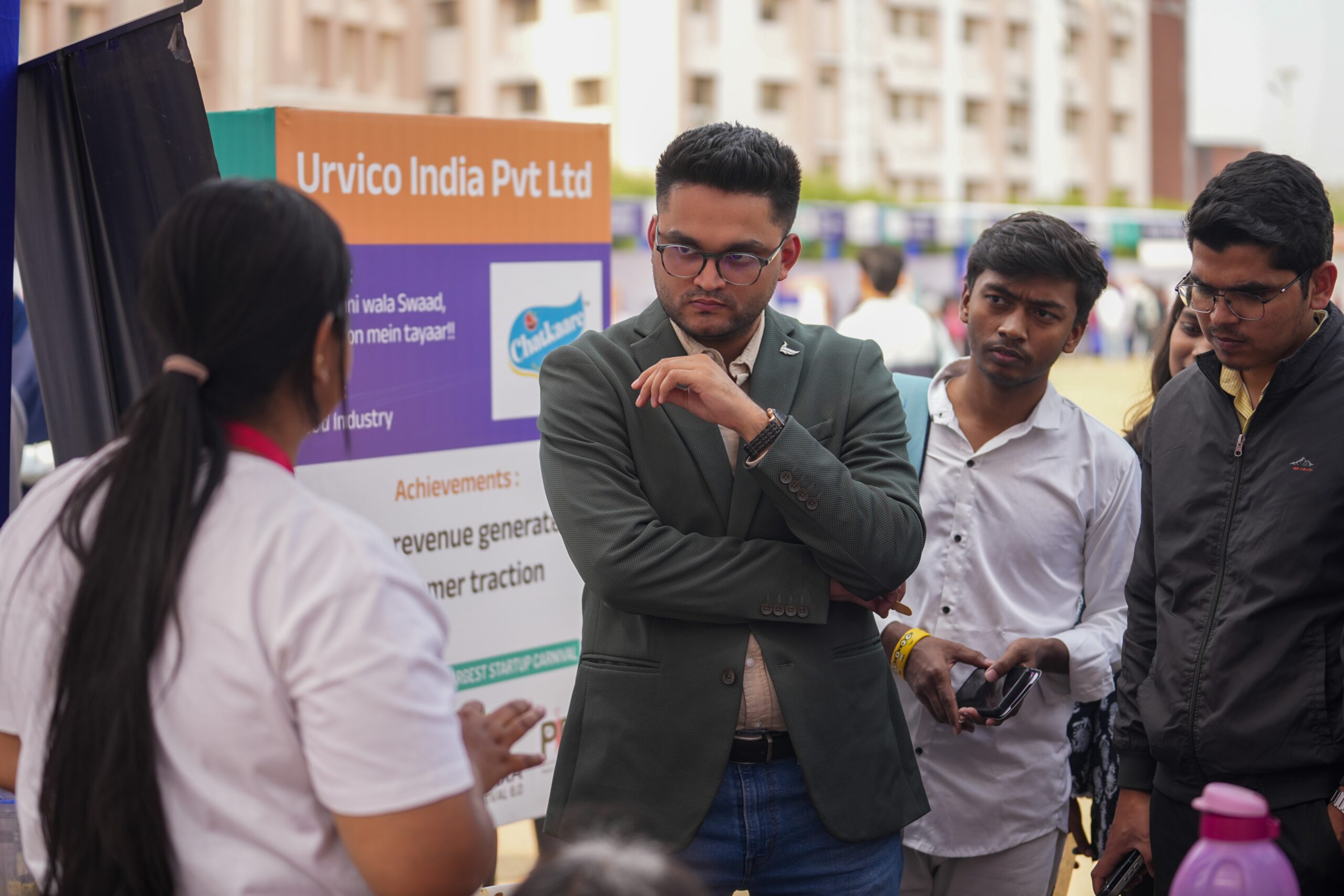
Vadodara isn’t Bangalore. It’s a tier-2 city with tier-1 ambitions. The Vadodara Startup Festival, India’s largest startup carnival, hosts over 10,000 participants annually not to observe entrepreneurship, but to practice it.
The startups emerging from PIERC solve problems that resonate in Vadodara, Surat, Rajkot cities where millions of Indians actually live. Not theoretical problems crafted for Western markets.
Rideaway’s affordable two-wheeler rentals? That’s relevant in every Indian college town where public transport is unreliable and car ownership is prohibitive.
Destinofy’s AI-powered construction measurement? That scales across India’s booming real estate market in cities that Silicon Valley has never heard of.
This geographic democratization matters. When entrepreneurship spreads beyond metro hubs, it transforms regional economies instead of concentrating wealth in a few cities.
The Language of Innovation: Beyond English
Kavish Gadia‘s story reveals a truth most startup discourse ignores: English fluency shouldn’t be a prerequisite for entrepreneurship.
He grew up in Jhunjhunu, Rajasthan, scoring well in academics but struggling with English. His sisters mocked his pronunciation when they returned from boarding school.
Today, he’s the CEO of ExcelOne and founder of Stones2Milestones, which has helped 3.1 million children develop reading habits. His organization employs 600 people and partners with Stanford University.
What changed? He refused to let language barriers define his potential.
This matters for India’s future. We have 22 official languages and hundreds of dialects. If entrepreneurship requires perfect English, we’re excluding most of the country’s problem-solvers.
The startups at Parul operate in multiple languages. They serve customers who prefer Hindi, Gujarati, or regional languages. They hire teams that reflect India’s linguistic diversity.
This isn’t a limitation. It’s an advantage. It means these startups understand markets that English-only ventures miss entirely.
Problem-First, Not Prestige-First
The traditional Indian startup path prioritizes prestige: IIT degree, prestigious employer, raise big round, make headlines.
Parul’s student founders follow a different sequence: identify problems, build solutions, find customers, validate model, scale if it works.
Priyanshi Rathore didn’t build Eternia because mental health was a trendy market. She built it because students around her were suffering and existing solutions violated privacy.
That’s not prestige-driven. That’s problem-driven.
This distinction matters because prestige-driven entrepreneurship chases what investors fund. Problem-driven entrepreneurship solves what customers need.
India needs both.
But historically, we’ve overindexed on the former. Parul’s ecosystem demonstrates the power of the latter
The Diversity of Problems Being Solved
Look at the range of startups incubated at PIERC:
- Mastiskya Yantra: Early dementia detection through practice tests analyzing brain activity.
- Ayurveda: Natural products addressing stress and insomnia.
- Good Amrit Beverages: Reviving traditional Indian drinks with modern appeal.
- Smarthomie: Voice-command switches that don’t compromise privacy.
This diversity reveals something critical: India’s problems are complex and varied. One-size-fits-all solutions don’t work.
Healthcare needs are different in rural Gujarat versus urban Mumbai. Privacy concerns vary by generation and digital literacy. Mobility challenges depend on infrastructure quality.
Student founders at Parul understand this intuitively because they’re embedded in these communities. They’re not parachuting in with imported solutions. They’re building from within.
The Capital Efficiency Story
Not every startup needs $10 million in funding. Some need smart execution and patient capital.
PIERC has deployed ₹14.53 crores across 250+ startups. That’s an average of roughly ₹5.8 lakh per startup.
Compare this to typical seed rounds in metro cities: ₹2-5 crores for similar-stage startups.
Yet these capital-efficient startups collectively generate ₹40+ crores in revenue and created 1400+ jobs.
This capital efficiency matters for India’s future because venture capital is concentrated. Most tier-2 and tier-3 cities don’t have robust funding ecosystems.
If entrepreneurship requires massive upfront capital, it remains inaccessible to most Indians. If it can start to learn and grow organically, it democratizes.
Parul’s ecosystem proves the latter is possible. Not every time. Not for every business model.
The Failure Literacy Gap
Silicon Valley celebrates failure. “Fail fast, fail often” is a cliché precisely because it’s so deeply embedded in the culture.
India doesn’t have that luxury. Failure here carries social stigma. Family pressure. Financial consequences that ripple through extended networks.
This is changing slowly and places like PIERC are accelerating the shift.
When Anurag Sundarka openly calls his first venture a “miserable failure” at Vadodara Startup Festival, he normalizes the experience. When Yogesh Brahmankar explains that rejection cycles are natural, he removes shame from setbacks.
This failure of literacy is essential for entrepreneurship to scale in India. Because most startups don’t succeed. Most ideas don’t work. Most pivots still fail.
If we can’t talk about failure honestly, we can’t learn from it. And if we can’t learn from it, we’re destined to repeat expensive mistakes.
The Education System Reckoning
Traditional Indian education optimizes for one outcome: placement in a prestigious company.
PIERC’s vision challenges this: enable 5% of students to pursue entrepreneurial careers as job creators.
Five percent sounds modest. But consider the math:
Parul University graduates thousands of students annually. If 5% become founders, that’s hundreds of new startups every year.
If this model spreads to even 100 universities across India, that’s tens of thousands of new startups annually each creating jobs, solving problems, and potentially scaling.
That’s not an incremental change. That’s ecosystem transformation.
The bottleneck isn’t student capability. It’s institutional support.
Most universities discourage entrepreneurship. The messaging is subtle but clear: get placed, get promoted, get secure.
PIERC flips this: get started, get feedback, get better. Security comes from skill, not from employers.
The Policy Implications
Government initiatives like SSIP (Student Startup and Innovation Policy) recognize this shift. The grants distributed at VSF – Vadodara Start-up Festival 6.0 signal institutional support for student entrepreneurship.
But policy follows culture. The reason SSIP exists is because universities like Parul demonstrate demand.
The startups didn’t wait for perfect policy. They built despite policy gaps. Then policy evolved to support what was already working.
This is how sustainable change happens. Not top-down mandates that nobody follows. Bottom-up innovation that policy eventually recognizes and amplifies.
The Technology Adoption Pattern
Notice what technologies student founders at Parul are using:
- AI for floor scanning (Destinofy.ai)
- Voice commands without privacy violations (Smarthomie)
- Anonymous mental health platforms (Eternia)
- Data-driven brain analysis (Mastiskya Yantra)
These aren’t theoretical applications of emerging tech. These are practical solutions deploying cutting-edge tools to solve immediate problems.
This pattern suggests India’s future advantage won’t come from inventing new technologies. It will come from applying existing technologies to contexts Silicon Valley hasn’t considered.
AI for construction measurement isn’t sexy to Western VCs. But it solves a real problem for millions of Indian construction workers and property developers.
That’s where value gets created not in the innovation itself, but in the application.
The Gender Dynamics Shift
Priyanshi Rathore (Eternia) isn’t an exception. She’s part of a growing pattern.
Indian entrepreneurship has historically skewed male. PIERC’s ecosystem shows more balance, not perfect equity, but visible progress.
This matters because diverse teams build better products. Mental health platforms designed by women consider privacy differently. Mobility solutions designed with female safety in mind serve broader markets.
As more women succeed publicly as founders, it normalizes the path for others. Representation isn’t just symbolic. It’s practical because it expands the pool of people who believe entrepreneurship is possible.
The Ecosystem Maturity Indicator
Mature startup ecosystems have specific characteristics:
- Experienced founders mentor new founders. Check ZebraLearn’s Anurag shares lessons publicly.
- Investors understand local markets. Check ₹100+ crores invested locally.
- Infrastructure exists beyond capital. Check prototyping labs, coworking spaces, legal support.
- Failure is normalized, not stigmatized. Getting their public discussions at VSF – Vadodara Start-up Festival help.
- Success stories reinvest locally. Emerging early-stage mentorship is happening.
PIERC isn’t perfect. No ecosystem is. But it demonstrates maturity markers that most tier-2 cities lack entirely.
The Collaboration Over Competition Model
Bangalore’s startup scene can be cutthroat. Stealth mode. NDAs. Competitive paranoia.
Parul’s ecosystem feels different. Founders share learnings openly. VSF – Vadodara Start-up Festival brings together 50+ startups to pitch and exhibit not in isolation, but collectively.
This collaborative approach makes sense for emerging ecosystems. When you’re building from scratch, cooperation accelerates everyone’s progress.
Rideaway’s founders explicitly told the audience: “If you have a scalable startup idea, approach PIERC.” That’s not competitive positioning. That’s ecosystem building.
The Job Creation Multiplier
Here’s the math that matters for India’s future:
1400+ jobs created by 250 startups = approximately 5.6 jobs per startup.
That’s not Google-scale employment. But it’s sustainable growth distributed across multiple companies.
If this pattern holds, every 100 student-founded startups create 500+ jobs. Every 1000 startups create 5000+ jobs.
India needs to create millions of jobs annually. Traditional employment growth can’t keep pace. Entrepreneurship-driven job creation is essential.
But it only works if we enable thousands of small and medium startups, not just chase unicorns.
The Social Mobility Dimension
Mr. Pareek from Scholify represents a critical demographic: students from financially constrained backgrounds.
He struggled to find scholarships, internships, and direction. So he built Scholify, which has since disbursed ₹7-8 crores in scholarships to deserving students.
His message to students from similar backgrounds: “Financial limitations should not limit ambition. Background does not define potential. Struggles can become strength.”
This is social mobility through entrepreneurship. Not waiting for opportunities to trickle down. Creating them from scratch.
If entrepreneurship remains accessible only to privileged students with family safety nets, it reinforces inequality. If it’s accessible to those solving problems from lived experience, it disrupts existing hierarchies.
What This Means for India's Next Decade
The startups emerging from Parul aren’t just businesses. They’re signals of systemic change:
- Geographic decentralization: Entrepreneurship spreading beyond metro hubs.
- Capital efficiency: Building valuable companies without massive funding.
- Problem diversity: Solutions addressing uniquely Indian contexts.
- Failure normalization: Removing stigma from setbacks.
- Collaborative ecosystems: Cooperation accelerating collective growth.
- Social mobility: Entrepreneurship accessible beyond elite circles.
If these patterns hold and there’s evidence they’re already spreading, India’s startup ecosystem in 2035 will look radically different from today.
Not just bigger. Different. More distributed. More diverse. More resilient.
The Bottom Line
Student-founded startups at Parul University aren’t just building companies. They’re building the future of Indian entrepreneurship.
A future where geography doesn’t dictate opportunity. Where language diversity is an asset, not a barrier. Where failure is learning, not shame. Where capital efficiency matters more than headline funding rounds.
A future where 5% of every university’s graduates become job creators instead of job seekers. Where tier-2 cities produce globally competitive startups. Where problems get solved by people who actually experience them.
This isn’t guaranteed. Ecosystems can stall. Support can evaporate. Cultural shifts can reverse.
But the proof of concept exists. 250+ startups. ₹40+ crores in revenue. 1400+ jobs created. Real companies solving real problems.
The question isn’t whether this model can work. It’s already working.
The question is whether it can scale and whether other universities, cities, and states will replicate what Parul has pioneered.
India’s startup future isn’t being written in Bangalore boardrooms or Mumbai pitch decks. It’s being written in university labs and student dorm rooms across tier-2 cities.
And if you’re paying attention, you can see it taking shape right now.
FAQs
1. What is the startup ecosystem at Parul University?
Parul University supports entrepreneurship through incubation, mentorship, funding opportunities, and startup events via its innovation ecosystem, including PIERC.
2. How many startups has Parul University incubated?
The university has incubated 250+ startups, collectively generating over ₹40+ crore in revenue and creating 1400+ jobs.
3. What is PIERC at Parul University?
PIERC (Parul Innovation and Entrepreneurship Research Centre) is the university’s startup incubation center that helps students develop ideas into scalable businesses through mentorship, resources, and funding.
4. What is the Vadodara Startup Festival?
The Vadodara Startup Festival is one of India’s largest startup events, hosted annually by Parul University, attracting thousands of entrepreneurs, students, investors, and industry leaders.
5. Can students start a business while studying at Parul University?
Yes. The university actively encourages student entrepreneurship and provides incubation, grants, mentorship, and infrastructure to support student-led startups.
6. How does Parul University support early-stage startups?
Support includes funding assistance, mentorship from experienced entrepreneurs, startup infrastructure, investor networking, and exposure through events like the Vadodara Startup Festival.


