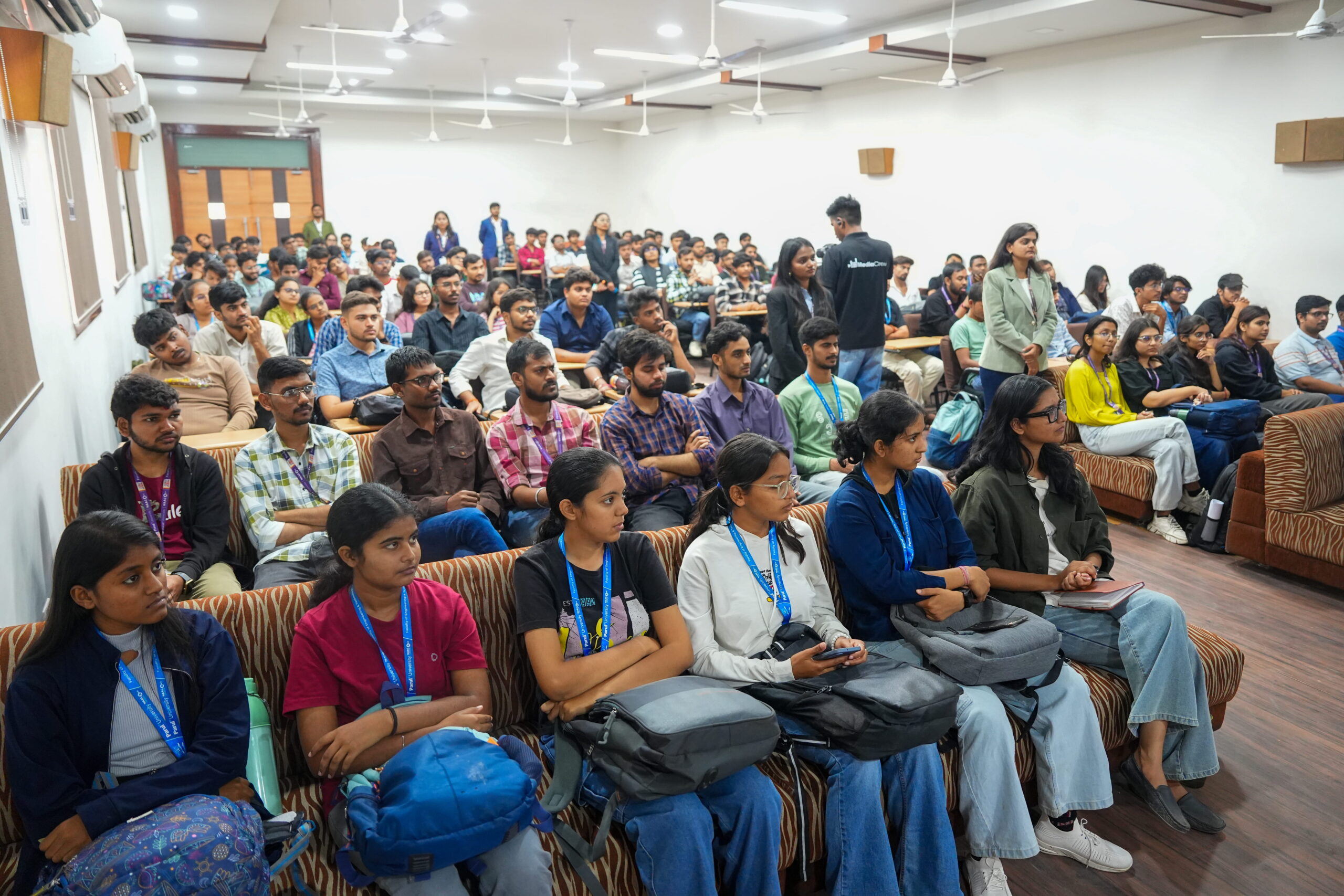
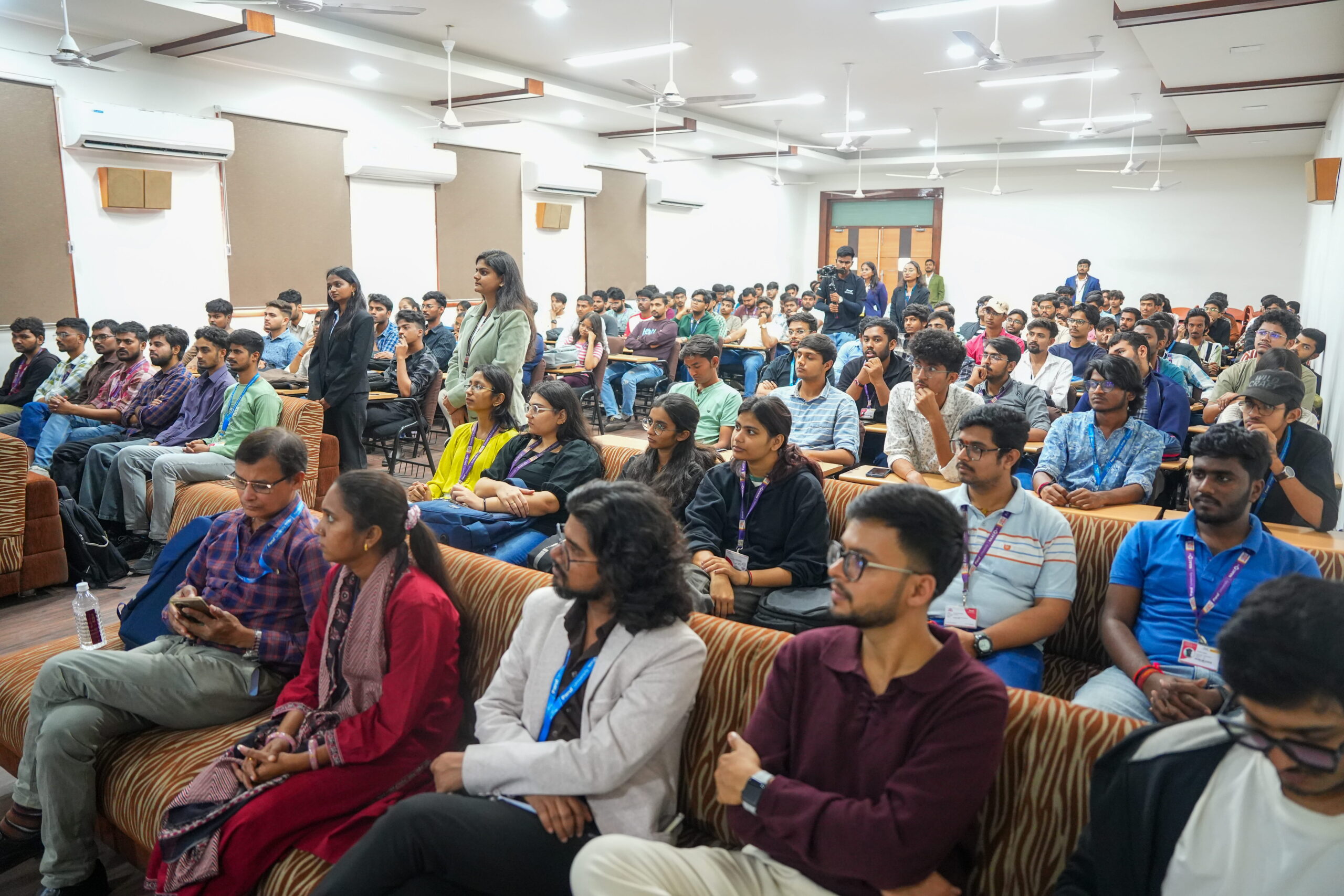
“How many of you are solo founders?”
About half the hands went up at Parul University’s Founder’s Studio on January 19, 2026. Students expected encouragement. What they got was a hard truth from someone who’d seen hundreds of startups succeed and fail.
“Most investors avoid solo-founder startups,” Poyni Bhatt stated flatly.
The silence wasn’t uncomfortable, it was contemplative. Poyni Bhatt, who built SINE at IIT Bombay into one of India’s premier startup incubators, wasn’t offering opinion. She was delivering market reality most entrepreneurship courses avoid.
“You want to know why? Three words: risk, capability, and sustainability. One person cannot distribute operational risk. One person cannot cover functional diversity. One person cannot guarantee organizational stability when a personal crisis hits.”
Then came the insight that changed how many in that room thought about co-founders:
"Campus is the best place to discover co-founders. Not because it's convenient. Because it's the only environment where you can observe someone over years rather than months, test collaboration through low-stakes projects, and validate compatibility before betting your future on it."
The Investor Math on Solo Founders
Investors don’t avoid solo founders out of bias. They avoid them because probability says they should.
1. Risk Distribution Mathematics
When founders get sick, burn out, or face family emergencies, work stops. Solo founders have no backup. Every personal problem becomes an existential business problem.
“I’ve watched brilliant solo founders lose six months of momentum to health issues,” Bhatt noted. “Meanwhile, founding teams redistribute work, maintain customer relationships, keep product development moving.”
Investors calculate: What happens if this person gets hit by a bus tomorrow? With a solo founder, the answer is: the company dies. With team: company continues.
2. Functional Diversity Requirements
Startups need simultaneous excellence across multiple domains:
- Product development
- Customer acquisition
- Operations
- Finance
- Strategy
“Show me the solo founder is genuinely excellent at all five,” Bhatt challenged. “They don’t exist.”
Founding teams specialize. The technical co-founder owns the product. Marketing co-founder owns growth. Operations co-founder owns delivery.
3. Organizational Stability Signals
“When I see multiple committed founders,” Bhatt explained, “I think: these people believe in this vision enough to tie their futures together. That commitment is infectious.”
Solo founders can be equally committed, but they can’t prove it the same way. If the idea was truly world-changing, wouldn’t they have convinced at least one other talented person to join?
The data supports this. Studies of venture-backed startups show higher success rates for founding teams versus solo founders. Y Combinator openly prefers teams. Paul Graham wrote: “Have you ever noticed how few successful startups were founded by just one person?”
Poyni Bhatt pointed to names everyone recognized.
Examples of companies that prove the campus co-founder model works:
- Zepto – Kaivalya Vohra and Aadit Palicha met before college, tested their partnership as Stanford students, then dropped out together to build India’s fastest-growing quick commerce company. Current valuation exceeds $5 billion.
- Meesho – IIT Delhi friends Vidit Aatrey and Sanjeev Barnwal collaborated on projects throughout college. Built a social commerce platform now valued at $5 billion.
- PhysicsWallah – Alakh Pandey and Prateek Maheshwari built partnership before formalizing their company. That foundation enabled scaling to millions of students.
- Flipkart – IIT Delhi batchmates Sachin Bansal and Binny Bansal were campus friends who became co-founders, then built India’s largest e-commerce company before selling to Walmart for $16 billion.
“Notice the pattern,” Bhatt emphasized. “These weren’t random partnerships formed at startup events. They were relationships built over months and years on campus, tested through projects and exams, proven before any company code was written.”
Why Campus Creates Unreplicatable Advantages
Networking events are performative. Job interviews are rehearsed. Campus is real.
Extended Observation Replaces Interviews
“When you interview someone, they’re performing,” Bhatt explained. “When you work with someone on a semester-long project? That’s when you see who they really are.”
Campus provides years to observe:
- How they handle deadline pressure
- Whether they blame others when things fail
- If they actually do work or just talk
- How they communicate during disagreements
- Whether they show up when things get hard
Testing the Four Essential Parameters
Bhatt introduced “founding parameters” four qualities essential for successful co-founding:
- Commitment – Do they finish what they start? When a project gets difficult, do they push through or make excuses?
- Compatibility – Do you work well together? Are working hours similar? Can you spend extended time together without conflict?
- Chemistry – Do you actually like each other? Startups mean spending more time with co-founders than family.
- Common Vision – Do you want the same things? Building to exit in 5 years or run a company for 20?
“These parameters can be naturally assessed during college life,” Bhatt noted. “You see commitment through group projects. Discover compatibility through study sessions. Find chemistry through campus activities. Align vision through conversations about the future.”
Low-Stakes Testing Before High-Stakes Commitment
Campus projects offer perfect co-founder testing grounds:
- Build something for hackathon together
- Start campus club and run it jointly
- Work on research project with real deadlines
- Organize event requiring coordination
- Collaborate on freelance work
If small collaboration fails, you’ve learned something without destroying a company. If it succeeds, you’ve built confidence.
The Irreversible Decision
Midway through her masterclass, Bhatt’s tone shifted:
“Choosing a co-founder is not easily reversible.”
“The co-founder knows every detail of the business,” she explained. “Every strategy, customer insight, competitive advantage, weakness. If a co-founder exits, their expertise exits. The startup faces increased risk.”
- Knowledge Loss Risk – That co-founder who handled all customer relationships? Their departure means losing those relationships.
- Competitive Threat Risk – Co-founder who exits might start competing ventures using insights gained.
- Confidential Information Exposure – Trade secrets, customer data, strategic plans, co-founders know everything.
- Legal protections exist (NDAs, non-competes), but lawsuits are expensive and often ineffective. Better to choose co-founders unlikely to exit.
The Agreement Blueprint
“This is why co-founding agreements are the blueprint for successful ventures,” Bhatt emphasized.
Equity Distribution
“Equal equity sharing is almost never a good idea,” Bhatt stated.
“Equity should be based on:
- Role and responsibility
- Time commitment (full-time vs part-time)
- Time of joining
- Capital invested
Founders working full-time cannot receive the same equity as someone contributing part-time.
Better approaches:
- 51-49 (ensures clear decision authority)
- 60-40 (reflects different contributions)
- 70-20-10 (three founders with primary, secondary, advisory roles)
Vesting Schedules
“What if the co-founder leaves after one month? Should they keep full equity?”
Obviously not. Vesting typically works:
- Equity “vests” over time (usually 4 years)
- Often includes “cliff” (no equity until 1 year)
- If co-founder leaves early, they keep only vested portion
Example: 40% equity with 4-year vesting and 1-year cliff
- Leave at month 6: get 0%
- Leave at year 2: get 20%
- Leave at year 4: get full 40%
Other Critical Elements
- Role Definitions – Clear documentation of responsibilities
- Exit Mechanisms – What happens if co-founder wants to leave
- Dispute Resolution – Mediation, arbitration clauses, decision frameworks
What Investors Actually Evaluate
- Market Validation – Is there a real customer base? Is the market scalable?
- Execution Capability – Can the team actually deliver?
- Exit Potential – Typical horizon: 5-7 years. Potential acquirers or IPO path?
- Equity Structure – Highly imbalanced equity often discourages investment.
Red Flags to Avoid
The Idea Person Who Never Executes – “Ideas are worthless without execution,” Bhatt emphasized.
- The Credit-Taker – Consistently takes credit while minimizing others’ contributions.
- The Blame-Shifter – Never owns mistakes when things go wrong.
- The Inconsistent Communicator – Responds immediately sometimes, disappears for weeks other times.
- The Risk-Avoider – Needs excessive certainty or guaranteed outcomes.
- The Solo Glory Seeker – Sees you as an employee, not a partner.
The Essential Conversation
Before formalizing any co-founding relationship, have explicit conversations about:
- Time Commitment – Full-time or part-time? What happens if someone gets a job offer?
- Financial Expectations – How much capital can each contribute? Salary expectations?
- Life Goals – Where do you want to be in 5 years? 10 years?
- Work Preferences – Working hours? Communication style? Decision-making approach?
- Values and Principles – What would you never compromise on? How do you define ethical business?
“These conversations are uncomfortable,” Bhatt acknowledged. “Have them anyway. Discomfort now prevents disaster later.”
Practical Campus Strategy to build start-up at Parul University
Year 1-2: Build Relationships
- Take diverse classes
- Join clubs requiring commitment
- Participate in hackathons
- Work on side projects
- Observe who delivers consistently
Year 2-3: Test Collaboration
- Start small ventures
- Organize campus events
- Freelance together
- Build for competitions
- Watch how they handle pressure
Year 3-4: Formalize Partnership
- Discuss startup ideas seriously
- Align on vision and values
- Define roles clearly
- Create co-founding agreement
- Start company while in school
By graduation, you’re scaling a validated partnership with a proven track record.
The Window That Closes
As Ponny Bhatt concluded:
“Campus provides unique advantages for finding co-founders that you will never have again.”
Why?
- Low stakes testing
- Extended timeline
- Natural observation
- Shared context
- Infrastructure access
- Mentor availability
- Peer community
“Don’t rush this decision,” she urged. “Choosing a co-founder is choosing who you’ll spend more time with than family, who’ll know your business better than anyone. Choose wisely. Choose from people you’ve actually worked with extensively.”
The 250+ startups incubated through PIERC prove this model works. The ₹100+ crore raised validates the approach. The 1,400+ jobs created demonstrate impact.
Your Next Step
If you’re student wondering how to find your co-founder:
Start today, but start slowly.
Don’t go looking for co-founders desperately. Go looking for excellent people to work with on meaningful projects. Build relationships. Test collaboration. Observe behavior over time.
When you find someone who repeatedly demonstrates commitment, compatibility, chemistry, and common vision, someone you’ve worked with successfully on multiple projects then have the conversation.
But have it properly:
- Discuss time commitment
- Align on finances
- Share life goals
- Acknowledge work preferences
- Clarify values
Then create a formal co-founding agreement covering equity, vesting, roles, exits, and disputes.
PIERC exists to support this journey. Resources exist. Examples are proven. The path is clear.
Your job? Start building relationships. The co-founder who’ll help you create something remarkable might be sitting in your next class.
As Bhatt concluded: “Always chase customers, never investors. And always think about solving bigger problems.”
But first, find the right person to chase those customers with you.
Frequently Asked Questions (FAQs)
1. Why do investors prefer founding teams over solo founders?
Most investors view solo founders as higher risk. A single person cannot distribute operational risk, cover multiple functional areas, or ensure business continuity during personal crises. Founding teams bring complementary skills, shared responsibility, and stronger long-term sustainability.
2. Why is campus the best place to find a co-founder?
Campus life allows extended observation over years rather than months. Students can test commitment, compatibility, chemistry, and shared vision through projects, clubs, hackathons, and academic collaborations before entering a high-stakes business partnership.
3. What qualities should I look for in a co-founder?
According to Poyni Bhatt, four key parameters matter: ● Commitment – Do they finish what they start? ● Compatibility – Can you work well together under pressure? ● Chemistry – Do you genuinely enjoy working together? ● Common Vision – Are your long-term goals aligned? Without these four, co-founding relationships often struggle.
4. Should co-founders split equity equally?
Not necessarily. Equity should reflect role, responsibility, time commitment, and capital contribution. Vesting schedules (typically 4 years with a 1-year cliff) are essential to protect the startup if a co-founder exits early.
5. How does PIERC at Parul University help students build startups?
PIERC provides structured incubation programs, mentorship, co-working space, networking events, legal and funding guidance, and long-term startup support. With 250+ startups incubated and ₹100+ crore raised collectively, the ecosystem is designed to help student founders scale sustainably.
Poyni Bhatt’s masterclass “From Idea to Business” was conducted at VSF – Vadodara Start-up Festival 6.0 on January 19, 2026. She served as Founding Member and CEO of SINE at IIT Bombay. PIERC accepts applications year-round: pierc@paruluniversity.ac.in | www.pierc.org


