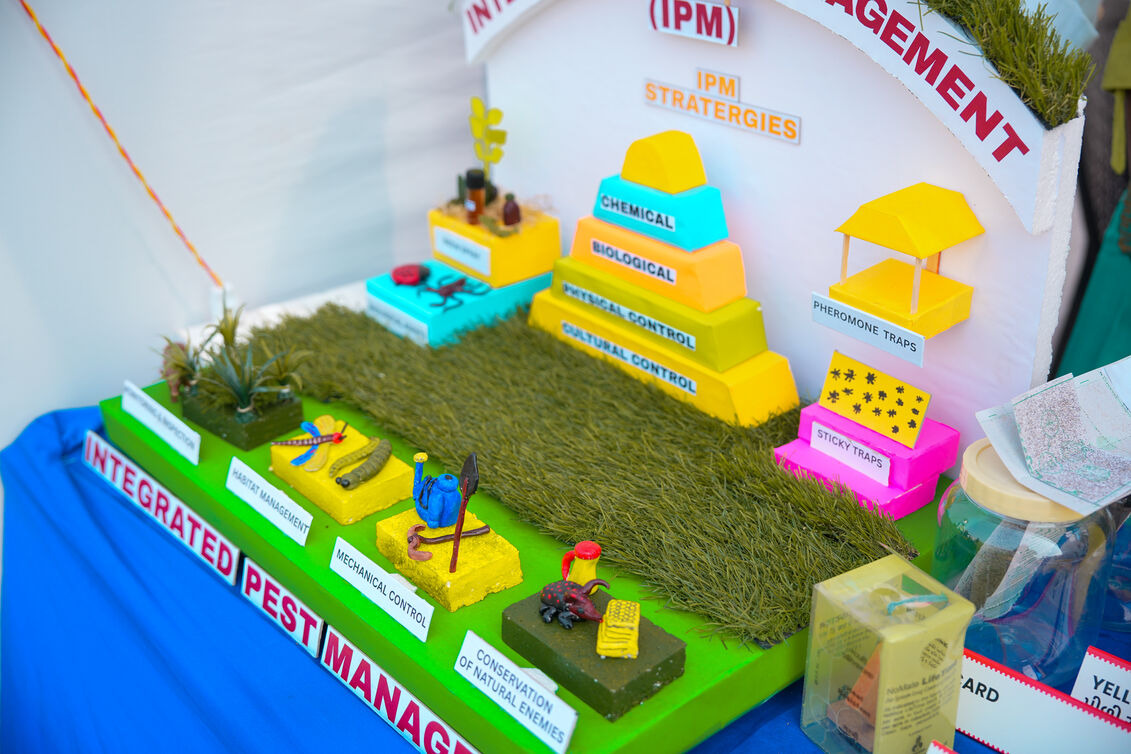
AgriFest 2026 at Parul University was not a farming fair – it was a snapshot of where agriculture careers are heading. Students were not ploughing fields. They were converting dairy waste into protein-rich cookies (Pop Whey Cookies), developing gluten-free millet products for the diabetic consumer market (Moribix), extracting butterfly pea flower compounds for skincare formulations (Revitalize Cosmetics), and building specialised product lines for the home-gardening market (Gardenica, with ₹6.5–7 lakhs annual revenue and a 70% repeat customer rate).
At the same time, the Soil Science department was running on-site laboratory analysis for farmers. Extension Education students were connecting village-level farming challenges with university resources. Also, the Walkman of India, i.e., Dr. Raju M. Thakkar, introduced the Lakshpati Farming Model for making natural farming a more financially reliable option.
A career in agriculture comprises various opportunities like technology and food, soil science, plant testing, plant breeding, agronomy, agri-communication, botany, seed innovation, and farmer-facing extension services.
A B.Sc. An agriculture program that prepares you for this range – not just for one narrow track – is what gives graduates a competitive edge.
B.Sc. (Hons.) Agriculture at Parul University: What the Programme Covers
The university’s Faculty of Agriculture is Gujarat’s first private agricultural college. It is designated as a center of excellence by the Government of Gujarat. The faculty has also received many awards, like the Agricultural Institute Award from EduExcellence (Zee Tv), and the university is ranked among the top 50 in India under NIRF list.
B.Sc. In Agriculture is a 4-year undergraduate program, which covers important subjects that are the basis for agricultural knowledge. It includes agronomy, soil science, horticulture, plant science, plant pathology, agricultural economics, pest management, sustainability, and environmental conservation.
Beyond the classroom, students gain practical experience through instructional farms, greenhouses, R&D laboratories, and industrial visits to organisations like Amul Dairy, Anand Milk Union, honey processing units, cold storage facilities, and flower shows.
Eligibility requires the 12th examination from the science stream with Physics, Chemistry, and Biology (PCB). Candidates whose father holds an agricultural background or farmer certificate (Kisan Card) receive an additional 5% in their marks.
Career Paths After B.Sc. Agriculture
Many opportunities are available for B.Sc. in Agriculture graduates, a few of them are listed below:
• Food technology and processing – developing value-added products from raw farm produce.
• Agribusiness and entrepreneurship – launching ventures like those showcased at AgriFest (Chocoveda, Gardenica, and Revitalize Cosmetics).
• Soil science and advisory – providing data-driven soil analysis and nutrient management recommendations.
• Horticulture and nursery management – plant cultivation, landscape design, and floriculture.
• Extension education – connecting farmers with scientific knowledge through village visits and advisory programs.
• Seed technology and development – improving crop yields through hybrid and enhanced seed varieties.
• Organic and natural farming advisory – supporting the transition from chemical to sustainable agriculture.
• Agricultural research – working in government agencies (ICAR, state agricultural universities) or private R&D.
• Government roles – positions under NABARD, FCI, ATMA, State Agricultural Departments, and extension services.
Why Parul University: The AgriFest Advantage
AgriFest is not a one-day event, it is the culmination of a year-round culture of experiential learning. Students pursuing a Bachelor of Agriculture who organise AgriFest through the Experiential Learning Programme (ELP) develop leadership, teamwork, and project management skills. Students who present food innovations develop entrepreneurial abilities, while those who test farmer soil samples strengthen their scientific diagnostic skills.
Students who visit villages through Extension Education gain valuable field communication and problem-solving experience. Together, these hands-on opportunities shape the practical learning environment expected from master of science in agricultural economics, preparing students to work closely with farmers, researchers, and the wider agricultural industry
This combination – lab research, field practice, farmer engagement, industry visits, and entrepreneurial support through PIERC – is what distinguishes Parul University’s agriculture program from institutions that teach agriculture only through textbooks.
FAQ - Career in Agriculture After 12th
Can I pursue agriculture after 12th?
Yes. Parul University's B.Sc. (Hons.) Agriculture is a 4-year programme open to students who have passed 12th from the Science stream with Physics, Chemistry, and Biology (PCB). Candidates with a family agricultural background (Kisan Card) receive additional marks consideration.
What is the fee for B.Sc. Agriculture at Parul University?
The total tuition fee for the 4-year B.Sc. (Hons.) Agriculture programme is approximately ₹3.96 lakhs. The first-year fee is approximately ₹99,000. Fees may vary depending on the candidate's state.
Is the Agriculture Faculty of Parul University recognised?
Yes. The faculty of agriculture at Parul University is recognized by the Gujarat government and designated as a Center of Excellence by the government of Gujarat. The university has received NAAC A++ accreditation and is ranked amongst the top 50 in India under NIRF. The faculty has received an award - Institute EduExcellence (Zee TV).
What placements are available after B.Sc. Agriculture?
Definitely, placements are there for the students, which start in the 4th year. Companies like GSFC, Indus, SuperFoods, etc. come to the campus. Various career paths can be achieved after completing this degree, like food technology, organic farming, farming consultancy, research, and government roles (NABARD, ATMA, FCI, Stat Department)


