If you showed up at Udyam Management Fest 2026 at Parul University, one thing became obvious fast: AI and data weren’t just some side topic for the tech crowd. They popped up everywhere – whether people were talking about consulting with Accenture, HR with IHCL, infrastructure at Tata Projects, or even packaged snacks with Bikanervala. The takeaway? If you want to make it as a management graduate now, you need to be comfortable with data and AI. It’s not optional anymore
"Data Is the New Sunshine" - Why Mukesh Jain Says Data Decides Everything
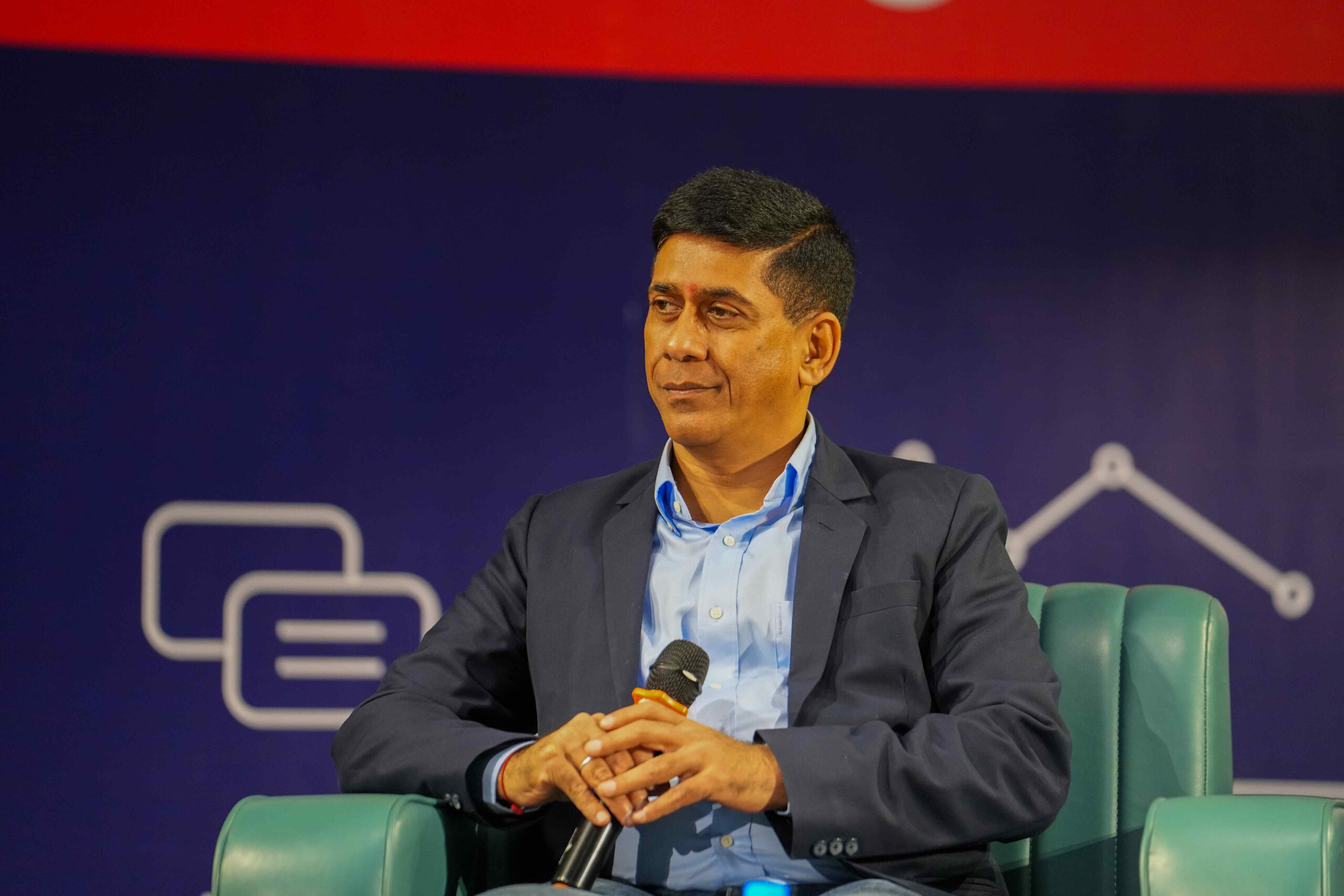
Mukesh Jain, CTO of Capgemini India, opened Day 3 with a phrase that anchored the entire session: data is the new sunshine. His argument: data is no longer stored information sitting in a database. It exists in every active and inactive action – every transaction, every click, every supply chain movement.
He cited Uber as a company that succeeded specifically because it understood and leveraged its data for pricing, routing, and demand prediction. Organizations that fail to read their data properly lose opportunities they never even detect.
● Data drives strategy building, customer understanding, and risk reduction.
● Data is not limited to technology companies — it shapes decisions in every industry.
● Curiosity about how data works is the first step; formal expertise comes after.
Pro Tip:
Jain specifically recommended that all students – regardless of specialisation – learn the basics of Python and algorithmic thinking. Parul University’s MBA programs include analytics electives that cover these foundations for non-tech students.
How AI Reshapes Business: Not Replacement, but Transformation ?
A bunch of speakers touched on AI, but Mukesh Jain put it plainly: “AI isn’t some far-off idea. It’s already making businesses faster, sharper, and more productive. Companies turn to AI for automating repetitive work, sifting through massive data, and making quick decisions.”
He didn’t just hype it up- he said using AI right can actually double your business output. Why? Because it helps you spot trends and figure out what customers really want. Still, Jain was clear about where the line is: machines can’t mimic human creativity or emotional smarts. AI is your tool, not your rival.
P.V. Ramana Murthy on AI in HR
Murthy focused on AI from the HR angle. Machines are taking over the repetitive stuff—think payroll, scheduling, and compliance – giving HR folks the freedom to focus on bigger things like building talent, shaping company culture, and helping employees grow. He even predicted for the next 30 years, we’ll see job categories that don’t even exist yet, just like today’s roles would’ve sounded crazy a generation ago.
India's Digital Payment Infrastructure and What It Means for Future Careers
Vijay Thakral on UPI, Compliance, and Behavioural Risk
Vijay Thakral mapped how India’s digital payment ecosystem has consolidated. UPI (Unified Payments Interface), card processing, and online banking now operate under integrated platforms. This interoperability transformed how money moves across the country.
His compliance message: RBI regulations, PCI-DSS (Payment Card Industry Data Security Standard), and ISO benchmarks are not bureaucratic obstacles – they are the infrastructure that makes digital trust possible. Companies that weave compliance into operations from day one scale faster than those that retrofit it.
He also brought up a less-discussed issue: BNPL (Buy Now, Pay Later) models. Models that give short-term ease at checkout, but it will not make the consumer aware of their financial limits. Students taking up fintech need to understand the behavioral psychology behind this, keeping tech alongside.
Sunil Ramrakhiani on India's Investor Growth and Market Infrastructure
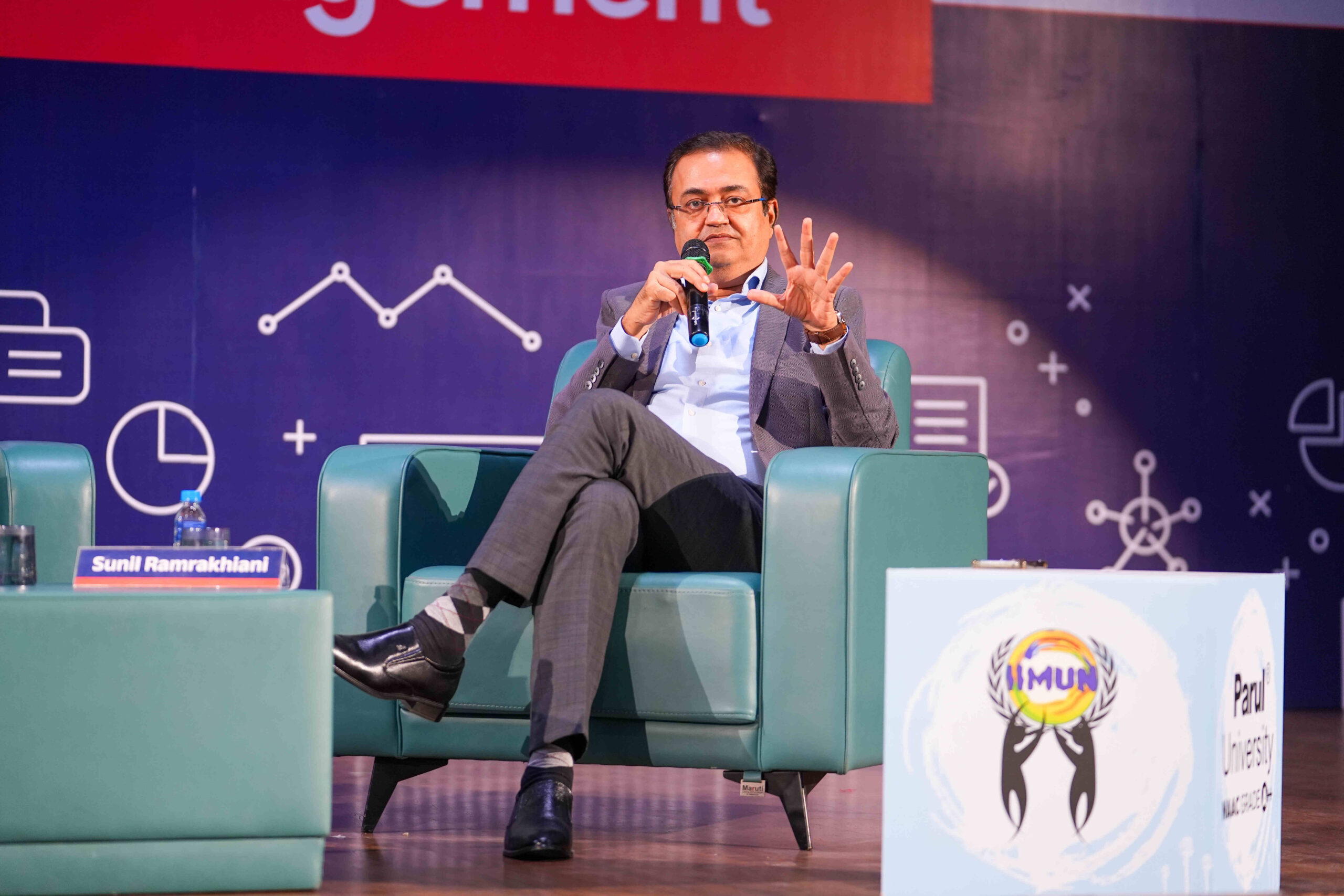
Ramrakhiani provided data that contextualizes India’s fintech moment. Pre-COVID, the country accumulated approximately 3.8 crore investors over nearly three decades. Post-pandemic acceleration pushed the monthly new-investor rate to approximately 25 lakh, with the total approaching 10 crore.
He described BSE’s infrastructure: approximately 973 crore orders processed through its systems, with close to 20 lakh traders active simultaneously during peak periods. The exchange operates as an open network with hidden trader identities, supported by separate technology, compliance, and operations teams.
- A quarter of current Indian investors are under 30; three-quarters are under 40.
- German exchange models inspired Indian infrastructure, but Indian systems handle far higher volumes.
- Financial literacy must precede market entry – social media tips are not an investment strategy.
Common Mistake:
Students often conflate familiarity with trading apps for financial literacy. Ramrakhiani was explicit: day trading and options trading without structured knowledge lead to predictable losses. Parul University’s finance curriculum addresses this through structured market simulation modules
The Future-Ready Skill Stack: What Udyam 2026 Speakers Collectively Recommend
Across all sessions, a consistent skill framework emerged. No single speaker prescribed this exact list, but the overlap across seven speakers was striking:
TOP X LIST – SKILLS STACK FROM UDYAM 2026
- Analytical thinking – interpret data, not just collect it.
- Python basics and algorithmic logic – even for non-tech students.
- Communication and presentation skills – express ideas with clarity.
- Compliance and regulatory awareness – especially for fintech and digital roles.
- Emotional intelligence – the skill AI cannot replicate.
- Networking and LinkedIn presence – visibility creates opportunities.
- Adaptability and continuous learning – the only constant across all speakers.
- Resilience and self-confidence -setbacks test, but do not define.
Key Takeaways: AI, Data & Future Skills from Udyam 2026 (h3)
Key Takeaways
- Data literacy is the baseline; organizations that ignore their data lose opportunities invisibly.
- AI transforms roles rather than eliminating them; upskilling is the correct response.
- Compliance knowledge is a career accelerator in fintech, not a bureaucratic chore.
- India’s investor base is young and growing fast – financial literacy is urgent, not optional.
- The skill stack that emerged across all speakers combines technical, analytical, and human capabilities.
Who This Article Is For
• MBA and BBA students choosing electives in analytics, fintech, or digital transformation.
• Parents evaluating whether Parul University prepares students for AI-era careers.
• Career counselors advising students on future-ready skill development.
• Researchers are tracking how Indian industry leaders frame AI adoption for young professionals.
FAQ - AI, Data & Future Skills at Udyam 2026
Did Udyam 2026 have a dedicated AI session?
AI was discussed across multiple sessions rather than isolated to one. Mukesh Jain (CTO, Capgemini India) provided the most detailed AI coverage on Day 3, while P.V. Ramana Murthy addressed AI's impact on HR, and Suresh Goel discussed technology in the packaged food industry.
What did speakers say about AI replacing jobs?
The consensus was clear: AI transforms jobs; it does not eliminate them. Mukesh Jain stated that AI handles repetitive tasks and data analysis, freeing humans for creative and strategic work. Murthy predicted that new job categories will emerge over the next 30 years.
Should non-tech MBA students learn coding?
Yes, according to Mukesh Jain. He specifically recommended Python basics and algorithmic thinking for all students regardless of specialization. The goal is not to become a developer but to understand how data and technology shape business decisions.
What is PCI-DSS and why did it come up at Udyam?
PCI-DSS stands for Payment Card Industry Data Security Standard. Vijay Thakral (Razorpay) cited it as one of the key compliance frameworks that digital payment companies must follow. Understanding such frameworks is increasingly relevant for students entering fintech.
How does Parul University integrate these skills into its programs?
Parul University's MBA and BBA programs include analytics electives, financial literacy modules, and events like Udyam that bring working professionals into direct contact with students. The Exposure-to-Execution Bridge framework ensures industry exposure translates into applied learning.


