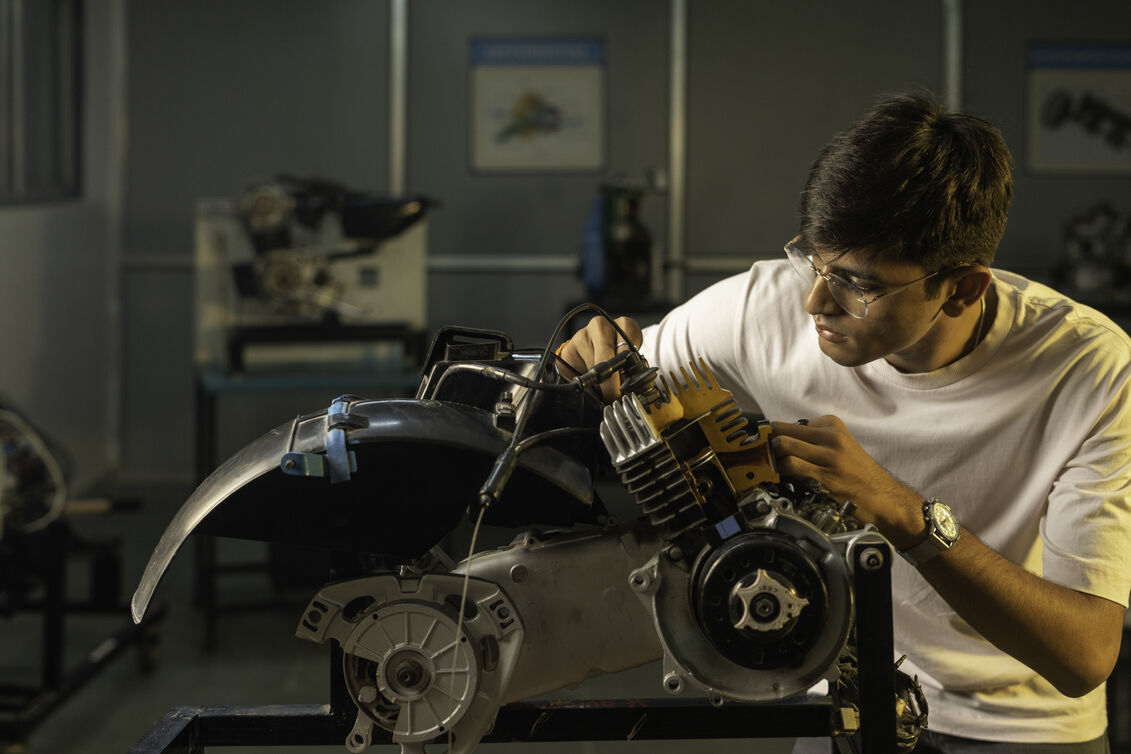
The automotive industry is evolving at an unprecedented pace. From electric vehicles (EVs) and hybrid systems to smart mobility and autonomous driving technologies, modern vehicles are far more advanced than ever before. For students passionate about cars, engines, and mobility innovation, pursuing a BTech in Automobile Engineering offers the perfect pathway into this dynamic field.
The BTech Automobile Engineering programme is structured to equip students with comprehensive skills in vehicle design, performance testing, and advanced manufacturing processes. The curriculum blends theoretical learning with practical exposure, preparing graduates to meet the growing demands of the global automotive industry.
Let’s explore the key design, testing, and manufacturing skills students gain through this specialised engineering programme.
Vehicle Design Skills: Building the Future of Mobility
Vehicle design is one of the most exciting aspects of automobile engineering. A BTech in Automobile Engineering teaches students how to conceptualise, model, and optimise different vehicle systems, ensuring performance, safety, and efficiency.
Automotive Engineering Fundamentals
Students begin by building a strong foundation in subjects such as:
● Engineering Mechanics
● Thermodynamics
● Fluid Mechanics
● Strength of Materials
● Engineering Mathematics
These core subjects help students understand how forces act on vehicles, how engines generate power, and how materials respond to stress.
Automotive System Design
The programme covers key automotive systems, including:
● Internal combustion engines
● Transmission systems
● Suspension and steering systems
● Braking systems
● Vehicle dynamics
Students learn how each system functions independently and how they integrate into a complete vehicle. With the support of computer-aided design (CAD) tools, students create 2D and 3D models of automotive components, thereby enhancing design accuracy and innovation.
Electric and Hybrid Vehicle Design
With the rise of sustainable mobility, BTech Automobile Engineering also introduces students to electric vehicle technology. They gain knowledge about:
● Battery systems
● Electric powertrains
● Motor controllers
● Energy management systems
Understanding EV architecture prepares graduates for the fast-growing electric mobility sector.
Testing Skills: Ensuring Performance, Safety & Efficiency
Designing a vehicle is only the first step. Rigorous testing ensures reliability, durability, and compliance with safety standards. A BTech in Automobile Engineering equips students with hands-on knowledge of automotive testing procedures and quality control methods.
Engine Performance Testing
Students study engine performance parameters such as:
● Power output
● Fuel efficiency
● Emission levels
● Thermal efficiency
In laboratory environments, they analyse engine components and simulate real-world operating conditions to evaluate performance.
Vehicle Dynamics and Road Testing
Understanding vehicle stability, braking efficiency, suspension behaviour, and handling characteristics is essential. Students learn how to assess vehicle performance under different conditions and how design modifications impact overall safety.
Automotive Safety and Emission Testing
Safety regulations are a critical part of the automotive industry. The BTech programme introduces students to:
● Crash safety concepts
● Emission control standards
● Environmental compliance regulations
This knowledge ensures graduates understand both engineering principles and legal frameworks governing vehicle manufacturing.
Simulation and Analysis Tools
Modern automobile testing increasingly relies on simulation software. Students gain exposure to analysis tools that help evaluate stress distribution, thermal performance, and aerodynamics before physical prototypes are built. This reduces cost and improves design efficiency.
Manufacturing Skills: From Prototype to Production
Automobile engineering goes beyond design and testing. It includes manufacturing processes that turn prototypes into mass-produced vehicles. A BTech in Automobile Engineering develops strong skills in automotive production technologies.
Manufacturing Processes
Students learn about:
● Casting and forging
● Welding and fabrication
● Machining operations
● CNC (Computer Numerical Control) systems
● Sheet metal processing
These subjects help students understand how automotive components are manufactured with precision and efficiency.
Production Planning and Quality Control
Efficient vehicle production requires strong management and quality systems. Students are introduced to:
● Lean manufacturing principles
● Total Quality Management (TQM)
● Production line optimisation
● Inventory control systems
These skills are crucial for ensuring smooth operations in automobile manufacturing plants.
Automation in Automotive Manufacturing
With Industry 4.0 transforming production lines, automation plays a major role in vehicle assembly. Students gain insights into:
● Robotics in manufacturing
● Automated assembly systems
● Smart production technologies
This prepares graduates to work in technologically advanced automotive factories.
Practical Exposure and Laboratory Learning
The BTech Automobile Engineering programme at Parul University emphasises hands-on learning. Students benefit from:
● Automobile workshops
● Engine testing labs
● CAD/CAM laboratories
● Manufacturing process labs
Working with real automotive components builds practical understanding and problem-solving skills. Industrial visits and internship opportunities further enhance exposure to real-world production and testing environments.
Soft Skills and Industry Readiness
In addition to technical expertise, a BTech programme also focuses on developing professional competencies such as:
● Analytical thinking
● Problem-solving abilities
● Team collaboration
● Technical documentation
● Project management
These skills ensure graduates are industry-ready and capable of handling complex automotive challenges.
Career Opportunities After BTech Automobile Engineering
Graduates of B.Tech. Automobile Engineering can pursue careers in:
● Automobile manufacturing companies
● Electric vehicle startups
● Automotive design firms
● Research and development centres
● Quality testing laboratories
● Government transport departments
Common job roles include:
● Automotive Design Engineer
● Vehicle Testing Engineer
● Production Engineer
● Quality Control Engineer
● EV Systems Engineer
● Manufacturing Process Engineer
With the automotive industry expanding into electric mobility, autonomous systems, and sustainable technologies, career prospects continue to grow.
Conclusion
A BTech in Automobile Engineering provides a comprehensive skill set in vehicle design, performance testing, and manufacturing processes. From understanding engine mechanics and vehicle dynamics to mastering CAD tools and production systems, students develop the technical expertise required to thrive in the automotive industry.
As the world shifts toward smart mobility and electric transportation, automobile engineers play a crucial role in shaping the future of transportation. For students passionate about vehicles and innovation, this BTech programme offers the perfect blend of creativity, technical precision, and industry relevance.