The aviation and aerospace industry continues to push the boundaries of innovation, speed, safety, and efficiency. Behind every aircraft that takes flight lies a combination of precise engineering, advanced electronics, and powerful propulsion technology.
A BTech in Aeronautical Engineering is designed to equip students with the technical knowledge and practical skills required to design, analyse, and maintain modern aircraft systems.
The BTech Aeronautical Engineering programme focuses on the three most critical pillars of aviation technology: aircraft design, avionics systems, and propulsion systems.
Let’s explore how these core areas shape future aeronautical engineers.
Aircraft Design: Turning Concepts into Flying Machines
Aircraft design is one of the most exciting and fundamental aspects of b.tech in aeronautical engineering. It involves conceptualising, analysing, and developing aircraft structures that are safe, efficient, and aerodynamically stable.
In a BTech Aeronautical Engineering programme, students are introduced to:
- Aerodynamics
- Aircraft Structures
- Flight Mechanics
- Engineering Mechanics
- Computational Analysis
- Material Science for Aerospace Applications
Aerodynamics and Lift Principles
Aerodynamics forms the backbone of aircraft design. Students learn how air flows around an aircraft’s wings and fuselage, how lift is generated, and how drag can be minimised. Understanding airflow behaviour helps engineers optimise wing shapes and improve fuel efficiency.
Concepts such as Bernoulli’s principle, boundary layer theory, and airflow modelling are taught to give students a strong theoretical foundation.
Aircraft Structures and Materials
Aircraft must be lightweight yet extremely strong. In the BTech curriculum, students study structural analysis and the behaviour of aerospace materials like aluminium alloys, composites, and advanced lightweight materials. They learn how to design wings, fuselage frames, landing gear systems, and tail assemblies while ensuring safety and durability.
Computer-aided design (CAD) tools are often introduced to help students model and simulate aircraft components digitally before physical testing.
Flight Mechanics and Stability
Flight mechanics focuses on how aircraft behave in motion. Students study stability, control systems, and manoeuvrability to understand how aircraft maintain balance during take-off, cruise, and landing. This knowledge is critical for safe aircraft operation and for the development of advanced flight controls.
Through this comprehensive approach, the BTech programme prepares students to conceptualise and analyse aircraft from a systems perspective.
Avionics: The Brain of the Aircraft
While aircraft structures allow flight, avionics systems act as the brain of modern aircraft. Avionics combines electronics, communication systems, navigation technology, and control systems to ensure smooth and safe flight operations.
A B.Tech. in Aeronautical Engineering introduces students to:
● Aircraft instrumentation
● Navigation systems
● Radar and communication systems
● Embedded systems
● Flight control electronics
● Digital signal processing basics
Flight Instruments and Navigation
Students learn about cockpit instrumentation such as altimeters, gyroscopes, airspeed indicators, and navigation displays. Modern aircraft rely heavily on advanced navigation systems like GPS, inertial navigation systems (INS), and autopilot systems.
Understanding these technologies allows aeronautical engineers to design, maintain, and improve communication and control systems that guide aircraft safely through various atmospheric conditions.
Communication and Radar Systems
Aircraft must maintain continuous communication with ground control and other aircraft. In the BTech curriculum, students study radio communication systems, signal transmission, and radar technology used for surveillance and collision avoidance.
These systems are critical for both civilian aviation and defence applications.
Integration of Electronics and Control Systems
Avionics is increasingly integrated with automation and intelligent control. Students gain exposure to electronic circuits, microcontrollers, and control systems that manage aircraft performance. This prepares them for careers in aerospace electronics, aircraft maintenance, and avionics system development.
By understanding avionics, BTech students learn how hardware and software work together to ensure aircraft safety and efficiency.
Propulsion Systems: Powering Flight
No aircraft can fly without a powerful and efficient propulsion system. Propulsion engineering is another core component of the B.Tech. Aeronautical Engineering programme.
Students study:
● Jet engines
● Turbofan and turbojet engines
● Rocket propulsion basics
● Thermodynamics
● Fluid mechanics
● Combustion systems
Jet Engine Fundamentals
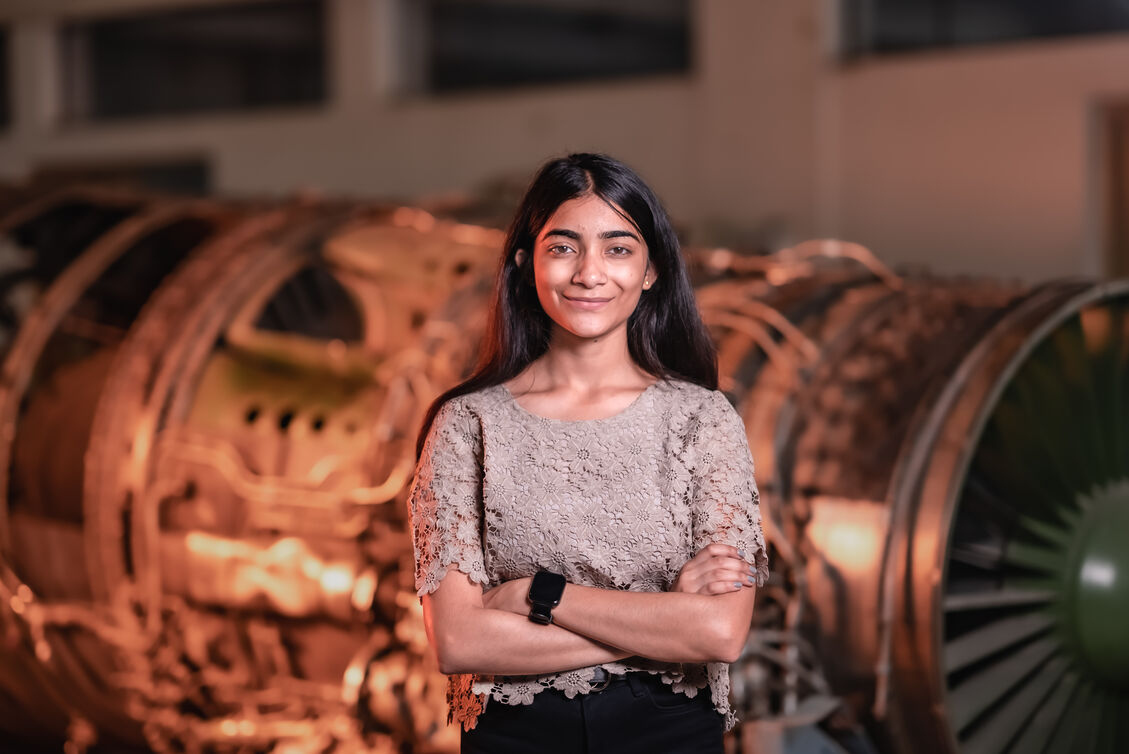
Modern aircraft rely on jet engines for thrust. In this subject, students learn how air intake, compression, combustion, and exhaust processes generate thrust. They explore different engine types and their applications in commercial and military aircraft.
Thermodynamics plays a vital role here, helping students understand energy conversion, fuel efficiency, and engine performance.
Rocket Propulsion Basics
While aeronautical engineering focuses primarily on aircraft, students may also gain introductory exposure to rocket propulsion systems. This helps them understand high-speed and high-altitude flight dynamics.
Fuel Efficiency and Environmental Considerations
With increasing focus on sustainability, propulsion system design also includes efficiency optimisation and emission reduction techniques. Students explore how engineers improve fuel performance and reduce environmental impact.
Practical Learning and Industry Exposure
A strong BTech programme combines theory with hands-on learning. Students typically work in:
● Aerodynamics laboratories
● Propulsion labs
● Aircraft structure labs
● Simulation and modelling labs
Practical sessions allow students to conduct wind tunnel experiments, engine testing simulations, and structural stress analysis. Such exposure builds confidence and technical competence.
Industrial visits, internships, and project-based learning further strengthen students’ understanding of real-world aerospace applications.
Career Opportunities After BTech Aeronautical Engineering
Graduates of BTech Aeronautical Engineering can pursue careers in:
● Aircraft manufacturing companies
● Airlines and maintenance organisations
● Defence and aviation research centres
● Aerospace design firms
● Avionics development companies
● Government aviation authorities
Roles include:
● Aeronautical Engineer
● Aircraft Design Engineer
● Propulsion Engineer
● Avionics Engineer
● Maintenance and Safety Engineer
● Flight Systems Analyst
With the global aviation industry continuously evolving, skilled aeronautical engineers remain in high demand.
Conclusion
A BTech in Aeronautical Engineering provides in-depth knowledge of aircraft design, avionics systems, and propulsion technologies: the three pillars that make modern aviation possible. From understanding airflow over wings to designing jet engines and advanced navigation systems, the programme prepares students to contribute to one of the most technologically advanced industries in the world.