Real Problem + Actual Solution + Market Validation = Career Readiness!
The placement coordinator at most universities sells a simple story: good grades + technical skills + interview prep = successful career.
Parul University’s PIERC offers a different equation: real problem + actual solution + market validation = career readiness that transcends job descriptions.
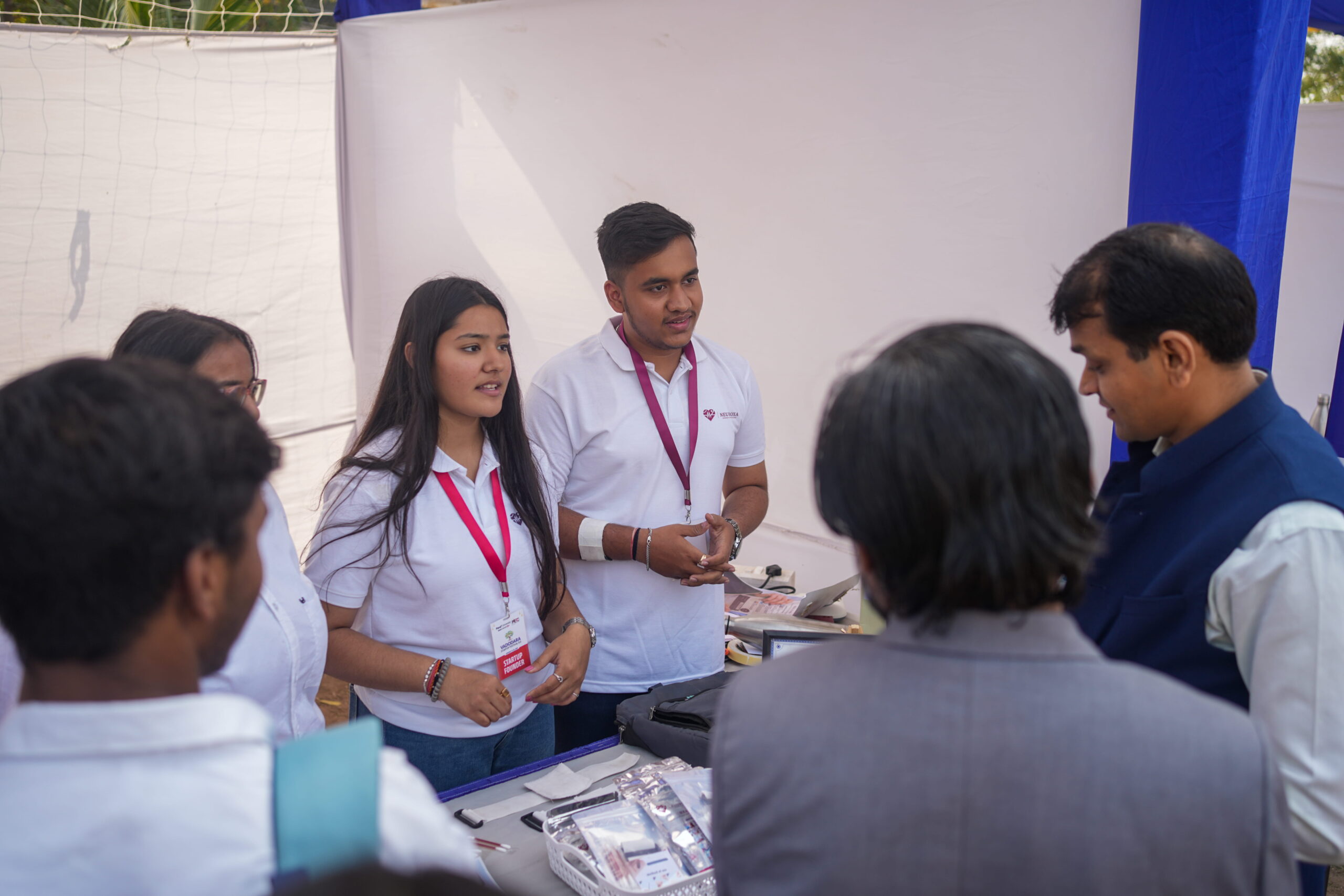
The evidence arrived January 21-23, 2026, when Vadodara Startup Festival 6.0 showcased student founders who’d built companies generating ₹50+ crore in collective revenue. These weren’t trust fund kids playing entrepreneur. They were regular students who’d developed capabilities most MBA programs can’t teach.
And those capabilities matter whether they ultimately run companies or join them.
The Career Readiness Gap Traditional Education Misses
Traditional education optimizes for: memorization, standardized testing, following instructions, replicating known solutions.
Modern careers require: problem identification, hypothesis testing, ambiguity navigation, creating novel solutions.
The gap is massive.
Employers consistently report new graduates struggle with:
- Identifying what problem actually needs solving
- Testing assumptions before committing resources
- Collaborating across functional boundaries
- Managing uncertainty without detailed instructions
- Prioritizing when everything seems urgent
- Learning from failure without defensive blame
These aren’t technical deficiencies. They’re capability gaps that classroom education rarely addresses.
Student-founded startups force development of exactly these capabilities.
Capability 1: Problem Identification (Not Problem Solving)
Most education teaches problem solving. The professor gives a problem. Students solve it. Grades reward correct answers.
Startups require problem identification. No professor assigns the problem. The world doesn’t arrive with clear instructions.
Anurag Sundarka‘s journey illustrates this perfectly.
Traditional problem-solving approach:
- Professor assigns: “Analyze the publishing industry”
- Student researches, writes report, gets grade
- No real-world impact
Anurag’s problem identification:
- Experiences frustration trying to get book published
- Recognizes pattern: first-time authors face catch-22
- Identifies root cause: publishing industry optimizes for established authors
- Discovers thousands share this frustration
- Builds ZebraLearn to solve it
Revenue trajectory: ₹10 lakh (2022) → ₹3.05 crore (2023) → ₹10.7 crore (2024)
Career readiness impact:
Whether Anurag runs ZebraLearn forever or eventually joins a publisher, he’s learned:
- How to identify genuine market needs versus perceived ones
- How to validate problems before building solutions
- How to recognize patterns across individual frustrations
These capabilities transfer to any role. The product manager who can identify what customers actually need. The consultant who recognizes root causes versus symptoms. The employee who spots opportunities others miss.
Capability 2: Hypothesis Testing (Not Assumption Validation)
Traditional education rewards proving you’re right. Students form hypotheses. Conduct research supporting them. Get a grade.
Startups punish being wrong. Every assumption costs money, time, and reputation.
AnyTrip‘s founders learned this through painful iteration.
Initial hypothesis: “People want cheaper flights.”
Testing revealed: Wrong. People want transparent pricing. They’ll pay fair prices, but hate surprise fees.
Adjusted hypothesis: “Showing all-inclusive pricing upfront creates competitive advantage.”
Testing revealed: Correct. Revenue: ₹2.8 crore in 10 months.
But then the B2B hypothesis failed. Corporate travel operates differently than consumer booking. What worked for individual travelers didn’t transfer to enterprise clients.
Career readiness impact:
The founder who’s tested hundreds of hypotheses develops intuition for:
- What assumptions need validating before committing resources
- How to design quick, cheap tests
- When to pivot versus persist
- How to separate ego from evidence
This matters in any role. The engineer who tests edge cases before deployment. The marketer who validates channels before burning the budget. The manager who experiments with team structure before reorganizing.
Capability 3: Resource Management (Doing More with Less)
Traditional education provides resources: textbooks, labs, libraries, professor time.
Startups operate under constant constraint: limited capital, time, people, attention.
Solnce Energy‘s journey demonstrates extreme resourcefulness.
Started: Government co-working space (free)
First office: 300 sq. ft. (minimal rent)
Current: 2,000 sq. ft. (only after revenue justified it)
They didn’t wait for perfect resources. They built with what they had:
- SSIP grant: ₹2 lakh for initial prototype
- Gujarat government: ₹30 lakh for scaling
- UNDP: $5,000 for specific development
Each funding stage validated before seeking next. Never raised more than they could effectively deploy.
Career readiness impact:
Founders who’ve managed tight budgets understand:
- How to prioritize ruthlessly
- Where to invest versus where to economize
- When to build versus buy versus partner
- How to create maximum impact with minimum resources
This transfers directly to corporate roles. The team lead who delivers results despite limited budget. The project manager who accomplishes goals with constrained resources. The executive who allocates capital efficiently.
Capability 4: Cross-Functional Collaboration (Not Siloed Expertise)
Traditional education rewards individual mastery. Students specialise in engineering, business, design. Stay in lane.
Startups demand cross-functional thinking. Technical decisions have business implications. Marketing choices affect product development. Everything connects.
EasyRugs founders embodied this integration.
Samrath: E-commerce background, business operations
Harnaam: Interior design expertise, product vision
Neither could have built EasyRugs alone:
- Product requires design expertise Samrath lacked
- Business requires e-commerce knowledge Harnaam lacked
- Success required integration of both
During development, they had to:
- Make technical decisions considering design impact
- Make design choices considering logistics constraints
- Balance functionality with aesthetics
- Coordinate manufacturing with marketing
Career readiness impact:
Founders who’ve worked across functions develop:
- Ability to translate between technical and business stakeholders
- Understanding of how decisions ripple across organization
- Skill in collaborating with different expertise areas
- Perspective that transcends functional boundaries
This capability is increasingly valuable. Companies need employees who understand the whole system, not just their piece. The engineer who considers business impact. The marketer who understands technical constraints. The manager who bridges different departments.
Capability 5: Ambiguity Navigation (Operating Without Instructions)
Traditional education provides clarity: syllabus explains expectations, rubric defines success, timeline specifies deadlines.
Startups operate in fog: market needs unclear, best approach unknown, timeline uncertain.
Priyanshi Rathore’s Eternia faced this constantly.
Unclear questions:
- What mental health features do students actually need?
- How much anonymity is sufficient versus excessive?
- Which privacy protections matter most?
- How to provide support without storing data?
- What growth strategy works for sensitive platforms?
No textbook answered these. No professor graded solutions. No competitor showed the path.
She had to:
- Make decisions with incomplete information
- Test approaches without knowing if they’d work
- Iterate based on usage patterns
- Accept uncertainty as permanent condition
Career readiness impact:
Founders comfortable with ambiguity develop:
- Confidence making decisions despite incomplete information
- Skill at testing and learning in uncertain environments
- Comfort with “good enough” versus waiting for perfect
- Resilience when initial approaches fail
Every modern career involves ambiguity. Markets change. Technologies evolve. Competition shifts. The ability to navigate uncertainty separates effective employees from those who freeze without detailed instructions.
Capability 6: Failure Recovery (Not Failure Avoidance)
Traditional education punishes failure: wrong answer = lower grade, failed course = delayed graduation, bad GPA = fewer opportunities.
Startups require failure tolerance: every successful startup has failed repeatedly, learning happens through iteration, persistence matters more than perfection.
Anurag Sundarka’s pre-ZebraLearn failures:
- Saralife.com: ₹20,000 total revenue. Failed.
- Aatisbazi.in: Crackers business. Failed.
- Book publishing attempt: Rejected by all publishers.
Traditional education lens: Three failures = give up entrepreneurship.
Startup lens: Three experiments = valuable learning.
Each failure taught something:
- What markets are harder than they appear
- How to identify genuine versus perceived demand
- When to persist versus when to pivot
- How to maintain motivation through setbacks
Career readiness impact:
Founders who’ve recovered from failures develop:
- Resilience through disappointment
- Ability to extract lessons from setbacks
- Confidence that failure isn’t permanent
- Willingness to attempt difficult things
This matters enormously in careers. Projects fail. Initiatives don’t work. Strategies need adjustment. Employees who treat failure as a learning opportunity versus catastrophe are infinitely more valuable.
The Data: Career Outcomes from PIERC Startups
PIERC has incubated 250+ startups since 2015. Not all succeeded. Many failed. Some pivoted.
Career outcomes across all founders (not just successful ones):
- Entrepreneurship track: Built sustainable companies, raised funding, created jobs
- Corporate track: Joined companies with product management, business development, strategic roles
- Hybrid track: Corporate roles while building ventures on side, eventually transitioning full-time
- Academic track: Research positions, faculty roles, PhD programs with entrepreneurship focus
Common thread across all paths: Capabilities developed through startup attempts transferred to whatever they did next.
The ZebraLearn founder who joins publishing brings product innovation thinking.
The AnyTrip founder who moves to corporate brings customer obsession.
The failed startup founder who joins consulting brings execution discipline.
PIERC’s 1,400+ jobs created include both:
- Jobs created by successful startups for employees
- Jobs obtained by founders who developed career-ready capabilities
What Employers Actually Want (According to VSF - Vadodara Start-up Festival 6.0 Speakers)
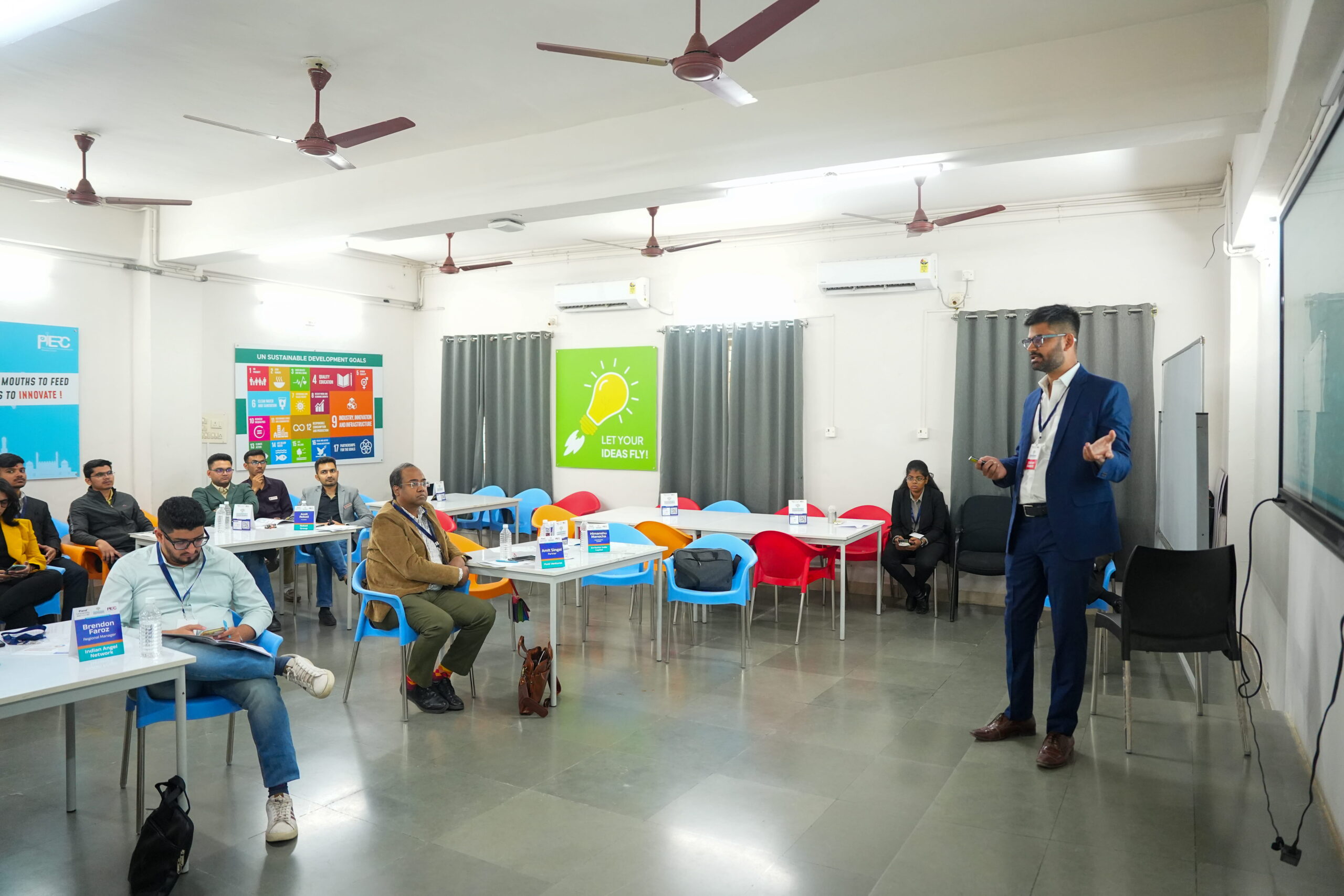
During VSF – Vadodara Start-up Festival 6.0, multiple industry speakers addressed what makes employees valuable:
Shri Yogesh Brahmankar (Innovation Director, AICTE):
“Entrepreneurship is a mindset. Proactive problem-solving, resource management, team coordination, mental resilience, these capabilities matter whether you build companies or join them.”
Poyni Bhatt (Ex-CEO, SINE IIT Bombay):
“Investors and employers evaluate similar things: Can this person actually execute? Do they understand market needs? Can they adapt when plans change?”
Raj Hadvani (CEO, Gopal Snacks):
“Focus on controlling the controllable. Quality is non-negotiable. Understanding what customers actually want matters more than impressive credentials.”
The pattern: Capabilities > Credentials.
Employers increasingly care less about where you studied or what you majored in. They care whether you can:
- Identify what needs doing
- Figure out how to do it
- Execute despite obstacles
- Learn from results
- Improve continuously
Student founders develop exactly these capabilities.
The PIERC Infrastructure That Makes This Possible
How does Parul University enable student founders to develop career-ready capabilities?
1. Real Work Environment
Not classroom simulations. Actual co-working space where founders work 8-10 hours daily. Real deadlines. Real customers. Real consequences.
2. Structured Support
Incubation Program (idea stage), Growthpad Program (scaling), Need-Based Support (specific challenges). Appropriate support for specific development stages.
3. Expert Mentorship
Not theoretical instruction. Actual entrepreneurs who’ve built companies sharing honest insights from experience.
4. Funding Access
₹14.53 crore distributed since 2015. SSIP grants. Government funding. Students can test ideas with real resources.
5. Meaningful Events
VSF – Vadodara Start-up Festival brings investors writing checks. Demo days with funding outcomes. Pitch sessions leading to customer acquisition.
6. Peer Community
65,000+ students provide diverse perspectives, cross-disciplinary collaboration, and an immediate testing environment.
Result: 250+ startups incubated. ₹40+ crore revenue generated. ₹100+ crore raised. 1,400+ jobs created.
But equally important: Hundreds of students developed career-ready capabilities whether their startups succeeded or not.
Why This Matters for Indian Higher Education
India produces millions of graduates annually. Many struggle finding employment matching their education level.
The problem isn’t lack of credentials, it’s lack of capabilities.
Traditional education provides knowledge.
Startup experience provides capabilities.
Knowledge: Understanding publishing industry dynamics
Capability: Identifying and solving actual publishing problems
Knowledge: Learning marketing frameworks
Capability: Acquiring customers with limited budget
Knowledge: Studying organizational behavior
Capability: Building teams and managing conflicts
If more universities adopted PIERC’s model:
- Students would graduate with capabilities employers actually need
- Career readiness would improve dramatically
- Employment outcomes would strengthen
- Economic value creation would accelerate
The blueprint exists. The evidence is clear. The question is implementation.
Your Capability Development Starts With Attempting Something Real
India produces millions of graduates annually. Many struggle finding employment matching their education level.
The problem isn’t lack of credentials, it’s lack of capabilities.
Traditional education provides knowledge.
Startup experience provides capabilities.
Knowledge: Understanding publishing industry dynamics
Capability: Identifying and solving actual publishing problems
Knowledge: Learning marketing frameworks
Capability: Acquiring customers with limited budget
Knowledge: Studying organizational behavior
Capability: Building teams and managing conflicts
If more universities adopted PIERC’s model:
- Students would graduate with capabilities employers actually need
- Career readiness would improve dramatically
- Employment outcomes would strengthen
- Economic value creation would accelerate
The blueprint exists. The evidence is clear. The question is implementation.
Frequently Asked Questions (FAQs)
1. What is PIERC at Parul University?
PIERC (Parul Innovation & Entrepreneurship Research Centre) is Parul University’s startup incubation hub. It provides co-working space, mentorship, government grant access, structured programs, and investor exposure to help student founders build market-validated startups.
2. How do student startups improve career readiness?
Student startups build real-world capabilities like problem identification, hypothesis testing, resource management, resilience, and cross-functional collaboration. These skills directly improve employability across corporate, entrepreneurial, and research careers.
3. Can students build startups while studying full-time?
Yes. Many founders begin in their second or third year. PIERC’s structured incubation model allows students to validate ideas, access funding like SSIP grants, and generate revenue while continuing their academic programs.
4. Do startups need to succeed for students to benefit?
No. Even failed startup attempts build transferable career skills such as decision-making under uncertainty, financial discipline, adaptability, and execution capability — qualities highly valued by employers.
5. What kind of funding support is available for student founders?
Student founders can access SSIP grants, university incubation support, government schemes, and investor connections through demo days and events like VSF - Vadodara Start-up Festival. Over ₹100+ crore has been raised collectively by PIERC-incubated startups.
PIERC accepts startup support applications year-round: pierc@paruluniversity.ac.in | www.pierc.org.
VSF – Vadodara Start-up Festival 6.0 took place January 21-23, 2026, at Parul University, Vadodara.
Graduate with experience, not just marks.


