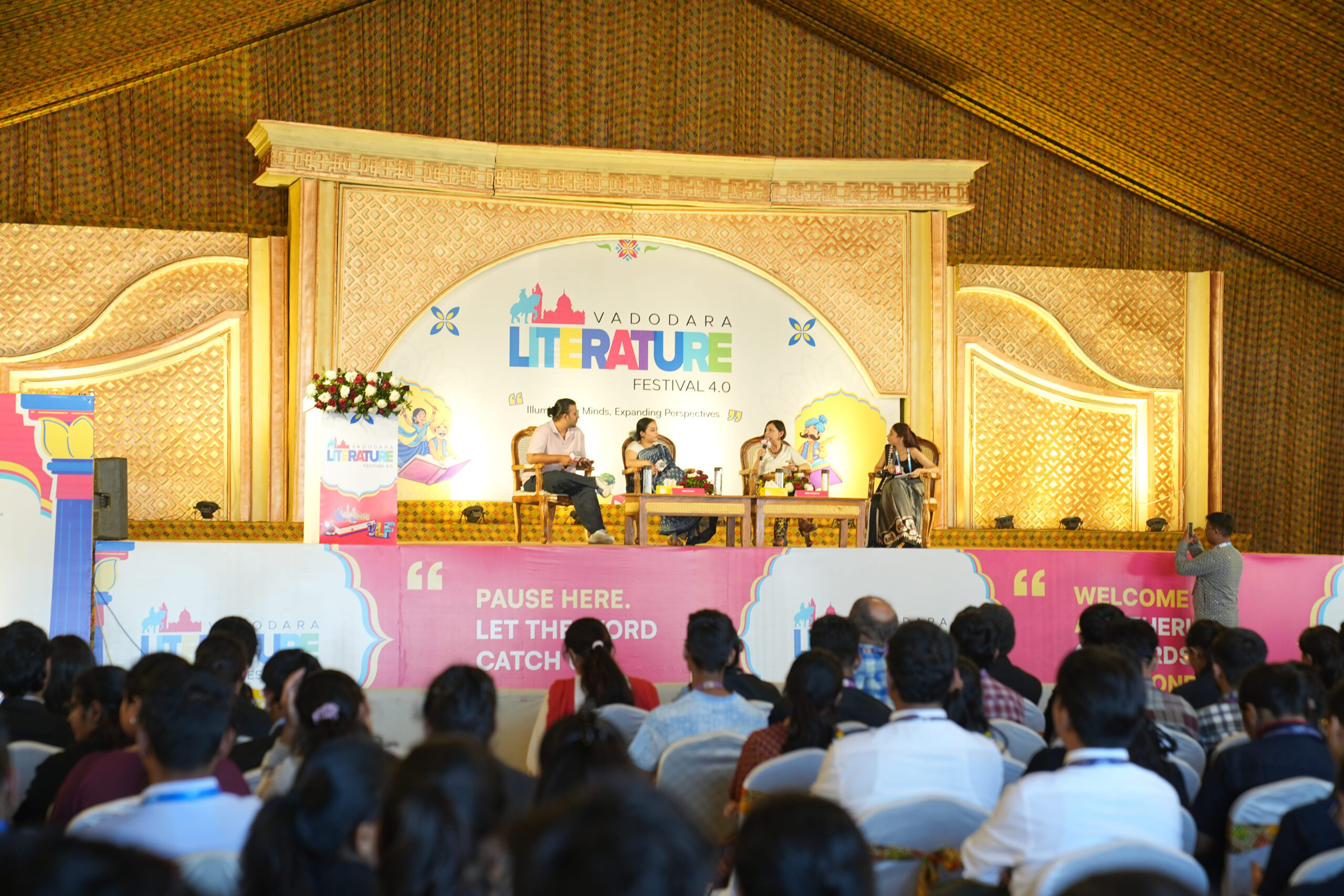
The panel discussion Dawat-e-Diplomacy at Vivekananda’s Vedanta Bhavan on January 28, 2026, was moderated by Ritwik Bhandari and brought together two practitioners who have built serious careers in the space where food, writing, and cultural identity intersect.
Hina Gujral is the curator of ‘Fun Food and Frolic’ – a culinary platform she built after leaving the finance sector when she realised that numbers were not feeding her soul the way food did. She has developed into a recipe writer, food educator, and content creator who has consistently argued that Indian cooking is not one thing, that its apparent complexity is not a barrier but a beauty, and that the reflexive simplification of Indian cuisine for Western audiences is a form of cultural self-erasure.
Sona Bahadur is an independent food journalist and media consultant who took an unusual path: she had been passionate about food her entire professional life but waited until the right opportunity arrived rather than forcing the career before the infrastructure for it existed. That opportunity came with BBC Good Food India. She secured her position not just by applying but by presenting a prototype food magazine she had designed during her master’s degree – proof that readiness is preparation meeting the moment.
India's Culinary Identity: Moving Beyond 'Curry'
The session began with the moderator’s opening question: how do you see food becoming an identity from a global perspective?
Hina Gujral answered with a diagnosis before she offered a prescription. The global representation of Indian food, she said, needs to move beyond stereotypes – and the most damaging stereotype is not that Indian food is spicy or flavourful, it is that it is homogeneous. The reduction of all Indian cuisine to ‘curry’ does not do justice to the extraordinary diversity of what actually exists. India has dishes – dosa, litti chokha, khichdi, regional gravies ranging from coconut milk-based to mustard-based to tamarind-based – that are as distinct from each other as Italian pasta is from French bouillabaisse. The goal is not to make Indian food palatable to Western tastes. It is to educate people about the correct way to experience it.
She illustrated this with a story from her own professional history: when her manager suggested she could write ‘more than 100 curry recipes,’ she challenged him directly – she could write more than 100 recipes, she said, each with a distinct gravy, none of them generic ‘orange curry.’ The distinction was not pedantry. It was the entire argument: Indian curries include green, yellow, white, red, and regional gravies, each rooted in local traditions and specific ingredient combinations. Flattening them into one is not simplification. It is erasure.
Sona Bahadur extended the argument into the territory of soft power. India has historically been associated with cultural influence through art, philosophy, yoga, and cinema. Cuisine naturally fits into this narrative. Food creates emotional connections and cultural curiosity in a way that is both more immediate and more accessible than most other cultural forms – you do not need to speak Hindi to find dal makhani moving, or to understand the hospitality embedded in the ritual of a shared meal. This is, she argued, an extraordinary diplomatic resource that India has barely begun to use strategically.
Authenticity Versus Western Adaptation: The Tension That Defines Modern Food Writing
The session’s most substantive exchange came when the moderator asked the panel how to manage authenticity while incorporating a Western touch in recipes.
Hina Gujral’s answer was organised around a principle she described as ‘traditional at heart, modern in process.’ She does not use generic curry masala. She prepares and promotes authentic, homemade spice blends that reflect the regional traditions they come from. The authenticity, in her view, is in the flavour, the ingredients, the regional identity. The process can be adapted without betrayal.
She was equally direct about what she would not compromise: the ingredients themselves. Coconut milk in Kerala curries. Mustard oil in Bengali preparations. The specific spice combinations that give each regional tradition its character. The substitution of these for generic alternatives is not simplification. It is the destruction of the thing that makes the food worth eating – and worth knowing.
Sona Bahadur spoke about authenticity from the angle of the stories that surround food. Food is incomplete without its stories, she argued. Memories, history, and personal narratives are integral to food – removing these elements reduces food to mere consumption.The recipe without the story of where it came from is, in her view, an ingredient list , not a cultural document.
When Food Became a Serious Career and What That Took
The session devoted significant time to the question many students were most interested in: how do you build a career in food writing, food journalism, or food content creation? The honest answer from both panellists was that it required both patience and preparation – and that the combination of the two is rarer than either alone.
Hina Gujral’s turning point was a simple email from a recipe website offering to pay for her work. The amount was not significant. The principle was: her passion had market value. From that point, she pursued it with the seriousness that she had previously reserved for her finance career. She also identified a skill stack that aspiring food content creators consistently underestimate: cooking is one component. Video editing, photography, SEO, content strategy, audience development – these are equally necessary, and the person who has only the cooking is only partially equipped for the career.
Sona Bahadur’s path was one of strategic patience. Food media was not a distinct career path fifteen years ago. She honed her skills in mainstream journalism, built the prototype magazine that would eventually secure her position at BBC Good Food India, and waited until the moment was ready rather than forcing entry before the infrastructure existed to support it. Her advice for aspiring food writers was practical and exacting:
- Identify your specific niche: investigative food writing, restaurant criticism, culinary travel, food history – specialise
- Distinguish between blogging and professional journalism – they require different skills and different relationships with sources
- Build a portfolio before you need it – Sona’s prototype magazine was years before the job it helped her get
- Skill stack beyond cooking: photography, writing, video, SEO, and ideally a second specialist domain
- Find real-life connections in your studies – the academic and the practical must inform each other
Key Takeaway - The Soft Power India Hasn't Fully Claimed
Both panellists pointed to the diaspora as an existing vector of this change: diaspora chefs in London, New York, Toronto, and Sydney who are presenting regional Indian cooking at the highest levels of culinary quality and cultural seriousness. The shift is already happening. The question is whether India itself will invest in telling the story of its own food culture with the depth and confidence that the culture deserves – in food journalism, in food publishing, in the culinary education that would allow the next generation of practitioners to inherit and extend the tradition rather than simplify it for export.
For students at VLF – Vadodara Literature Festival 4.0 who were sitting in this session because they were thinking about careers in food, in writing, in cultural communication – the message from Hina Gujral and Sona Bahadur was consistent: the story of Indian food is not finished. In many ways, the most interesting chapters have not been written yet. The people in the room were the ones who would write them.


