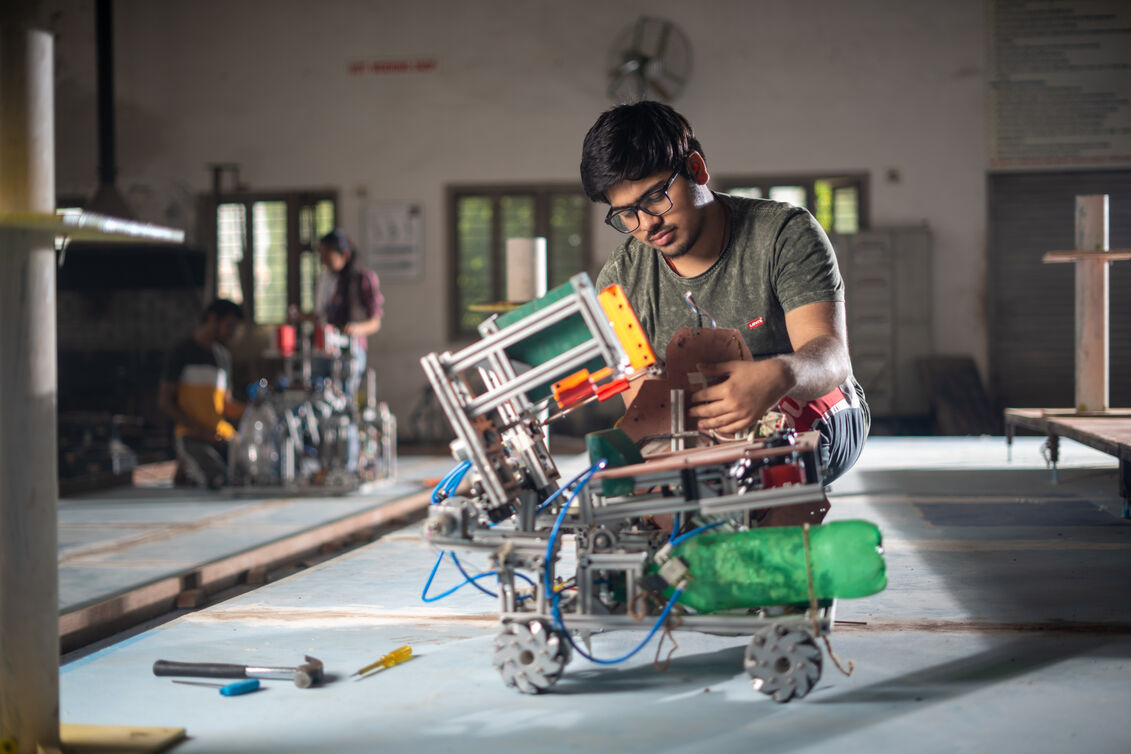
In the era of smart automation, robotics, and intelligent systems, careers that blend multiple engineering disciplines are becoming increasingly valuable. Among these, BTech in Mechatronics Engineering stands out as a future-ready choice. It brings together mechanical engineering, electronics, computer science, and artificial intelligence into one cohesive field.
At Parul University, the BTech in Mechatronics Engineering programme equips students with the multidisciplinary skills required to design and develop smart machines, automated systems, robots, and intelligent solutions that define Industry 4.0 and beyond.
Let’s explore how this degree bridges traditional engineering domains with emerging technologies like AI and automation, and why it’s a smart path for aspiring engineers.
What Is Mechatronics Engineering? An Integrated Engineering Approach
Mechatronics Engineering is an interdisciplinary field that combines mechanical engineering, electronics, computer programming, control systems, and artificial intelligence into one unified discipline. Unlike conventional engineering streams that focus on a single domain, mechatronics is designed to create multifunctional engineers who can think across hardware and software boundaries.
A core goal of the BTech in Mechatronics Engineering is to enable students to build “smart” systems: machines that perceive, interpret, and respond intelligently to changing environments. This includes everything from industrial robots and automated production lines to self-driving systems, intelligent manufacturing cells, and advanced robotics used in healthcare and automotive sectors.
Bridging Mechanical and Electronics Engineering
At its heart, Mechatronics bridges two foundational branches of engineering:
●Mechanical Engineering:
This includes dynamics, kinematics, machine design, fluid systems, and mechanics, skills essential for understanding how physical systems move and interact.
●Electronics Engineering:
This covers sensors, actuators, circuit design, signal processing, and embedded electronics that control mechanical systems.
In a modern automated system, mechanical components must be precisely directed through electrical signals and software logic. For instance, the mechanical arm in a robotic assembly line relies on electronic sensors and control algorithms to perform accurate and repeatable tasks. A BTech in Mechatronics Engineering teaches students the synergy between these areas so they can design, troubleshoot, and optimise complex machines.
What’s the Role of AI and Intelligent Control Systems?
One of the most exciting aspects of mechatronics is how it embraces artificial intelligence and intelligent systems to make machines smarter and more adaptable. Traditional automated systems execute pre-programmed instructions, but intelligent systems understand contexts, adapt to changing conditions, and even learn from data.
In the BTech curriculum, students engage with subjects and labs involving control systems, robotics, sensors and actuators, embedded systems, and intelligent machine interfaces. This lays the foundation for integrating AI techniques, such as machine learning for predictive maintenance or autonomous decision-making, into mechanical and electronic designs.
In real-world applications, AI enables mechatronics engineers to build machines that can:
● Detect and respond to environmental changes
● Predict system failures before they occur
● Adapt operations based on data patterns
● Interact with humans safely and efficiently
This blend of physical engineering with AI-driven intelligence is what truly sets mechatronics apart from traditional disciplines.
Curriculum Designed for Industry 4.0
Parul University’s B.Tech. in Mechatronics Engineering emphasises interdisciplinary learning, hands-on labs, and industry-aligned projects. The programme covers:
- Mechanical design principles
- Electronics and control systems
- Embedded systems and microcontrollers
- Robotics and automation
- Sensors and actuators
Such a curriculum ensures students graduate with both theoretical foundations and real-world skills needed to tackle the demands of smart factories, connected devices, and autonomous systems.
Hands-on experience with robotics kits, microcontroller boards, automation technology, and sensor systems prepares students to approach engineering from a systems perspective. Here, mechanical, electronic, and AI components work in harmony.
Real-World Applications: Where Mechatronics Shines
The fields where mechatronics engineers are shaping the future are both broad and impactful. Here’s a glimpse into key application areas:
Robotics
Robots are everywhere, from industrial automation and production lines to consumer robots and assistive healthcare devices. Mechatronics engineers design and build robots that can interact intelligently with environments and people.
Automation and Smart Manufacturing
Industry 4.0 relies on automated systems that optimise production with minimal human intervention. Engineers with mechatronics expertise can develop, maintain, and improve such systems.
Automotive and EV Systems
Modern vehicles use advanced mechatronics in engine control units, automatic braking systems, active suspension systems, and autonomous driving features.
IoT and Smart Devices
With connected sensors and real-time data processing, mechatronic systems support the backbone of the Internet of Things, where physical machines and digital intelligence converge.
Healthcare Technology
From surgical robots to rehabilitation systems and diagnostic instruments, intelligent automated technology improves patient care and precision.
Career Pathways and Skills Demand
Graduates with a BTech in Mechatronics Engineering are in demand in industries that prioritise automation, precision, and intelligent systems. Potential career roles include:
●Mechatronics Engineer:
Designing integrated systems that combine mechanical and electronic components
●Robotics Engineer:
Building and programming robots for industrial or service applications.
●Automation Engineer:
Creating automated systems for manufacturing and production.
●Embedded Systems Developer:
Working with microprocessors and real-time control systems.
●Control Systems Engineer:
Designing systems that regulate machine behaviour.
●AI/ML Systems Integrator:
Applying data-driven intelligence to mechanical systems.
The multidimensional nature of this degree makes graduates adaptable to evolving industrial demands and positions them well for leadership in innovation and system design.
The Future of Engineering Is Multidisciplinary
Today’s technological challenges, whether in automation, robotics, sustainable manufacturing, or smart infrastructure, cannot be solved through a single discipline alone. The convergence of mechanics, electronics, computing, and intelligence defines the next wave of engineering breakthroughs.
A BTech in Mechatronics Engineering prepares students to be system architects of the future. Whether it’s developing autonomous machines, designing smart manufacturing systems, or integrating AI into physical products, mechatronics graduates are on the cutting edge of innovation.
Conclusion: Engineering the Future with BTech Mechatronics
BTech in Mechatronics Engineering bridges the traditional boundaries between mechanical, electronics, and AI by training engineers to build systems that are integrated, intelligent, and adaptable.
With a strong curriculum, real-world projects, and interdisciplinary exposure, students graduate with the skills needed to lead in smart manufacturing, robotics, embedded systems, and AI-powered automation.
For students passionate about shaping the future of technology, this engineering discipline offers not just a degree but a launchpad into the frontier of innovation.