From Affordability to Global Trust: Arvind Agarwal on India’s Pharmaceutical Rise
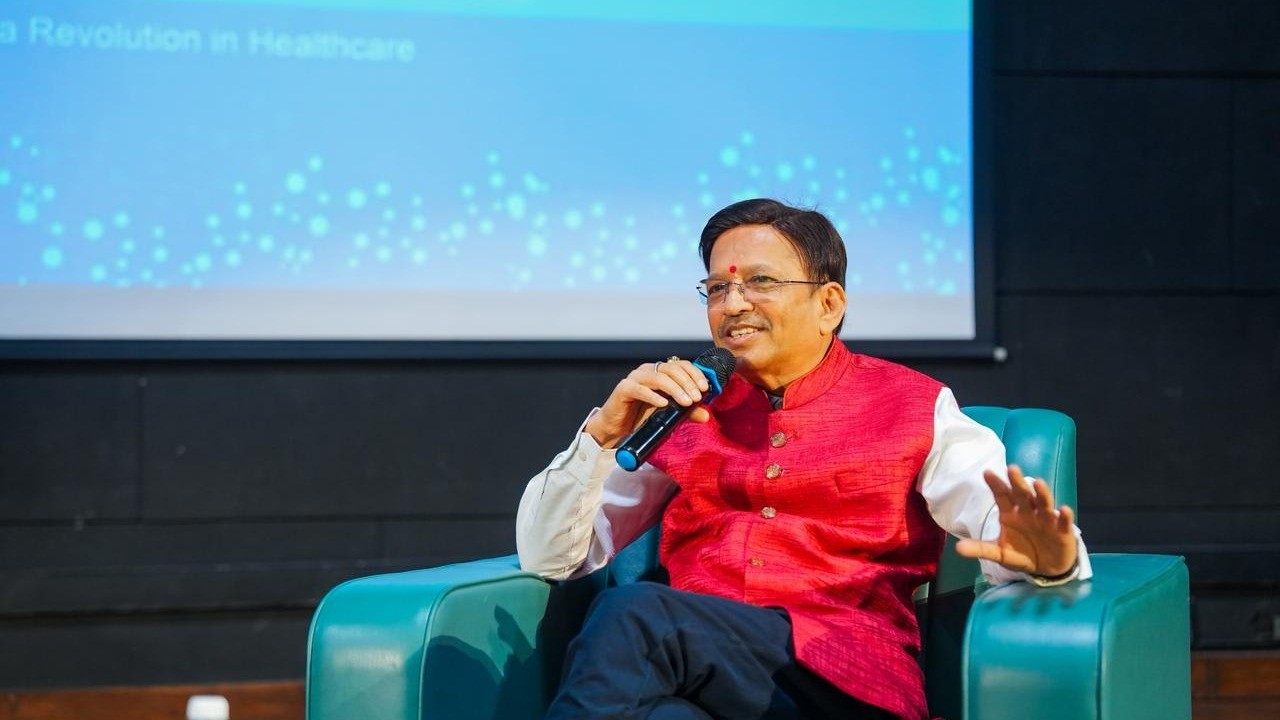
India’s pharmaceutical industry did not achieve global leadership overnight. Speaking at PU Talks during PHARMA Fest at Parul University, Mr. Arvind Agarwal (Ajanta Pharma) explained how decades of regulatory discipline, adaptability, quality compliance, and supply chain rigor transformed India from a cost-driven generic supplier into a globally trusted pharmaceutical powerhouse. Today, India’s pharma story is no longer about affordability alone, but it is about credibility, quality, and trust.
India’s Pharma Story Is Built on Patience, Not Chance
India’s rise as a global pharmaceutical leader is often summarised in numbers, whether exports, volumes, or affordability. But behind those metrics lies a far deeper story of trial, reform, and persistence.
At PU Talks, held during PHARMA Fest at Parul University, Mr Arvind Agarwal, senior leader at Ajanta Pharma, shared first-hand industry insights with students, researchers, and aspiring professionals. His session offered a rare practitioner’s view into how Indian pharma earned its place in highly regulated global markets, not through shortcuts, but through discipline built over decades.
This conversation was not about sudden success. It was about earning global trust the hard way.
When Did India Truly Go Global in Pharmaceuticals?
According to Mr. Agarwal, India’s genuine global transition began in the mid-to-late 1990s.
While Indian pharmaceutical companies had earlier footprints in parts of Africa and Asia, entering highly regulated markets like the United States fundamentally changed the industry’s trajectory. Companies such as Ranbaxy and Dr. Reddy’s Laboratories became early proof points that Indian firms could meet stringent international standards.
However, this transformation was slow.
India’s early competitive strength lay in reverse engineering, a model that naturally invited intense competition. At the time, pharmacy education infrastructure was limited, research facilities were scarce, and trained regulatory talent was in short supply.
What the global market sees today, Mr Agarwal emphasised, is the outcome of decades spent closing those gaps.
Global Markets Demand Risk, Not Comfort
India’s international expansion was never risk-free.
Recalling a defining experience from the early 1990s, Mr. Agarwal described traveling to Iraq in 1996, during a period of political instability and active conflict. Despite the dangers, Ajanta Pharma chose to understand the market firsthand.
Today, Ajanta Pharma ranks among the top three pharmaceutical companies in Iraq.
The lesson was clear and uncompromising:
Markets exist everywhere. The real question is whether you are prepared to meet their expectations.
The same philosophy guided Ajanta’s expansion across Africa, where the company is now one of the leading pharmaceutical players. Entering complex and underserved markets became not a strategy but a mindset.
Adaptability: A Non-Negotiable Requirement
Each global market presents unique operational challenges.
In Central Asia, for example, Ajanta Pharma faced extreme temperature variations ranging from –20°C to +40°C. Products designed for Indian climatic conditions failed stability tests.
The solution was not resistance but it was reformulation and redesign.
Mr. Agarwal underscored a critical industry truth:
Adaptability is not a competitive advantage. It is the cost of survival.
Companies unwilling to change exit global markets. Those willing to evolve endure.
Beyond Affordability: India’s Shift to Quality and Trust
India’s pharmaceutical identity has long been associated with affordable medicines. But affordability alone no longer defines global success.
Different markets interpret affordability differently. Price sensitivity in the United States, Africa, China, and India varies widely. What remains constant is the demand for quality, consistency, and reliability.
Over the last decade, Indian pharma has undergone a visible quality transformation:
- Earlier, USFDA inspections often resulted in multiple observations and import alerts.
- Today, several Indian facilities meet the highest global compliance benchmarks.
Mr. Agarwal shared a notable achievement:
Ajanta Pharma’s Modi manufacturing plants currently have zero USFDA observations.
Globally, only around 4% of pharmaceutical plants achieve this standard.
Having personally faced nearly 12 USFDA inspections, Mr. Agarwal explained how zero-observation outcomes reflect a deeply embedded quality culture, not temporary compliance.
Industry bodies like the Indian Pharmaceutical Alliance (IPA) are now actively investing in compliance education and regulatory training thus reinforcing that quality is no longer optional.
Credibility: The Most Fragile Currency in Pharma
Despite regulatory approvals, credibility remains the hardest barrier in global markets.
Mr. Agarwal cited Ajanta Pharma’s experience in the Philippines, where strong resistance from local competitors delayed the company’s first product launch by nearly four years. Acceptance came only after consistent proof of quality and value.
However, credibility is fragile.
A single incident, such as the cough syrup tragedy, can damage the reputation of an entire industry overnight. Rebuilding trust demands time, transparency, and significant investment.
Mr Agarwal warned against the lingering “chalta hai” mindset, emphasising that complacency undermines not just individual companies, but India’s collective pharmaceutical credibility.
Why Supply Chains Decide Global Survival
Regulatory approval alone does not guarantee success.
In markets like the United States, customers expect:
- Near-perfect delivery accuracy
- Consistent product availability
- Lean, penalty-driven inventory systems
Even a single delayed shipment can lead to financial penalties or permanent loss of contracts.
Ajanta Pharma’s strong US presence is closely linked to its award-winning supply chain operations, recognised consistently over the last five years.
Mr. Agarwal shared an example from Europe, where disruptions at a major distribution hub delayed shipments. Ajanta rerouted supplies through alternate ports, absorbing higher logistics costs to protect market commitments.
His conclusion was unequivocal:
Missed deliveries don’t just delay revenue but they can erase markets permanently.
Why the Future of Global Pharma Still Belongs to India
Looking ahead, Mr. Agarwal expressed strong confidence in India’s pharmaceutical future.
- India supplies nearly 40% of generic medicines to the United States
- Holds leadership positions across Asia, Africa, and Latin America
- Continues to balance cost efficiency with global-quality compliance
As long as Indian pharmaceutical companies remain:
- Quality-driven
- Operationally disciplined
- Adaptable to market realities
their global relevance will continue to grow.
India’s pharmaceutical journey, he concluded, has evolved beyond affordability.
It is now about trust.
And once trust is earned, it becomes the most powerful competitive advantage of all.
Trending Topics

PU Achieves a Remarkable Debut in Global Rankings, Ranked Among Top 50 Indian Institutions in THE Impact Rankings 2025
Vadodara-based PU has made its mark on the global academic map by registering a remarkable...
November 20, 2025

Inspiring the Next Generation: A Strategic Dialogue with Dr. Tanu Jain IAS
Dr. Tanu Jain, Physician, Retired IAS officer, Co-founder of Tathastu ICS, and Assistant Director of...
August 7, 2025

When Vision Meets Value: Dr. Vikas Divyakirti Inspires Parul University
"The future belongs to those who bring meaningful change into others lifes," shared Dr. Vikas...
November 20, 2025


